By Green Innovator Jaiguru Kadam – Subject Matter Specialist with vast international experience
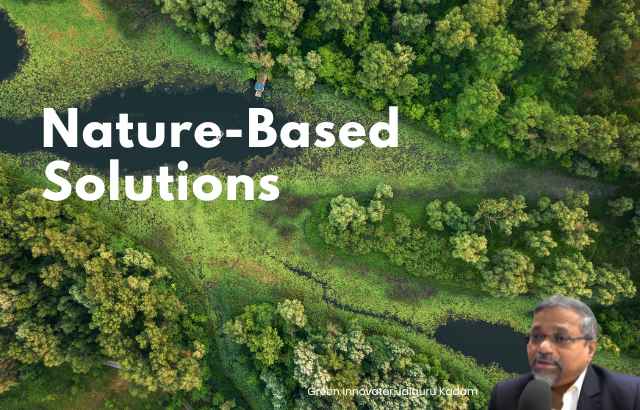
As cities expand and climate pressures intensify, engineering alone is no longer enough to solve environmental challenges. A growing and powerful approach is emerging under nature-inspired design systems: Nature-Based Solutions (NBS).
Nature-Based Solutions use existing ecosystems such as wetlands, forests, mangroves, and grasslands to address environmental and social problems while restoring ecological balance.
Instead of fighting nature, NBS works with it.
What are Nature-Based Solutions?
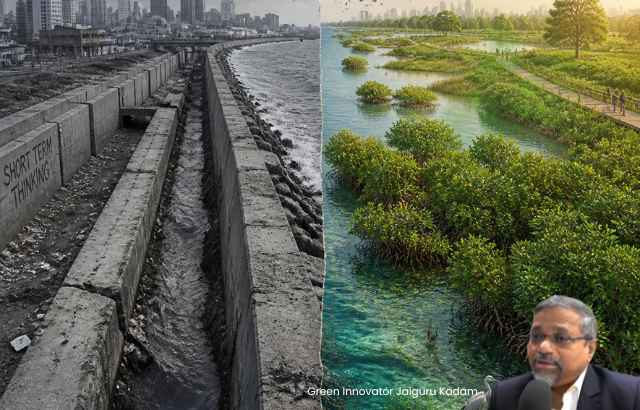
Nature-Based Solutions (NBS) are strategies that protect, restore, or manage natural ecosystems to solve challenges like:
- Flooding and stormwater management
- Air and water pollution
- Urban heat islands
- Coastal erosion
- Biodiversity loss
- Water scarcity
These solutions are cost-effective, scalable, and self-sustaining when compared to traditional grey infrastructure like concrete drains or seawalls.
Core Idea Behind Nature-Based Solutions
Nature already performs complex engineering functions:
- Wetlands filter water
- Forests regulate climate
- Mangroves protect coastlines
- Soil stores carbon and water
NBS simply enhances and integrates these natural systems into human planning.
Key Types of Nature-Based Solutions
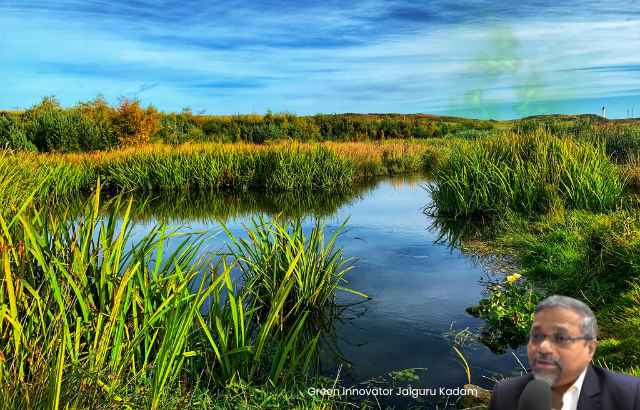
1. Wetlands for Water Filtration
Wetlands act as natural water purification systems.
They:
- Remove pollutants
- Trap sediments
- Support biodiversity
Example:
Constructed wetlands are used to treat wastewater in urban and rural areas without heavy chemical use.
2. Mangroves for Coastal Protection
Mangrove forests act as natural barriers against storms and erosion.
They:
- Reduce wave energy
- Prevent coastal flooding
- Protect fisheries and livelihoods
3. Urban Forests for Heat Reduction
Trees and green corridors in cities help regulate temperature.
They:
- Reduce surface heat by 2–5°C
- Improve air quality
- Enhance mental well-being
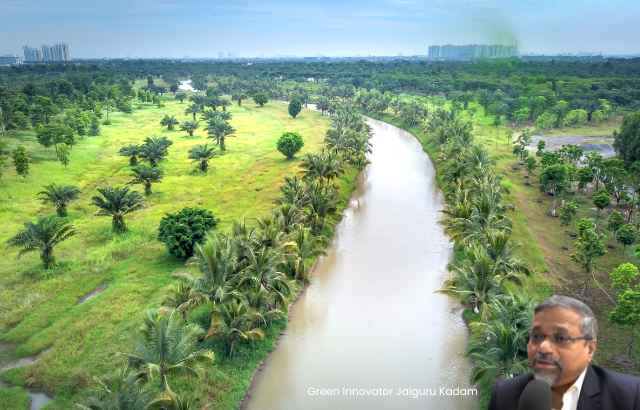
4. River Restoration Systems
Natural riverbanks are restored instead of being replaced by concrete channels.
Benefits:
- Improved groundwater recharge
- Reduced flooding
- Revived aquatic ecosystems
Real-World Examples of Nature-Based Solutions
Example 1: Mangrove Restoration in Coastal Regions
Restored mangrove belts have reduced storm damage by up to 60–80% in vulnerable coastal areas by absorbing wave energy.
Example 2: Urban Wetlands for Wastewater Treatment
Cities use engineered wetlands where plants and microbes naturally treat sewage water.
Outcome:
- 80–95% reduction in pollutants
- Lower operational costs than chemical plants
Example 3: Green Roof Systems in Cities
Rooftop gardens reduce building temperature and manage rainwater runoff.
Simple Calculations in Nature-Based Systems
1. Flood Reduction Using Wetlands
If a wetland absorbs:
- 1 hectare wetland = ~10,000 cubic meters of water storage capacity
Then:
- 5 hectares wetland = 50,000 cubic meters water buffer
This reduces flood pressure in surrounding urban areas significantly during heavy rainfall events.
2. Carbon Absorption by Trees
A mature tree absorbs approximately:
- 20–25 kg CO₂ per year
If:
- 10,000 trees planted
Then:
- CO₂ absorption = 200,000 to 250,000 kg/year
- Equivalent to removing hundreds of cars annually from emissions impact.
3. Temperature Reduction in Urban Areas
If:
- Urban area temperature = 40°C
- Tree cover increases from 10% to 30%
Then:
- Average reduction = 2–5°C
- Energy demand for cooling can drop by 15–25%
Benefits of Nature-Based Solutions
- Cost-effective compared to engineered infrastructure
- Self-maintaining systems
- Improves biodiversity and ecosystems
- Reduces disaster risks naturally
- Enhances human health and wellbeing
- Supports climate adaptation and mitigation
Frequently Asked Questions (FAQs)

Q1: Are Nature-Based Solutions better than engineered systems?
They are not replacements but complements. Hybrid systems often perform best.
Q2: Do NBS require large land areas?
Not always. Urban wetlands, green roofs, and vertical gardens work in compact spaces.
Q3: How long do Nature-Based Solutions take to work?
Some benefits like cooling appear immediately, while full ecosystem restoration may take 2–5 years.
Q4: Are NBS expensive to implement?
Initial planning is needed, but long-term maintenance costs are significantly lower than conventional infrastructure.
Conclusion
Nature-Based Solutions demonstrate that the most advanced engineering systems already exist in nature. By restoring wetlands, protecting mangroves, and integrating forests into urban design, we create systems that are both functional and regenerative.
As emphasized by Green Innovator Jaiguru Kadam, Subject Matter Specialist with vast international experience, the future of sustainable development lies in designing cities and systems that behave like ecosystems—adaptive, resilient, and self-balancing.
When we work with nature, we don’t just solve problems—we restore the balance of life itself.