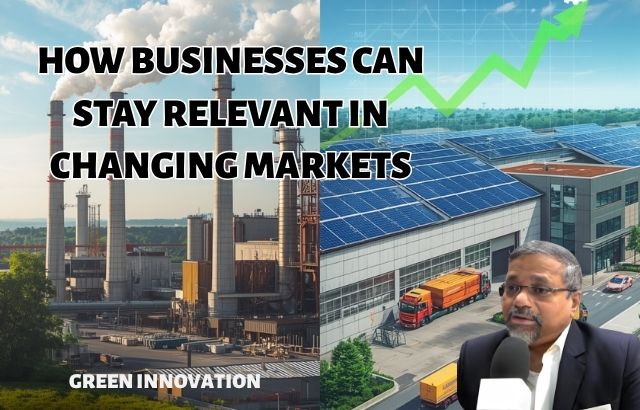
The Factory That Refused to Change
In 2018, during a consulting assignment in Southeast Asia, I visited a mid-sized manufacturing company producing specialty ingredients for personal care products. The business had been profitable for nearly two decades. Their formulas were trusted, their customers were loyal, and their leadership believed their future was secure.
Yet something felt different.
Young buyers were asking questions the company had never heard before:
- Where do your raw materials come from?
- What is the carbon footprint of your product?
- Can you prove sustainability claims?
- Is your packaging recyclable?
- Do you have ESG disclosures?
Management dismissed these questions as temporary trends.
Three years later, several multinational customers shifted to competitors that could demonstrate traceability, sustainability performance, and lower environmental impact.
The company did not lose because its products were poor.
It lost because the market changed faster than its mindset.
In contrast, another manufacturer in the same sector embraced renewable energy, digital traceability, and sustainable sourcing. Within five years, it secured premium contracts, reduced operating costs, and became a preferred supplier for global brands.
This is the reality of today’s business landscape.
Markets are changing faster than ever, and relevance has become the most valuable competitive advantage.
The question is no longer whether businesses should adapt.
The question is whether they can adapt fast enough.
The Great Market Shift Is Already Here
The global economy is undergoing a transformation driven by sustainability, resource efficiency, digitalization, and changing consumer expectations.
According to the International Energy Agency (IEA), global energy investment is expected to reach a record USD 3.3 trillion in 2025, with approximately USD 2.2 trillion flowing into clean energy technologies, double the investment directed toward fossil fuels. This signals a fundamental shift in where capital, innovation, and future opportunities are moving.
At the same time:
- Global renewable energy capacity is projected to expand by approximately 4,600 GW between 2025 and 2030, nearly doubling the growth achieved during the previous five-year period.
- Circular economy investments have exceeded USD 164 billion globally, demonstrating growing investor confidence in sustainable business models.
- Studies indicate that economies representing over 90% of global GDP are increasingly decoupling economic growth from carbon emissions.
The message is clear:
Future growth belongs to businesses that align profitability with sustainability.
Why Many Businesses Still Miss the Real Opportunity

Most discussions about sustainability focus on compliance.
That is a mistake.
The real winners view sustainability as a business growth strategy.
Sustainability Reduces Customer Acquisition Costs
Modern consumers increasingly trust brands that demonstrate environmental responsibility.
When sustainability becomes part of a company’s identity, marketing becomes more effective because customers become advocates.
Trust lowers acquisition costs.
Supply Chain Resilience Is the New Competitive Advantage
Climate disruptions, geopolitical uncertainty, and resource shortages are creating supply chain risks worldwide.
Companies with diversified, local, and sustainable sourcing strategies recover faster during disruptions.
Resilience is becoming more valuable than efficiency alone.
Investors Are Evaluating Sustainability More Than Ever
Institutional investors increasingly assess:
- ESG performance
- Resource efficiency
- Climate risk exposure
- Carbon management
Businesses that ignore these factors may face higher financing costs in the future.
What This Means for Skin Care, Hair Care, and Animal Feed Supplement Manufacturers

These industries sit at the intersection of consumer trust, regulatory scrutiny, and environmental impact.
Skin Care & Hair Care Manufacturers
Consumers increasingly demand:
- Natural ingredients
- Traceability
- Clean-label formulations
- Sustainable packaging
- Ethical sourcing
Brands that demonstrate transparency are commanding premium pricing.
Animal Feed Supplement Manufacturers
The livestock sector faces growing pressure to reduce emissions and improve sustainability.
Innovations in:
- Nutritional efficiency
- Feed conversion optimization
- Methane reduction technologies
- Sustainable raw material sourcing
are becoming major market differentiators.
Companies that innovate now can secure long-term partnerships with global agricultural and food companies.
Real-World Example #1
Unilever: Turning Sustainability Into Growth
For years, Unilever integrated sustainability into core business operations rather than treating it as a separate initiative.
The result?
Stronger brand equity, enhanced consumer trust, and long-term resilience.
Their success demonstrates that sustainability works best when embedded into business strategy rather than marketing campaigns.
Real-World Example #2
Patagonia: Loyalty Through Purpose
Patagonia transformed environmental responsibility into one of the world’s most powerful brand assets.
Customers do not simply buy products.
They buy into a mission.
The company proved that purpose-driven businesses can achieve extraordinary customer loyalty.
Real-World Example #3
Interface Inc.: Reinventing Manufacturing
The global flooring manufacturer radically reduced waste, emissions, and resource consumption while improving profitability.
Its sustainability journey demonstrated that environmental performance and financial performance can strengthen each other.
Simple Sustainability Calculation
How Cost Savings Become Competitive Advantage
Imagine a manufacturing facility consuming:
- 100,000 kWh electricity/month
- Electricity cost: $0.12/kWh
Monthly energy expense:
100,000 × $0.12 = $12,000
If efficiency measures reduce consumption by 20%:
20,000 kWh saved monthly
Annual savings:
20,000 × 12 × $0.12
= $28,800 per year
Now imagine ten facilities.
Annual savings exceed:
$288,000 annually
This is why sustainability is increasingly viewed as a profitability strategy rather than an environmental expense.
Simple Carbon Reduction Example
A facility emits:
500 tons CO₂ annually
By switching 30% of electricity usage to renewable energy:
500 × 30%
= 150 tons CO₂ avoided annually
That reduction can strengthen:
- ESG ratings
- Customer relationships
- Investor confidence
- Regulatory preparedness
while reducing long-term operational risks.
Expert Insights from Jaiguru Kadam
“The businesses that survive market disruption are not always the largest. They are the ones that learn fastest.”
“Sustainability is no longer a corporate responsibility initiative. It is a business continuity strategy.”
“Customers increasingly reward transparency. What companies measure today becomes their competitive advantage tomorrow.”
“The future belongs to organizations that combine innovation, efficiency, and environmental stewardship.”
Did You Know?
Surprising Fact #1
Only about 6.9% of materials entering the global economy are currently recycled or reused, highlighting a massive opportunity for circular business models.
Surprising Fact #2
Clean energy investments globally are now attracting approximately twice as much capital as fossil fuel investments.
Surprising Fact #3
Solar energy alone is attracting hundreds of billions of dollars in annual investment and is becoming one of the lowest-cost energy sources worldwide.
Surprising Fact #4
Many global corporations now evaluate suppliers based on sustainability performance before awarding contracts.
Surprising Fact #5
Future carbon reporting requirements are expected to affect thousands of businesses across international supply chains.
Frequently Asked Questions

Why is sustainability important for business relevance?
Because customers, investors, regulators, and supply chain partners increasingly consider sustainability when making decisions.
Is sustainability only for large corporations?
No. Small and medium-sized enterprises often benefit even more because efficiency improvements can significantly improve profitability.
How can manufacturers start their sustainability journey?
Begin with:
- Energy audits
- Waste reduction
- Water optimization
- Sustainable sourcing
- Carbon footprint measurement
Will sustainability increase costs?
Initially, some investments may be required. However, many sustainability initiatives generate long-term savings through reduced resource consumption and operational efficiency.
How does sustainability help customer retention?
Consumers increasingly prefer brands aligned with their values. Sustainability strengthens trust and loyalty.
What is the biggest mistake businesses make?
Treating sustainability as a marketing initiative instead of integrating it into strategy, operations, and innovation.
Which industries will be most affected by sustainability trends?
Virtually all sectors, but especially:
- Skin care
- Hair care
- Animal feed supplements
- Food processing
- Agriculture
- Chemicals
- Manufacturing
Actionable Steps for Business Leaders
Step 1: Measure Your Current Environmental Footprint
Understand where energy, water, materials, and emissions are being generated.
Step 2: Identify Quick-Win Efficiency Opportunities
Target immediate savings through process optimization and waste reduction.
Step 3: Develop a Sustainability Roadmap
Align sustainability objectives with business growth goals.
Step 4: Invest in Renewable Energy and Resource Efficiency
Reduce operating costs while improving environmental performance.
Step 5: Build Transparent and Resilient Supply Chains
Strengthen supplier relationships and improve traceability.
Step 6: Educate Employees and Suppliers
Create a culture of innovation and sustainability across the value chain.
Step 7: Track Progress Through KPIs
Measure results and continuously improve performance.
The Future Is Not Green Because It Has To Be

The future is green because it makes business sense.
The companies that will lead the next decade are not necessarily the ones with the largest factories, biggest budgets, or longest histories.
They will be the organizations that understand a profound truth:
Markets change.
Customers evolve.
Resources become constrained.
But innovation creates opportunity.
Businesses that embrace sustainability today are not merely preparing for future regulations.
They are positioning themselves for future relevance.
As I often tell business leaders around the world:
“The greatest risk is not change itself. The greatest risk is remaining unchanged while the world transforms around you.”
The green future is not approaching.
It has already arrived.
The question is:
Will your business lead it—or chase it?
About the Author
Green Innovator Jaiguru Kadam
Green Innovator Jaiguru Kadam is a globally experienced Subject Matter Specialist known for helping industries transform sustainability challenges into growth opportunities. His work spans manufacturing, renewable energy, circular economy strategies, environmental innovation, and sustainable business transformation across international markets.