By Jaiguru Kadam — Subject Matter Specialist | Global Sustainability Expert | Green Innovation Strategist | Industry Thought Leader
The global pet food industry is evolving from a volume-driven market into a science-led, sustainability-conscious, ingredient-focused ecosystem.
Pet food ingredient manufacturers and formulation companies are facing a more sophisticated competitive environment. Customers are no longer evaluating ingredients only on price, availability, palatability, protein content, digestibility, or technical performance. Increasingly, they are also asking questions about sourcing, traceability, carbon footprint, resource efficiency, circularity, animal nutrition, regulatory compliance, and supply-chain resilience.
This transformation is creating a strategic opportunity.
For pet food ingredient and formulation manufacturers, sustainability should not be positioned merely as a corporate responsibility initiative. It can become a source of product differentiation, customer value, innovation, operational efficiency, and competitive advantage.
From the perspective of a Green Innovator, the strategic question is not simply:
“How sustainable is our ingredient or formulation?”
The more important question is:
“How can sustainability, nutrition science, formulation performance, and ingredient innovation create a market position that customers value and competitors cannot easily replicate?”
Why Market Positioning Matters in the Pet Food Ingredient Industry

Pet food ingredient manufacturers operate in a complex B2B environment.
The direct customer may be a pet food manufacturer, but the ultimate product is influenced by multiple stakeholders, including nutritionists, veterinarians, procurement teams, quality managers, regulatory specialists, product developers, sustainability teams, retailers, and increasingly informed pet owners.
This means that ingredient positioning cannot rely on a single benefit.
An ingredient may need to demonstrate:
- Nutritional performance
- Digestibility
- Palatability
- Functional performance
- Safety
- Consistency
- Supply reliability
- Traceability
- Cost effectiveness
- Sustainability performance
A strong positioning strategy connects these factors into a compelling customer proposition.
The Green Innovator’s Perspective
A Green Innovator looks beyond the question of whether an ingredient is “green.”
The focus is on creating measurable value across the ingredient lifecycle.
This includes asking:
- Where does the raw material originate?
- How efficiently is it converted into a functional ingredient?
- What happens to by-products?
- How much energy and water are required?
- Can processing waste become a valuable input?
- Can the ingredient improve formulation efficiency?
- Can the ingredient reduce dependence on resource-intensive inputs?
- Can sustainability performance be measured and verified?
- Can the sustainability advantage become commercially relevant to pet food manufacturers?
What Is Market Positioning for a Pet Food Ingredient Manufacturer?
Market positioning is the strategic decision about how an ingredient company wants to be perceived relative to competing ingredient suppliers and alternative solutions.
For example, a company could position an ingredient primarily as:
- A low-cost commodity
- A premium nutritional ingredient
- A functional ingredient
- A highly digestible protein source
- A palatability enhancer
- A natural ingredient
- A traceable ingredient
- A circular ingredient
- A low-impact ingredient
- A science-backed sustainability solution
The strongest position depends on customer needs, market structure, competitive capabilities, and evidence.
A Practical Positioning Equation
A useful strategic model is:
Ingredient Market Position = Nutritional Value × Functional Performance × Sustainability Credibility × Supply Reliability
If one component is weak, the overall positioning can suffer.
A highly sustainable ingredient with inconsistent quality may not succeed.
A nutritionally excellent ingredient with an unreliable supply chain may struggle to gain strategic importance.
An ingredient with impressive sustainability claims but limited evidence may lose credibility.
The Green Innovator therefore seeks balance between performance, sustainability, economics, and proof.
How Competitive Dynamics Are Changing
Historically, ingredient competition often centered on price, quality, availability, and technical specifications.
Today, pet food manufacturers increasingly need ingredient suppliers that can contribute to broader product development objectives.
Competitive differentiation may increasingly involve:
- Life-cycle thinking
- Responsible sourcing
- Traceability
- By-product valorization
- Alternative proteins
- Resource efficiency
- Low-impact processing
- Ingredient functionality
- Digestibility and nutrient utilization
- Formulation optimization
- Data transparency
- Supply-chain resilience
This creates a shift from ingredient selling toward ingredient solution selling.
Ingredient Selling Versus Ingredient Solution Selling
Traditional Ingredient Selling
The conversation may sound like:
“We supply a high-quality protein ingredient at a competitive price.”
Ingredient Solution Selling
A more strategic proposition could be:
“Our protein ingredient provides targeted nutritional performance, consistent digestibility, reliable supply, traceable sourcing, and measurable resource-efficiency benefits that can support your premium pet food formulation strategy.”
The second proposition addresses the customer’s broader business challenge.
This is where Green Innovation can create commercial differentiation.
Competitive Analysis for Pet Food Ingredient Manufacturers
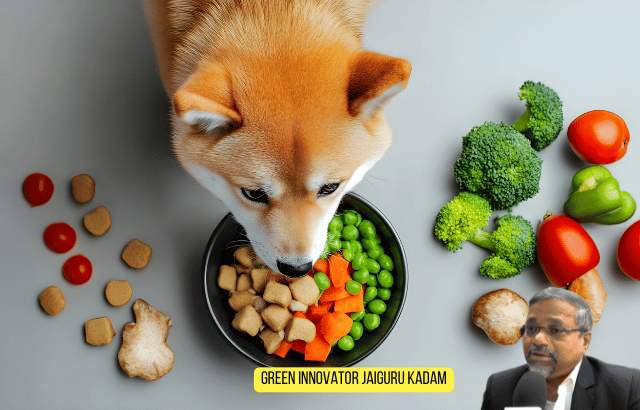
Competitive analysis should extend beyond comparing ingredient prices.
A comprehensive competitive assessment should examine at least seven dimensions.
1. Nutritional Performance
Evaluate amino acid profile, protein quality, digestibility, nutrient density, bioavailability, and other relevant nutritional characteristics.
2. Functional Performance
Assess palatability, texture, binding, emulsification, stability, processing compatibility, shelf-life contribution, or other formulation-specific characteristics.
3. Sustainability Performance
Examine resource use, emissions, waste generation, sourcing practices, circularity, packaging, and processing efficiency.
4. Supply Reliability
Assess production capacity, geographic diversification, raw-material security, logistics, inventory strategy, and business continuity.
5. Technical Support
Determine whether the supplier provides formulation assistance, application development, laboratory data, trials, troubleshooting, and technical documentation.
6. Regulatory and Quality Capability
Evaluate food safety systems, quality consistency, traceability, regulatory support, certifications, and documentation.
7. Innovation Capability
Assess the supplier’s ability to develop new ingredients, improve processing, generate new applications, and respond to emerging market needs.
Building a Pet Food Ingredient Competitive Scorecard

A structured scorecard can help ingredient manufacturers identify where they genuinely outperform competitors.
| Competitive Dimension | Weight | Example Rating |
|---|---|---|
| Nutritional Performance | 20% | 9/10 |
| Functional Performance | 15% | 8/10 |
| Sustainability | 20% | 8/10 |
| Supply Reliability | 15% | 9/10 |
| Technical Support | 10% | 7/10 |
| Regulatory Capability | 10% | 9/10 |
| Innovation Capability | 10% | 8/10 |
The weighted score is calculated as:
Competitive Score = Σ (Weight × Rating)
Using the example above:
(20% × 9) + (15% × 8) + (20% × 8) + (15% × 9) + (10% × 7) + (10% × 9) + (10% × 8)
= 1.80 + 1.20 + 1.60 + 1.35 + 0.70 + 0.90 + 0.80
= 8.35/10
The purpose is not to create an arbitrary ranking. The scorecard helps management identify capability gaps and opportunities for differentiation.
The Strategic Importance of Ingredient Traceability
Traceability is increasingly becoming a strategic asset for ingredient manufacturers.
A pet food manufacturer may want to understand:
- Where the raw material originated
- How it was processed
- Which suppliers were involved
- What quality controls were applied
- How batches can be tracked
- What environmental data is available
For the Green Innovator, traceability is not simply a compliance function.
It can become part of the value proposition.
A supplier capable of providing credible data across the ingredient lifecycle can potentially become a more strategic partner than a supplier that provides only a specification sheet and price.
Strategic Whitespace in Pet Food Ingredients
One of the most valuable outcomes of competitive analysis is identifying strategic whitespace.
Strategic whitespace exists where customer needs are growing but existing suppliers are not adequately addressing them.
Potential examples include:
- Highly traceable ingredients
- Lower-impact protein solutions
- Upcycled nutritional ingredients
- Functional ingredients supporting specific formulation objectives
- Ingredients designed for resource-efficient processing
- Solutions that improve nutrient utilization
- Ingredient systems that support premium sustainability claims
- Data-rich ingredients with verified environmental metrics
The objective is not to follow every sustainability trend.
The objective is to identify opportunities where sustainability intersects with a real customer problem.
Case Scenario: Upcycling Pet Food Ingredient Streams
Consider a hypothetical animal-derived ingredient manufacturer processing a raw-material stream that generates a substantial secondary fraction.
The conventional approach may treat this fraction as low-value material.
A Green Innovator asks:
“Can this material be converted into a safe, nutritionally valuable, commercially viable ingredient?”
Suppose a facility generates 1,000 tonnes of secondary material annually.
If 30% can be converted into a usable ingredient:
1,000 tonnes × 30% = 300 tonnes of potential product
If the recovered ingredient has a net contribution margin of ₹20,000 per tonne:
300 × ₹20,000 = ₹60 lakh potential annual contribution
The actual economics would depend on processing, quality, logistics, regulatory requirements, testing, and market demand.
However, the strategic principle is important: waste reduction can become product innovation.
Case Scenario: Sustainability Through Formulation Efficiency
Sustainability does not always require developing a completely new ingredient.
Sometimes the opportunity is improving how an ingredient is used.
Suppose a functional ingredient enables a pet food manufacturer to reduce inclusion from 5% to 4% while maintaining the desired formulation performance.
For a formulation producing 10,000 tonnes annually:
5% inclusion = 500 tonnes of ingredient
4% inclusion = 400 tonnes of ingredient
Potential reduction:
500 − 400 = 100 tonnes per year
If the ingredient delivers equivalent or improved functional performance, the manufacturer may gain economic and resource-efficiency benefits.
This demonstrates an important Green Innovation principle:
The most sustainable ingredient is not necessarily the ingredient with the lowest environmental footprint per kilogram. It may be the ingredient that delivers the required nutritional or functional outcome with less total resource use.
Ingredient Carbon Positioning: Beyond a Single Number
Carbon footprint can become an important competitive indicator, but a single carbon number should not be interpreted without context.
Ingredient manufacturers should consider the boundaries and assumptions behind environmental measurements.
Relevant questions include:
- What lifecycle stages are included?
- Are transportation impacts included?
- How are co-products allocated?
- What energy sources are used?
- What production assumptions are applied?
- Is the comparison based on mass, nutritional value, or functional output?
A Green Innovator therefore asks a more useful question:
“What is the environmental impact associated with delivering the required nutritional or functional value?”
Why Nutritional Functionality Matters to Sustainability
Sustainability discussions can become disconnected from formulation science.
That is a mistake.
An ingredient’s nutritional functionality can influence how efficiently resources are converted into nutritional value.
For example, two ingredients may have the same mass but different protein quality, digestibility, or nutrient availability.
Therefore, comparing ingredients only on kilograms can produce an incomplete picture.
The Green Innovator considers the relationship between:
Resource Input → Processing → Nutritional Function → Formulation Performance → Environmental Impact
This systems perspective is particularly important for pet food ingredient innovation.
Competitive Positioning Through Technical Evidence
Pet food ingredient manufacturers operate in a technical B2B environment.
Therefore, sustainability claims should be supported by technical evidence wherever possible.
Useful evidence can include:
- Digestibility data
- Nutritional composition
- Functional performance testing
- Lifecycle assessment data
- Resource-use metrics
- Batch consistency data
- Traceability information
- Third-party verification where appropriate
- Comparative formulation trials
Evidence turns sustainability from a marketing message into a technical value proposition.
The Difference Between Green Marketing and Green Innovation
Green Marketing
“Our ingredient is sustainable.”
Green Innovation
“Our ingredient is designed to deliver defined nutritional and functional performance while reducing material intensity, improving resource utilization, and providing measurable lifecycle information.”
The second approach connects environmental performance with product functionality and customer outcomes.
How Pet Food Formulators Influence Ingredient Positioning
Ingredient manufacturers should not develop positioning in isolation from formulation realities.
Formulators evaluate ingredients according to their role within the complete product system.
An ingredient that looks attractive in isolation may become less attractive if it creates:
- Processing challenges
- Palatability issues
- Texture problems
- Storage instability
- Higher formulation costs
- Supply-chain complexity
- Regulatory complications
Therefore, ingredient companies should position themselves as formulation partners rather than simply ingredient suppliers.
From Ingredient Supplier to Innovation Partner
A strategic ingredient supplier can provide more than raw material.
The supplier can contribute:
- Formulation knowledge
- Application development
- Ingredient optimization
- Processing guidance
- Technical troubleshooting
- Sustainability data
- Supply-chain intelligence
- New product concepts
- Co-development capabilities
This can strengthen customer relationships and create a more defensible market position.
Five Sources of Competitive Advantage for Ingredient Manufacturers
1. Proprietary Ingredient Technology
Unique processing or formulation technologies can create defensible differentiation.
2. Superior Raw-Material Strategy
Access to consistent, traceable, responsibly sourced raw materials can become a competitive asset.
3. Technical Application Expertise
Helping customers solve formulation challenges creates value beyond the ingredient itself.
4. Verified Sustainability Performance
Credible environmental data can differentiate a supplier from competitors relying on generic sustainability claims.
5. Customer Co-Innovation
Joint development with pet food manufacturers can create stronger relationships and increase switching costs.
Building a Green Innovation Pipeline
Pet food ingredient manufacturers can organize their innovation pipeline into four categories.
Product Innovation
Develop new proteins, functional ingredients, nutritional solutions, or ingredient blends.
Process Innovation
Reduce energy, water, waste, processing time, or material losses.
Circular Innovation
Convert underutilized streams, by-products, or secondary materials into valuable inputs.
Business Model Innovation
Move toward technical partnerships, co-development, data-enabled services, or integrated formulation solutions.
A Green Innovation Opportunity Matrix
| Opportunity | Customer Value | Sustainability Potential | Strategic Priority |
|---|---|---|---|
| New functional ingredient | High | Medium | High |
| Upcycled ingredient | Medium-High | High | High |
| Processing efficiency | Medium | High | High |
| Traceability platform | High | Medium-High | High |
| Packaging improvement | Medium | Medium | Medium |
This type of matrix helps organizations prioritize opportunities that combine market relevance and environmental impact.
How to Position an Ingredient for Global Markets
Global pet food markets are not identical.
Customer priorities, regulatory frameworks, raw-material availability, consumer expectations, and sustainability requirements vary across regions.
A globally relevant positioning strategy should therefore maintain a consistent core proposition while allowing regional adaptation.
Global Core Proposition
The central proposition might focus on:
Nutrition + Functionality + Safety + Traceability + Sustainability + Reliability
Regional Adaptation
The emphasis may change according to market conditions.
One market may prioritize premium nutrition.
Another may place greater emphasis on sustainable sourcing.
Another may focus strongly on cost and supply reliability.
The Green Innovator therefore avoids assuming that one sustainability message will work equally well everywhere.
Using Customer Segmentation for Ingredient Positioning
Not every pet food manufacturer has the same needs.
Premium Pet Food Manufacturers
May prioritize differentiated nutrition, traceability, novel ingredients, quality, and credible sustainability stories.
Mass-Market Manufacturers
May place greater emphasis on cost, consistency, scalability, and supply security.
Specialized Nutrition Companies
May prioritize scientific evidence, nutritional functionality, safety, and precise formulation performance.
Emerging Pet Food Brands
May value innovation support, flexible supply, technical collaboration, and differentiated ingredient stories.
Positioning should therefore be customer-segment specific rather than generic.
A Practical Seven-Step Positioning Framework
Step 1: Define the Target Customer
Identify the specific type of pet food manufacturer or formulation business you want to serve.
Step 2: Identify the Formulation Problem
Understand the nutritional, functional, cost, sustainability, or regulatory challenge the customer is trying to solve.
Step 3: Map the Competitive Alternatives
Compare competing ingredients, suppliers, technologies, and formulation approaches.
Step 4: Identify the Sustainability Opportunity
Determine where environmental improvement can strengthen customer value rather than simply add cost.
Step 5: Quantify the Benefit
Measure resource savings, cost reduction, formulation efficiency, emissions reduction, waste avoidance, or other relevant outcomes.
Step 6: Build the Proof
Generate technical, nutritional, environmental, and commercial evidence.
Step 7: Create the Positioning Statement
A useful positioning structure is:
For [target customer], our [ingredient or formulation solution] provides [key functional/nutritional benefit] while delivering [measurable sustainability or economic advantage], unlike [alternative], because [credible capability].
Example Positioning Statement
For premium pet food manufacturers seeking differentiated protein solutions, our ingredient platform provides consistent nutritional and functional performance while improving resource utilization and traceability, supported by controlled sourcing and measurable sustainability data.
The exact claim must be supported by appropriate evidence before commercial use.
Competitive Advantage Through Circular Ingredient Innovation
Circularity offers significant potential for ingredient manufacturers.
The concept is simple:
Waste stream → Processing innovation → Safe ingredient → Nutritional value → Customer value
However, successful circular innovation requires more than identifying a waste stream.
The resulting ingredient must meet appropriate requirements for:
- Safety
- Consistency
- Nutrition
- Functionality
- Regulatory compliance
- Supply scalability
- Customer acceptance
- Economic viability
This is where scientific formulation expertise and sustainability strategy must work together.
The Economics of Sustainability in Ingredient Manufacturing
Sustainability initiatives should be evaluated using both environmental and financial metrics.
Consider an ingredient manufacturing facility that spends ₹5 crore annually on energy.
If process innovation reduces energy consumption by 12%:
₹5 crore × 12% = ₹60 lakh potential annual energy savings
If the initiative also reduces emissions and improves operational stability, the total strategic value may exceed the direct financial saving.
This illustrates why Green Innovation should be evaluated as a business strategy rather than simply as an environmental expenditure.
Avoiding Greenwashing in Pet Food Ingredient Positioning
Pet food ingredient manufacturers should be particularly careful with environmental claims.
Statements such as:
- 100% sustainable
- Zero environmental impact
- Completely green
- Planet-friendly ingredient
- Carbon-free ingredient
can be misleading if the scope and evidence are unclear.
A stronger approach is to communicate specific measurable attributes.
For example:
“Our process reduced energy consumption per tonne of finished ingredient by 18% compared with the established production baseline.”
Specificity improves credibility.
What the Green Innovator Should Measure
A sustainability dashboard for an ingredient manufacturer could include:
| Metric | Example KPI |
|---|---|
| Energy | kWh per tonne of ingredient |
| Carbon | kg CO2e per tonne |
| Water | Litres per tonne |
| Material efficiency | % usable output from input material |
| Circularity | % recovered or upcycled material |
| Waste | kg waste per tonne |
| Supply chain | % traceable raw materials |
| Innovation | % revenue from new or improved products |
The exact metrics should be selected according to the ingredient category, production process, customer requirements, and applicable standards.
The Future of Competitive Positioning in Pet Food Ingredients
The next generation of ingredient manufacturers will increasingly compete on more than the ingredient itself.
They will compete on the total value ecosystem they provide to pet food manufacturers.
This ecosystem may include:
- Ingredient quality
- Nutrition science
- Formulation expertise
- Sustainability data
- Traceability
- Supply-chain resilience
- Regulatory support
- Product development
- Innovation partnerships
- Technical service
The supplier that helps a pet food manufacturer solve multiple problems can become more strategically valuable than a supplier competing only on price per kilogram.
Frequently Asked Questions

Why is market positioning important for pet food ingredient manufacturers?
Market positioning helps ingredient manufacturers communicate why customers should choose their ingredient or formulation solution over competing alternatives. Strong positioning can connect nutritional performance, functionality, sustainability, technical support, supply reliability, and economic value.
Should sustainability be the main positioning message?
Not necessarily. Sustainability should support the customer’s primary business and formulation needs. The strongest proposition often combines nutritional or functional performance with a measurable sustainability advantage.
How can an ingredient manufacturer differentiate itself from commodity suppliers?
Potential differentiation can come from proprietary technology, superior nutritional performance, technical application support, traceability, verified sustainability data, reliable supply, specialized formulation expertise, and co-development capabilities.
Can upcycled ingredients become commercially competitive?
Yes, provided they meet appropriate safety, nutritional, functional, regulatory, consistency, scalability, and economic requirements. Upcycling becomes strategically powerful when a previously underutilized material can be transformed into a reliable ingredient with genuine customer value.
How should carbon footprint be used in ingredient positioning?
Carbon data should be presented with appropriate scope, boundaries, assumptions, and methodology. Where relevant, manufacturers should consider environmental impact in relation to nutritional or functional performance rather than relying solely on impact per kilogram of ingredient.
What role does formulation science play in sustainability?
Formulation science determines how efficiently ingredients deliver nutritional and functional outcomes. An ingredient that enables lower inclusion rates, better nutrient utilization, improved stability, or reduced material requirements may create sustainability benefits beyond its own production footprint.
How can small and mid-sized ingredient manufacturers compete with large global suppliers?
Smaller companies can focus on specialized ingredients, technical responsiveness, niche applications, regional sourcing, traceability, customer co-development, faster innovation cycles, and highly specific sustainability solutions.
What is the biggest mistake companies make in sustainability positioning?
A common mistake is treating sustainability as a marketing label instead of a measurable business capability. Strong positioning should connect environmental performance with customer value, technical evidence, economic outcomes, and credible data.
What should pet food ingredient manufacturers prioritize first?
Begin by understanding customer formulation problems, benchmarking competitors, mapping the ingredient lifecycle, identifying material and resource inefficiencies, and determining where sustainability can improve rather than compromise nutritional, functional, and economic performance.
Conclusion
The competitive landscape for pet food ingredient and formulation manufacturers is changing.
Price and quality will remain important, but they will increasingly be joined by sustainability, traceability, resource efficiency, nutritional science, circularity, supply-chain resilience, and technical collaboration.
The opportunity for ingredient manufacturers is not simply to develop “greener ingredients.”
The larger opportunity is to develop better ingredient solutions that simultaneously address nutrition, formulation performance, economics, sustainability, and customer expectations.
That is the essence of Green Innovation.
For the Green Innovator, the strategic objective is to move from:
Ingredient → Ingredient Solution → Formulation Partnership → Sustainable Competitive Advantage
The companies that successfully make this transition can move beyond commodity competition and become strategic innovation partners to the global pet food industry.
The key question for every pet food ingredient manufacturer should therefore be:
“What measurable value do we create for the pet food manufacturer beyond the ingredient itself?”
The answer to that question can define the next generation of market positioning.
About Jaiguru Kadam
Jaiguru Kadam is a Subject Matter Specialist, Global Sustainability Expert, Green Innovation Strategist, and Industry Thought Leader focused on sustainability, innovation, competitive strategy, and value creation for the global pet food ingredient and formulation industry.