Agriculture is entering a period in which productivity alone is no longer an adequate measure of innovation. Farmers, agribusinesses, food companies, investors, and technology providers increasingly need solutions that improve productivity while using land, water, energy, inputs, and capital more intelligently.
This is where Agriculture Startups have an unusual strategic opportunity. The largest opportunities in AgriTech are not necessarily created by putting another application on a smartphone. They emerge when technology solves an expensive, persistent problem somewhere across the agricultural value chain.
That distinction matters.
From precision irrigation and AI-assisted crop monitoring to biological inputs, farm robotics, traceability, alternative financing, post-harvest optimization, waste valorization, and digital marketplaces, technology is expanding the addressable innovation space across agriculture. The Food and Agriculture Organization of the United Nations identifies innovation as a key catalyst for more efficient, inclusive, resilient, and sustainable agrifood systems, while its current work spans digital agriculture, biotechnology, AI, research, and community-driven innovation. r1
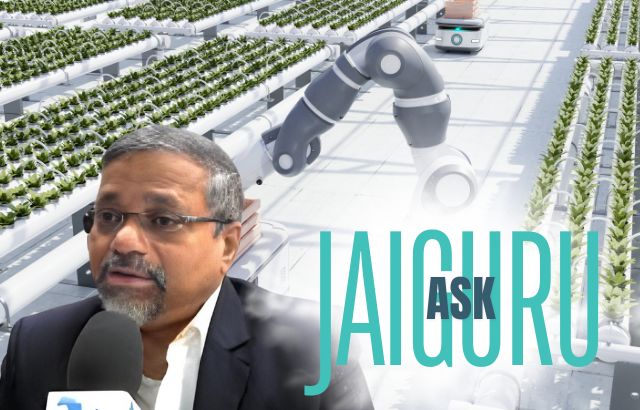
From the perspective of Jaiguru Kadam, Subject Matter Specialist, Global Sustainability Expert, Green Innovation Strategist, and Industry Thought Leader, the strategic question for Agriculture Startups is therefore not simply, “What technology can we build?” It is:
“Which agricultural constraint can we solve better, more economically, and more sustainably than the existing system?”
That shift—from technology-first thinking to problem-first innovation—is likely to separate scalable AgriTech businesses from technically impressive but commercially fragile ventures.
Why AgriTech Matters Now
Agriculture operates at the intersection of food security, natural-resource management, rural livelihoods, climate resilience, logistics, finance, and global trade. A technology improvement in one part of the system can therefore create value far beyond the farm gate.
FAO describes digital agriculture as a mechanism for improving efficiency and productivity while addressing bottlenecks involving food safety, post-harvest handling, market access, finance, and supply-chain management. The organization also notes that agriculture remains comparatively under-digitized, leaving significant room for technology-enabled value creation. r2
The OECD similarly identifies digitalization and innovation as important enablers of agricultural productivity, environmental sustainability, resilience, and market access, while highlighting adoption barriers such as upfront costs, recurring maintenance, limited use cases, skills requirements, user-friendliness, trust, and technology risk. r3
For startup leaders, this creates a useful paradox: the same factors that make agriculture difficult to digitize can also create defensible markets.
- Fragmented farms can create demand for aggregation platforms.
- Variable field conditions create demand for precision decision tools.
- Limited access to agronomic expertise creates demand for digital advisory services.
- Input inefficiency creates opportunities for precision application and biological alternatives.
- Post-harvest losses create opportunities in storage, cold chains, logistics, and quality monitoring.
- Uncertain farm income creates opportunities in embedded finance, insurance, and risk management.
- Demand for traceability creates opportunities in data infrastructure and supply-chain visibility.
- Agricultural waste creates opportunities for circular business models.
The opportunity is therefore not one market. It is an interconnected portfolio of markets.
What AgriTech Actually Includes
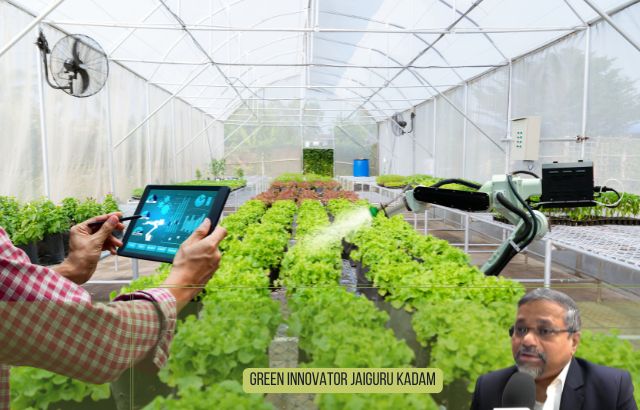
AgriTech is often used as an umbrella term for technologies that improve agricultural production or the broader agrifood system. For investors and corporate decision-makers, however, it is more useful to divide the landscape according to the problem being solved.
1. Precision Agriculture
Precision agriculture combines data, sensors, remote sensing, farm machinery, geospatial technologies, and decision-support tools to make agricultural operations more targeted.
The value proposition is straightforward: apply the right input, at the right location, at the right time, and at the right intensity.
Potential applications include:
- Variable-rate fertilization.
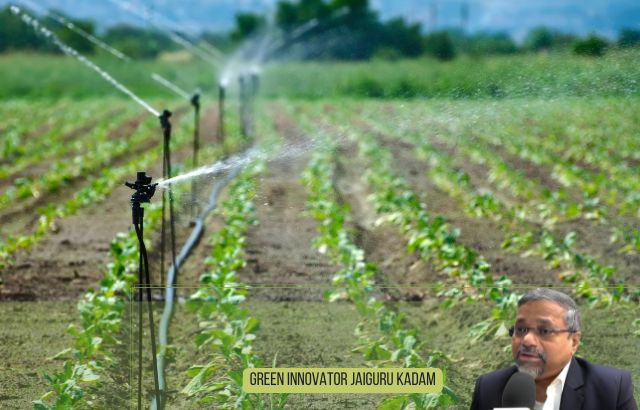
- Precision irrigation.
- Crop health monitoring.
- Yield prediction.
- Soil mapping.
- Automated field scouting.
- Targeted pest and disease management.
The Green Innovation question is not whether more data can be collected. It is whether better data can reduce resource intensity while maintaining or improving farm economics.
2. Artificial Intelligence and Decision Intelligence
AI can help convert fragmented agricultural data into recommendations. Potential applications include disease detection, weather interpretation, crop planning, irrigation recommendations, machinery optimization, demand forecasting, and supply-chain planning.
Recent initiatives demonstrate the direction of travel. For example, the World Bank reported in 2026 on AI-enabled agricultural services in India designed to provide practical information to farmers using basic smartphones and local-language interfaces. r4
However, the strategic opportunity is not “AI for agriculture.” It is decision improvement for agriculture.
An AI model that predicts disease but does not lead to an economically useful intervention may have limited commercial value. A simpler system that helps a farmer decide whether, where, and when to intervene may create substantially more value.
3. Biological and Low-Impact Agricultural Inputs
Another major opportunity is emerging around biological crop protection, microbial technologies, biostimulants, soil-health solutions, biological fertilizers, and other alternatives or complements to conventional agricultural inputs.
For startups in this segment, technical efficacy is only one part of the equation. Commercial adoption also depends on shelf stability, formulation, application compatibility, field performance, farmer usability, regulatory requirements, distribution economics, and consistency across growing conditions.
A Green Innovator therefore evaluates the entire product system—not merely whether the biological technology works in a controlled environment.
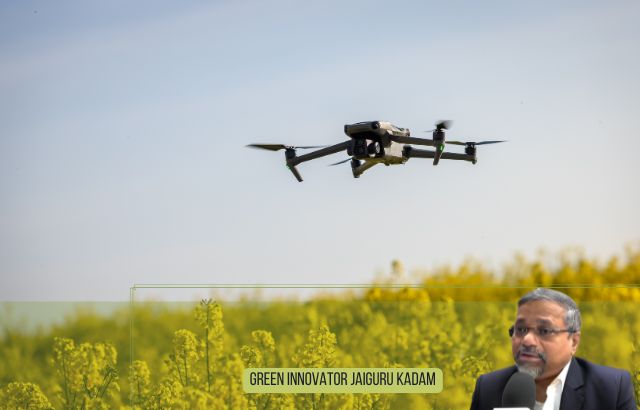
4. Robotics and Automation
Labor availability, operational efficiency, and precision requirements are creating opportunities for agricultural robotics.
Applications can include autonomous machinery, robotic harvesting, mechanical weeding, crop scouting, drone-based monitoring, and automated sorting or grading.
The commercial test should be rigorous:
Does automation produce a measurable improvement in cost, productivity, quality, safety, labor utilization, or resource efficiency?
A robot that performs a task faster but requires expensive infrastructure, specialist maintenance, and difficult integration may not create sufficient economic value. The best solutions will increasingly be evaluated on total cost of ownership rather than technological novelty.
5. Digital Marketplaces and Agricultural Finance
Agriculture involves thousands of fragmented transactions involving seeds, fertilizers, machinery, labor, logistics, commodities, insurance, credit, and advisory services.
Digital platforms can reduce transaction friction by connecting participants and improving information flows.
World Bank programs have supported AgTech innovation involving market access, digital advisory, agricultural finance, and access to quality inputs, illustrating the breadth of potential digital applications beyond crop production itself. r5
The opportunity becomes stronger when financial products are embedded into operational workflows. For example, a platform that knows what a farmer intends to plant may be able to connect that information with input purchasing, financing, insurance, advisory, and eventual market access.
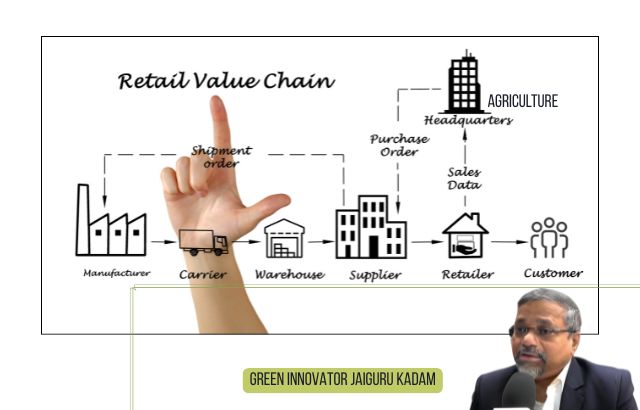
The Most Attractive Opportunity May Be Outside the Farm
One of the most important strategic observations from a value-chain perspective is that AgriTech should not be defined only by what happens on the farm.
FAO notes that the post-farmgate segment of agricultural value chains represents a substantial share of consumer food expenditure, highlighting the economic significance of processing, wholesale, retail, logistics, and related activities. r6
This expands the opportunity map considerably.
| Value-chain area | Potential startup opportunity | Potential sustainability value |
|---|---|---|
| Farm inputs | Precision purchasing, biological inputs, input optimization | Lower material and chemical intensity |
| Production | AI advisory, sensors, robotics, precision farming | Lower water, energy, and input intensity |
| Harvesting | Automation, quality prediction, yield analytics | Lower labor intensity and product losses |
| Storage | Smart storage, temperature monitoring, predictive systems | Reduced post-harvest losses and energy waste |
| Logistics | Route optimization, digital freight coordination | Lower fuel use and empty transportation |
| Processing | Quality analytics, process optimization, waste valorization | Higher resource productivity and circularity |
| Markets | Traceability, digital marketplaces, demand intelligence | Improved transparency and supply-chain efficiency |
| Finance | Embedded finance, insurance, alternative credit assessment | Greater resilience and access to productive investment |
Where Agriculture Startups Can Create Defensible Competitive Advantage
Technology alone rarely creates a durable moat in agriculture. A startup may have a sophisticated algorithm, sensor, or platform and still struggle to scale.
The stronger competitive advantages often come from the combination of technology, data, distribution, trust, workflow integration, domain knowledge, and measurable outcomes.
The AgriTech Competitive Advantage Framework
- Problem intensity: How expensive or disruptive is the problem for the customer?
- Frequency: How often does the customer encounter the problem?
- Measurability: Can the value created be demonstrated quantitatively?
- Integration: Does the solution fit existing agricultural workflows?
- Data advantage: Does usage create proprietary or defensible data?
- Distribution: Can the startup reach customers economically?
- Trust: Will farmers, processors, buyers, and financial institutions rely on the solution?
- Scalability: Can the model expand across crops, regions, or value chains without proportional cost increases?
Jaiguru Kadam’s Green Innovation perspective places particular emphasis on the intersection between measurable customer value and measurable resource efficiency. When those two outcomes reinforce each other, sustainability can become part of the competitive moat rather than a separate reporting exercise.
What Agriculture Startups Often Get Wrong
Technology Before Customer Economics
A technically sophisticated product is not automatically a commercially valuable product.
For example, suppose a precision irrigation system costs $8,000 to install and produces estimated annual savings of $2,000. Ignoring financing, maintenance, and other costs, the simple payback period is:
$8,000 ÷ $2,000 = 4 years
That may be acceptable for some commercial farms but unattractive for smaller producers with limited access to capital.
A startup could instead explore leasing, pay-per-hectare pricing, equipment financing, cooperative ownership, or outcome-based pricing.
The innovation is therefore not only the irrigation technology. It is also the business model.
Ignoring Adoption Friction
Agricultural technology frequently operates in environments where connectivity, digital literacy, infrastructure, labor availability, purchasing power, and technical support vary significantly.
OECD research highlights many of these barriers, including cost, usability, skills, trust, and technological risk. r7
A product designed for a highly connected commercial farm may need substantial redesign before it becomes useful to a smallholder farmer.
Confusing Data Collection With Value Creation
Sensors can generate enormous amounts of data. That does not mean the data is valuable.
The important question is:
What decision changes because of this data?
If collecting soil moisture data does not change irrigation behavior, the system may create information without creating value.
Underestimating Distribution
Agricultural customers are geographically dispersed. Distribution can therefore become one of the largest components of startup economics.
Successful models may require partnerships with cooperatives, agribusinesses, equipment dealers, processors, financial institutions, input distributors, extension networks, or large buyers.
For Agriculture Startups, distribution strategy should be designed as early as product strategy.
The Green Innovation Opportunity in AgriTech
From a Green Innovator perspective, the most compelling AgriTech opportunities often sit where resource efficiency and commercial efficiency overlap.
Consider four questions:
- Can the same crop output be produced with less water?
- Can the same farm operation use fewer inputs without reducing performance?
- Can agricultural waste become a feedstock or revenue stream?
- Can better data reduce unnecessary transport, storage, energy, or processing?
These questions convert sustainability from an abstract objective into an operational design principle.
Resource Productivity as a Startup Metric
Instead of measuring sustainability only through absolute reductions, startups can also measure resource productivity.
For example, assume a hypothetical farm currently uses 1,000 cubic meters of irrigation water to produce 10 tonnes of marketable crop.
Baseline water productivity:
10 tonnes ÷ 1,000 m³ = 0.01 tonnes/m³
If an AgriTech solution helps the farm produce the same 10 tonnes using 800 m³:
10 tonnes ÷ 800 m³ = 0.0125 tonnes/m³
That represents a 25% improvement in output per unit of irrigation water under the stated assumptions.
The commercial implication is important: the startup can potentially demonstrate value through both resource savings and improved resource productivity.
Turning Agricultural Waste Into a Business Opportunity
A circular-economy approach can create entirely new AgriTech markets.
Agricultural residues may become inputs for animal feed, bio-based materials, soil amendments, bioenergy, industrial ingredients, or other applications depending on the material and regulatory context.
The startup opportunity lies in solving the system around the waste stream:
- Identify a consistent waste source.
- Characterize its physical and chemical properties.
- Develop a reliable collection model.
- Determine economically viable processing.
- Identify a high-value downstream market.
- Validate quality and regulatory requirements.
- Measure environmental performance credibly.
A startup that merely “uses waste” has a story. A startup that converts a difficult waste stream into a reliable commercial input has a business model.
Agriculture Startup Opportunity Matrix
Industry professionals can use the following framework to prioritize potential AgriTech opportunities.
| Opportunity | Customer pain | Technology complexity | Sustainability potential | Strategic priority |
|---|---|---|---|---|
| Precision irrigation | High | Medium | High | Evaluate by crop and geography |
| AI crop advisory | Medium to high | Medium | Medium to high | Validate adoption and accuracy |
| Agricultural waste valorization | High | Medium to high | High | Evaluate feedstock economics |
| Farm robotics | High in labor-constrained markets | High | Medium to high | Evaluate total cost of ownership |
| Digital traceability | Medium to high | Medium | Medium to high | Link to buyer requirements |
| Embedded agricultural finance | High | Medium to high | Indirect but significant | Evaluate risk and distribution |
The matrix should not be interpreted as a universal ranking. Market attractiveness varies by crop, geography, farm structure, infrastructure, regulation, purchasing power, and value-chain configuration.
Hypothetical Scenario: A Precision Agriculture Startup
Illustrative scenario: Consider a hypothetical startup developing a crop-monitoring platform for commercial vegetable growers.
The platform combines satellite imagery, field sensors, weather data, and agronomic recommendations. Its proposed value proposition is to help growers detect stress earlier and prioritize field interventions.
Instead of selling the platform solely as a software subscription, the startup measures three outcomes:
- Reduction in unnecessary field inspections.
- Reduction in avoidable input applications.
- Improvement in marketable yield consistency.
Suppose an illustrative customer operates 500 hectares and spends $100 per hectare annually on a specific monitoring and scouting activity.
Baseline expenditure:
500 hectares × $100 = $50,000 per year
If the platform reduces that cost by an assumed 20%:
$50,000 × 20% = $10,000 annual savings
If the startup charges $12 per hectare annually:
500 × $12 = $6,000 annual software cost
Illustrative direct net benefit:
$10,000 − $6,000 = $4,000 per year
This calculation excludes potential yield, quality, water, chemical, or labor benefits. Those should be measured separately rather than assumed.
The strategic lesson is that an AgriTech startup should build its commercial narrative around measured customer outcomes, not merely technology specifications.
How Investors and Corporate Buyers Should Evaluate AgriTech Startups
For investors, corporate innovation teams, and strategic buyers, the evaluation process should go beyond user numbers and technology demonstrations.
Technology Due Diligence
- Is the underlying technology technically validated?
- Does performance remain reliable across different conditions?
- Are there meaningful integration requirements?
- Does the solution depend on proprietary infrastructure?
Commercial Due Diligence
- Who is the economic buyer?
- Who uses the product?
- Who captures the financial benefit?
- How long is the sales cycle?
- What is the customer acquisition cost?
- What is the expected retention rate?
Sustainability Due Diligence
- What resource is actually being reduced or improved?
- Is the baseline clearly defined?
- Can the claimed environmental benefit be measured?
- Does the technology shift impacts elsewhere in the value chain?
- Are energy, materials, data infrastructure, and end-of-life impacts considered?
Scale Due Diligence
- Can the product work across different crops?
- Can it operate across different climatic zones?
- Does scaling require proportional increases in field personnel?
- Can local partners support deployment?
- Are regulatory requirements manageable across target markets?
The Sustainability Maturity Model for Agriculture Startups
Agriculture Startups can also assess their sustainability maturity across four stages.
| Stage | Characteristics | Strategic focus |
|---|---|---|
| Stage 1: Compliance | Basic regulatory and environmental requirements | Risk management |
| Stage 2: Efficiency | Lower energy, water, material, or waste intensity | Operating cost reduction |
| Stage 3: Product Innovation | Sustainability embedded into products and services | Customer value creation |
| Stage 4: System Transformation | New circular, regenerative, data-enabled, or low-resource business models | Market differentiation |
The strategic objective should not be to achieve a particular label. It should be to move sustainability closer to the revenue engine.
Regulatory, Data, and Trust Considerations
AgriTech companies increasingly operate in data-rich environments. Farm data can include production records, field information, weather observations, financial information, equipment data, purchasing patterns, and supply-chain information.
Data governance therefore becomes a strategic issue rather than merely an IT issue.
FAO has highlighted both the transformative potential of digital technologies and the need to address associated policy, governance, inclusion, and market challenges. r8
Startups should establish clear answers to questions such as:
- Who owns the data?
- Who can access it?
- Can data be transferred between platforms?
- How is sensitive information protected?
- How are AI recommendations explained?
- What happens when an algorithm makes an incorrect recommendation?
Trust can become a competitive advantage. In agriculture, where decisions may affect an entire growing season, customers are unlikely to treat technology risk casually.
Funding and Partnership Opportunities
AgriTech businesses frequently require longer commercialization cycles than conventional software businesses because technologies may need field validation, hardware deployment, regulatory review, biological testing, infrastructure partnerships, or seasonal trials.
This makes capital strategy particularly important.
Blended finance and strategic partnerships can help address some of these barriers. IFC’s Inclusive Agritech Facility, for example, was established to de-risk early-stage investments in AgriTech companies in India, Nepal, and Bangladesh and has supported business models involving productivity, post-harvest systems, climate-related solutions, finance, and other agricultural applications. r9
For startup founders, the implication is broader than “raise more capital.” The better question is:
What type of capital is appropriate for each stage of technological and commercial risk?
- Research grants may support early technical validation.
- Strategic corporate partnerships may support pilots.
- Venture capital may support scalable technology platforms.
- Project finance may support infrastructure-heavy deployment.
- Blended finance may help address high-impact but high-risk market segments.
A Practical 90-Day Action Plan for Agriculture Startups
Days 1–30: Define the Problem
- Identify one high-cost agricultural problem.
- Interview farmers, processors, distributors, and other economic stakeholders.
- Quantify the existing cost of the problem.
- Document current alternatives and their weaknesses.
- Define the sustainability impact associated with the problem.
Days 31–60: Validate the Solution
- Build the smallest commercially meaningful prototype.
- Define measurable performance indicators.
- Run field or operational pilots.
- Measure both financial and environmental outcomes.
- Test willingness to pay.
Days 61–90: Design the Scale Model
- Identify the most scalable customer segment.
- Develop a repeatable distribution model.
- Map regulatory requirements.
- Develop partnerships required for deployment.
- Build a unit-economics model.
- Define the sustainability metrics that will be tracked over time.
The objective is to move from technology validation to economic validation as quickly as responsible field testing allows.
What Will Differentiate the Next Generation of AgriTech Leaders?
The next generation of successful Agriculture Startups is unlikely to be defined by technology alone.
They will increasingly combine five capabilities:
- Deep agricultural understanding. They understand crops, production systems, farm economics, logistics, and customer behavior.
- Technology intelligence. They use AI, sensors, biotechnology, robotics, geospatial data, or digital platforms where those tools genuinely improve outcomes.
- Business-model innovation. They solve adoption and financing barriers rather than leaving those problems to customers.
- Resource productivity. They connect environmental performance with economic performance.
- System thinking. They recognize that value can be created across the entire agrifood chain, not only at the point of production.
As Jaiguru Kadam’s perspective as a Subject Matter Specialist, Global Sustainability Expert, Green Innovation Strategist, and Industry Thought Leader emphasizes, the strongest sustainability strategies are often those that simultaneously improve resilience, resource productivity, and commercial competitiveness.
Frequently Asked Questions About Agriculture Startups and AgriTech
What are the biggest opportunities for Agriculture Startups?
Major opportunities include precision agriculture, AI-enabled decision support, biological inputs, robotics, agricultural finance, digital marketplaces, traceability, post-harvest technologies, waste valorization, and climate-resilience solutions.
Is AI the most important AgriTech opportunity?
AI is an important enabling technology, but it is not automatically the most valuable opportunity. The commercial opportunity depends on whether AI produces a measurable improvement in agricultural decisions, productivity, cost, quality, or resilience.
How can an AgriTech startup build a sustainability advantage?
Start by identifying a measurable resource or environmental problem and connecting its improvement to customer economics. Examples include water productivity, input efficiency, energy intensity, waste reduction, logistics efficiency, and post-harvest loss reduction.
Why do many agricultural technologies struggle with adoption?
Common barriers include cost, limited infrastructure, insufficient training, poor workflow integration, uncertain return on investment, technical complexity, and lack of trust. OECD research identifies several of these factors as important barriers to digital agricultural adoption. r10
Can smallholder farmers benefit from AgriTech?
Yes, but solutions often need to be designed around affordability, accessibility, local conditions, language, connectivity, trusted distribution channels, and appropriate financing. Technology designed only for large commercial farms may not transfer effectively to smallholder contexts.
How should investors evaluate an AgriTech startup?
Evaluate technical validation, customer economics, adoption barriers, distribution, regulatory exposure, unit economics, data governance, scalability, competitive differentiation, and measurable sustainability outcomes.
What role does circular economy thinking play in AgriTech?
Circularity can turn agricultural residues, processing by-products, water streams, or other underutilized resources into inputs for new products and businesses. The strongest models combine reliable feedstock supply with a credible downstream market.
How can Agriculture Startups measure environmental impact credibly?
Define a baseline, specify the measurement boundary, track comparable units, document assumptions, and avoid claiming benefits that have not been measured. Metrics may include water productivity, energy intensity, material intensity, waste diversion, emissions intensity, or post-harvest loss reduction.
What is the biggest strategic mistake AgriTech founders should avoid?
Building technology without first validating the economic problem. A strong solution should have a clear customer, measurable pain point, adoption pathway, willingness to pay, and credible mechanism for delivering value.
Conclusion: From Agricultural Challenge to Competitive Advantage
Agriculture faces complex challenges, but complexity is precisely what creates room for meaningful innovation.
The opportunity for Agriculture Startups is to move beyond isolated technology products and build solutions that connect productivity, resilience, resource efficiency, farmer economics, and value-chain performance.
Industry Challenge → Innovation Opportunity → Sustainability → Competitive Advantage → Future Direction
That progression represents a more durable model for AgriTech innovation.
The industry challenge may be water scarcity, fragmented markets, labor constraints, post-harvest losses, input inefficiency, climate volatility, or agricultural waste. The innovation opportunity is to redesign how that constraint is managed. Sustainability then becomes a mechanism for improving resource productivity rather than simply a reporting objective. When the resulting solution lowers cost, improves reliability, creates new revenue, or strengthens resilience, sustainability becomes part of competitive advantage.
The future of AgriTech will therefore belong not simply to companies with the most advanced technology, but to organizations that can translate technology into measurable agricultural outcomes.
For founders, investors, agribusiness leaders, and innovation teams, the strategic priority is clear: identify the highest-value constraint, quantify its economic and environmental dimensions, design around real adoption conditions, and build a business model capable of scaling the solution.
As a Subject Matter Specialist, Global Sustainability Expert, Green Innovation Strategist, and Industry Thought Leader, Jaiguru Kadam’s perspective is that the strongest agricultural innovations will increasingly be those that make farms and food systems simultaneously more productive, more resource-efficient, more resilient, and more commercially competitive.
About Jaiguru Kadam
Jaiguru Kadam is a Subject Matter Specialist, Global Sustainability Expert, Green Innovation Strategist, and Industry Thought Leader focused on sustainability, innovation, competitive strategy, and value creation across global industries.
His perspective on AgriTech focuses on connecting agricultural innovation with resource productivity, circular-economy thinking, technology adoption, measurable sustainability outcomes, and commercially scalable business models.