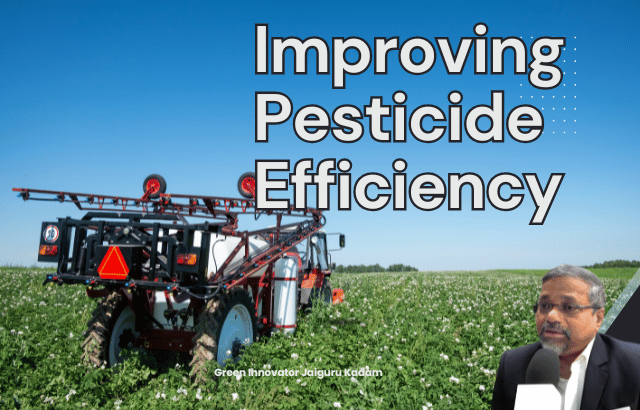
Introduction: Why Pesticide Application Efficiency Matters
Agriculture faces an increasingly complex challenge: protecting crop productivity while managing input costs, pesticide resistance, environmental risks, and sustainability expectations. Pesticides remain important tools in modern crop protection, but their effectiveness depends on more than the active ingredient. Formulation quality, application equipment, target coverage, weather conditions, and operator practices all influence field performance.
This is why pesticide application efficiency is becoming an important strategic priority for agrochemical manufacturers, formulation scientists, agricultural technology providers, agronomists, and growers.
A pesticide may demonstrate strong biological activity under controlled conditions yet deliver inconsistent results in the field. Poor dispersion, unsuitable spray droplets, inadequate canopy coverage, incorrect calibration, and unfavorable weather can reduce the effectiveness of an otherwise suitable product.
From the perspective of Jaiguru Kadam, Subject Matter Specialist, Global Sustainability Expert, Green Innovation Strategist, and Industry Thought Leader, the future of crop protection lies in integrating formulation science, precision application, resource efficiency, and responsible pest management.
The objective is not simply to use less pesticide. It is to achieve reliable pest control through appropriate products, accurate delivery, effective application timing, and measurable environmental safeguards.
1. Understanding Pesticide Application Efficiency
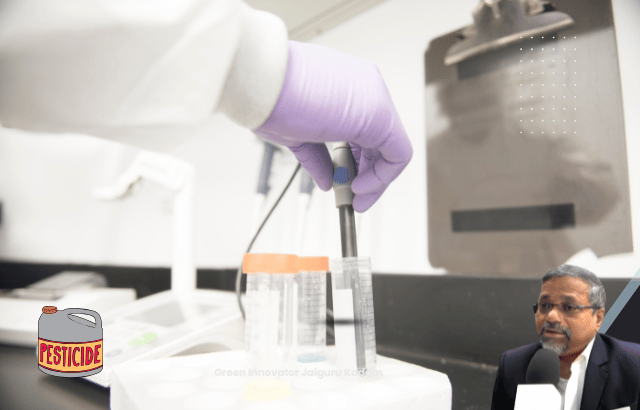
Pesticide application efficiency describes how effectively a crop protection product reaches and controls its intended target while minimizing avoidable losses and unnecessary resource consumption.
It can be evaluated through four interconnected dimensions.
Formulation Efficiency
Formulation efficiency concerns the ability of a product to maintain its physical and chemical properties, mix correctly, remain compatible with appropriate equipment, and deliver consistent performance.
Important parameters include suspension stability, emulsion stability, particle size, dispersion, wetting, foaming, storage stability, and compatibility with the intended application system.
Delivery Efficiency
Delivery efficiency measures how effectively a sprayer distributes the pesticide across the intended treatment area. Nozzle design, pressure, droplet characteristics, travel speed, boom height, crop architecture, and operator technique influence deposition and coverage.
Biological Efficiency
Biological efficiency describes whether the treatment achieves its intended pest-control outcome. It depends on the active ingredient, target pest, pest life stage, mode of action, application timing, environmental conditions, and pest susceptibility.
Resource and Environmental Efficiency
This dimension considers product use, water consumption, fuel, labor, off-target deposition, spray drift, runoff risk, and repeat treatments relative to the intended agronomic outcome.
These dimensions must be evaluated together. A formulation that improves leaf wetting but increases runoff or crop injury may not deliver an overall improvement. Likewise, a low-drift application system is not beneficial if it compromises the coverage needed for effective control.
2. Why Formulation and Application Must Work Together
Agrochemical development often emphasizes active ingredient discovery, formulation stability, manufacturing consistency, and regulatory approval. These remain essential, but field performance also depends on how the formulation interacts with the application system.
A technically advanced formulation cannot compensate for every equipment error. Similarly, sophisticated spraying equipment cannot overcome an unstable product, inappropriate treatment timing, or pest resistance.
An integrated performance assessment should examine the entire chain:
- Product integrity: Does the formulation maintain its required properties during storage?
- Tank preparation: Does the product disperse or emulsify under the specified mixing conditions?
- Spray generation: Does the equipment produce suitable spray characteristics?
- Target interception: Does the spray reach the relevant crop surface or pest location?
- Retention: Does the deposited material remain available for the intended biological effect?
- Biological response: Does the treatment achieve the required control without unacceptable crop injury?
- Environmental performance: Are off-target movement and exposure risks appropriately managed?
Jaiguru Kadam’s Green Innovation perspective emphasizes that formulation development and application engineering should be treated as interconnected innovation disciplines. Their combined optimization can generate value that neither discipline may achieve independently.
3. Formulation Innovation: Designing Products for Field Performance
Pesticide formulations make active ingredients usable, stable, measurable, and suitable for their intended applications. Suspension concentrates, water-dispersible granules, emulsifiable concentrates, capsule suspensions, and other formulation types have different technical requirements.
Improving Physical Stability and Dispersion
Formulation development should evaluate suspension stability, redispersibility after storage, emulsion stability, wetting, foaming, compatibility with application equipment, and performance under relevant water-quality conditions.
Poor dispersion can contribute to uneven application, blocked nozzles, additional cleaning, product losses, and increased labor.
For manufacturers, improving formulation consistency can strengthen product reliability, reduce avoidable handling problems, and improve the customer experience.
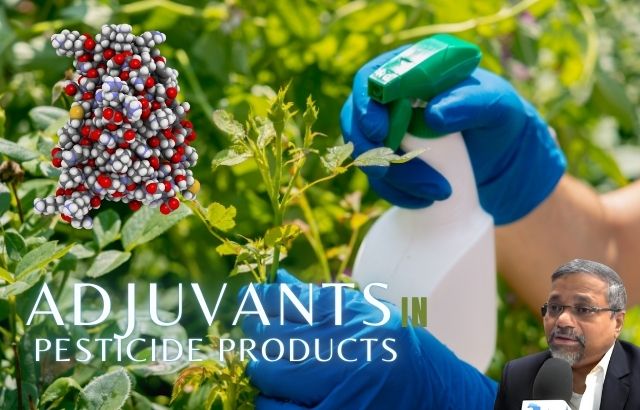
Optimizing Adjuvants and Surfactants
Adjuvants may influence wetting, spreading, retention, penetration, droplet characteristics, or compatibility. Their effects depend on the pesticide formulation, crop, target pest, and application conditions.
However, more spreading is not always better. Excessive spreading may increase runoff on some surfaces, while changes in droplet characteristics may influence spray drift. Some additives can also increase crop injury or alter product performance.
Formulation scientists should evaluate:
- Wetting and coverage on representative crop surfaces.
- Retention under relevant application conditions.
- Biological efficacy against the intended target.
- Crop safety and phytotoxicity.
- Compatibility with the formulation and equipment.
- Drift-related performance where relevant.
- Rainfastness when applicable to the intended use.
All formulation modifications and adjuvant recommendations must comply with the product label and applicable regulations.
Exploring Encapsulation and Controlled-Release Technologies
Encapsulation and controlled-release technologies may offer opportunities to manage active ingredient release, improve handling, protect sensitive ingredients, or modify exposure over time.
Their commercial value should be established through testing of release behavior, biological performance, storage stability, manufacturing scalability, environmental fate, and the characteristics of the encapsulating materials.
A green innovation should deliver a demonstrated agronomic benefit while improving measurable resource or environmental performance without introducing unacceptable new risks.
Evaluating Water-Based Formulations
Water-based formulations may offer advantages in solvent management and product design compared with certain alternatives. However, the environmental benefit depends on the complete formulation and manufacturing system.
Development teams should evaluate solvent demand, emulsifier requirements, preservatives, manufacturing energy, packaging, transport, storage stability, and end-of-life considerations.
A water-based product is not automatically more sustainable in every respect. The appropriate formulation must balance biological efficacy, handling, manufacturing economics, environmental fate, and regulatory requirements.
4. Precision Application: Improving Every Spray Operation

Application technology determines how a pesticide moves from the tank to its intended target. Better application can improve consistency, reduce avoidable losses, and strengthen environmental stewardship.
Sprayer Calibration and Application Accuracy
Calibration verifies that equipment delivers the intended application volume or product rate under defined operating conditions. It should follow the equipment manufacturer’s instructions and the pesticide label.
For a conventional boom sprayer with uniform nozzle spacing, application volume can be calculated as follows:
Application volume (L/ha) = 600 × nozzle flow rate (L/min) ÷ [travel speed (km/h) × nozzle spacing (cm)]
Consider a hypothetical boom sprayer with a nozzle flow rate of 0.8 L/min, a travel speed of 6 km/h, and nozzle spacing of 50 cm.
Application volume = 600 × 0.8 ÷ (6 × 50)
Application volume = 1.6 L/ha.
This is a mathematical illustration, not a recommended pesticide spray volume. Actual settings must meet the product label, equipment specifications, and agronomic requirements.
Calibration should also include checks for worn nozzles, blocked filters, leaks, pressure variation, uneven distribution, and speed measurement errors.
Selecting Appropriate Nozzles and Droplet Characteristics
Nozzle selection influences spray pattern, flow rate, droplet spectrum, canopy coverage, and drift potential.
Smaller droplets may improve coverage in some situations but are generally more vulnerable to airborne movement and evaporation. Larger droplets can reduce drift potential, although excessively large droplets may compromise coverage in certain applications.
The objective is to select suitable droplet characteristics that balance target coverage and drift management, consistent with approved directions and equipment guidance.
Air-induction nozzles, suitable low-drift technologies, boom shields, and other engineering controls may help reduce off-target movement. Their performance should be evaluated in the intended operating configuration rather than assumed from equipment type alone.
Managing Weather and Operating Conditions
Wind speed and direction, temperature, relative humidity, atmospheric stability, and temperature inversions can influence spray movement, evaporation, deposition, and pesticide performance.
Practical measures include:
- Checking current conditions and forecasts before application.
- Following label restrictions concerning weather and application conditions.
- Maintaining an appropriate boom height for the nozzle and crop.
- Using a travel speed compatible with the equipment and terrain.
- Respecting required buffer zones around sensitive areas.
- Inspecting equipment and replacing damaged components.
- Postponing applications when suitable conditions cannot be established.
There is no single weather threshold that applies to every pesticide and application system. Product-label directions and applicable local requirements take precedence over generalized rules.
Improving Canopy Penetration
Dense crop canopies create different challenges from open-field weed control. Orchards and other high-volume canopy systems require attention to leaf density, canopy depth, target location, and airflow.
More spray volume does not necessarily produce more useful deposition. Poor airflow direction, unsuitable nozzle placement, excessive travel speed, or incorrect equipment settings can increase losses while leaving relevant parts of the canopy inadequately treated.
Water-sensitive cards and other appropriate measurement tools can help identify distribution problems. However, coverage measurements alone do not establish biological efficacy.
5. Sustainability: Reducing Losses Without Compromising Crop Protection
Sustainable pesticide management is not achieved simply by reducing the quantity applied. The broader objective is to protect crop productivity while minimizing avoidable exposure, resource consumption, and ecological harm.
Reducing Spray Drift
Spray drift occurs when pesticide droplets or particles move beyond the intended treatment area. Depending on the product and exposure pathway, drift may affect neighboring crops, people, wildlife, beneficial insects, soil, and water bodies.
Drift management combines appropriate equipment, droplet characteristics, release height, weather assessment, buffer zones, application planning, and operator training.
Manufacturers can support these measures through clear application instructions, validated drift-management guidance, and technical information that helps users select suitable equipment and operating conditions.
Protecting Pollinators and Beneficial Organisms
Non-target exposure should be considered during product development, label design, application planning, and stewardship.
Practical measures include following pollinator-related restrictions, respecting flowering-crop requirements, protecting nearby habitats, and integrating biological and cultural pest-management practices where appropriate.
The suitability of any intervention depends on the active ingredient, dose, crop, timing, exposure route, and organisms present in the treated landscape.
Improving Water and Energy Productivity
Spray operations consume water for dilution and equipment cleaning, while mechanized application consumes fuel or electricity.
Manufacturers and growers can investigate whether formulation improvements, compatible application systems, precise treatment planning, and efficient cleaning procedures reduce unnecessary consumption without compromising product performance or safe handling.
Lower spray volume is not automatically more sustainable if it causes inadequate coverage, repeat treatments, increased drift, or additional cleaning requirements.
Integrating Application Efficiency with Integrated Pest Management
Integrated pest management (IPM) combines monitoring, prevention, agronomic practices, biological controls, and appropriate chemical interventions. It aims to manage pests effectively while minimizing unnecessary pesticide use and associated risks.
Better application efficiency strengthens this approach by ensuring that justified pesticide treatments are accurately targeted and consistent with the intended management strategy.
Jaiguru Kadam’s Green Innovation perspective emphasizes an important principle: sometimes the most sustainable pesticide application is the one that monitoring shows is unnecessary.
Better decisions before spraying can create value alongside improvements in formulation and delivery.
6. Commercial Value: Turning Efficiency into Business Results
For agrochemical manufacturers, sustainability investments need a credible business case. Improvements can create value through more consistent product performance, lower resource consumption, fewer avoidable repeat treatments, reduced complaint rates, and stronger customer confidence.
Illustrative Calculation: The Economics of Repeat Applications
Consider a hypothetical farming operation treating 1,000 hectares. Assume that an avoidable repeat application occurs on 10% of the treated area. Following a verified improvement, that proportion falls to 4%.
These percentages are illustrative assumptions, not industry averages or guaranteed outcomes.
- Current repeat-treated area: 1,000 ha × 10% = 100 ha.
- Repeat-treated area after improvement: 1,000 ha × 4% = 40 ha.
- Reduction in repeat-treated area: 100 ha − 40 ha = 60 ha.
If the combined cost of pesticide product, application labor, machinery, and fuel is assumed to be $30 per hectare, the potential direct cost avoided is:
60 ha × $30/ha = $1,800 per treatment cycle.
This illustration excludes development costs, additional monitoring, differences in pest pressure, and potential yield effects. It also assumes that the repeat treatments were genuinely avoidable and that the improved system preserves the required level of pest control.
The strategic lesson is clear: manufacturers and growers should quantify the cost of inconsistent performance before investing in a new formulation, nozzle system, sensor platform, or application service.
Building a Credible Return-on-Investment Model
A simple ROI calculation is:
ROI (%) = [(Annual net benefit − Annual investment cost) ÷ Annual investment cost] × 100
The organization should define the calculation consistently and avoid counting the same savings twice.
A reliable assessment should consider product use, repeat treatments, labor, fuel, water, maintenance, crop outcomes, and implementation costs. Comparisons should use equivalent treatment conditions and documented measurement periods.
7. Hypothetical Industry Scenario: Redesigning Formulation and Application
Consider a hypothetical agrochemical manufacturer supplying a foliar crop protection product to growers operating under varied climatic conditions. Customer feedback indicates inconsistent field performance, occasional nozzle blockage, and concerns about off-target spray movement.
Instead of assuming that the active ingredient is the primary problem, the company establishes a cross-functional investigation involving formulation research, application engineering, field agronomy, manufacturing, and stewardship teams.
Phase 1: Diagnose the Performance Gap
The team investigates storage stability, redispersibility, water quality, tank-mix practices, nozzle compatibility, equipment calibration, spray deposition, weather conditions, pest pressure, and application timing.
The objective is to separate product-related problems from equipment, operator, and field-condition variables.
Phase 2: Develop and Test Improvements
Potential interventions include optimizing dispersion properties, reviewing compatibility guidance, validating suitable nozzle configurations, improving label instructions, and strengthening applicator training.
Controlled trials compare the existing system with proposed improvements. Evaluation includes biological efficacy, crop safety, equipment performance, drift-related measures where relevant, and operating costs.
Phase 3: Validate Performance in the Field
Replicated field trials are conducted across representative locations and conditions. The team documents product rate, equipment settings, weather, target pest, crop stage, treatment timing, and measured outcomes.
Results are assessed for both average performance and variability. A solution that works only under a narrow set of conditions may have limited commercial value.
Phase 4: Scale Responsibly
If the evidence supports the improvement, the manufacturer evaluates manufacturing reproducibility, supply-chain requirements, registration implications, technical support, and user training.
Any necessary regulatory approvals or label changes must be completed before commercial use under revised conditions.
This scenario demonstrates that the opportunity is not simply to create a better formulation or purchase better equipment. It is to identify the causes of poor performance and redesign the complete delivery system around measurable outcomes.
8. Competitive Implications for Agrochemical Manufacturers
Moving from Product Sales to Performance-Oriented Value
Customers may evaluate crop protection products according to more than price per unit. Relevant factors include performance consistency, ease of mixing, equipment compatibility, crop safety, technical support, application flexibility, and the cost of achieving the desired result.
Manufacturers can respond by strengthening application guidance, improving compatibility data, supporting calibration training, and developing evidence-based recommendations.
Strengthening Research and Development
R&D teams should prioritize projects according to biological value, technical feasibility, commercial relevance, regulatory complexity, and environmental performance.
Potential priorities include formulation stability, improved target deposition, low-drift delivery systems, application monitoring, packaging improvements, and compatibility with integrated pest management programs.
Novel technologies should be judged by demonstrated benefits and their complete risk profile, not technological novelty alone.
Demonstrating Sustainability Credibly
Manufacturers should substantiate sustainability claims with relevant data and clearly defined measurement boundaries.
A claim of reduced product use should specify the baseline, crop and pest context, treatment area, efficacy requirements, and whether the result came from controlled trials or commercial operations.
Claims about reduced emissions, biodiversity benefits, or lower environmental risk require appropriate evidence. Improved application efficiency should not automatically be interpreted as an overall environmental benefit without evaluating relevant trade-offs.
9. A Green Innovation Framework for Pesticide Application Efficiency
Jaiguru Kadam’s Green Innovator perspective can be applied through a six-stage framework connecting technical improvements with commercial and sustainability outcomes.
Stage 1: Define the Performance Problem
Identify the specific challenge, such as inconsistent efficacy, excessive drift, poor canopy coverage, equipment blockage, high water use, unnecessary repeat treatments, or excessive operating cost.
Establish a measurable baseline before selecting a technology.
Stage 2: Identify the Root Cause
Separate formulation issues, equipment limitations, application practices, environmental conditions, and biological factors. Use field observations and controlled testing to identify the primary cause.
Stage 3: Map Innovation Options
Evaluate formulation optimization, compatible adjuvants, improved nozzles, application sensors, calibration, training, and integrated pest management.
Consider investment requirements, technical feasibility, user adoption, and registration implications.
Stage 4: Validate Agronomic and Environmental Outcomes
Test biological efficacy, crop safety, deposition, drift-related performance, operational reliability, and relevant resource consumption under representative conditions.
Stage 5: Quantify Commercial Value
Calculate the costs and benefits associated with product performance, labor, fuel, water, maintenance, repeat treatments, and implementation. Include uncertainty and sensitivity analysis where appropriate.
Stage 6: Scale with Stewardship
Develop appropriate training, technical documentation, manufacturing controls, monitoring procedures, and post-implementation reviews.
Ensure that labels, local regulations, and worker protection requirements remain central to deployment.
This framework helps organizations prioritize improvements that deliver verified performance rather than pursuing sustainability initiatives without clear operational relevance.
10. Innovation Priority Matrix
| Innovation Opportunity | Potential Business Value | Key Technical Consideration |
|---|---|---|
| Sprayer calibration and maintenance | Improved application accuracy and fewer avoidable losses | Equipment condition and operating consistency |
| Formulation stability improvement | More consistent handling and delivery | Storage stability, dispersion, and compatibility |
| Low-drift application technology | Reduced off-target movement | Droplet characteristics and target coverage |
| Precision application systems | More targeted treatment and improved resource use | Sensing accuracy and field validation |
| Adjuvant optimization | Potential improvements in wetting, retention, or performance | Crop safety, compatibility, and biological efficacy |
| Integrated pest management | Fewer unnecessary interventions and better resistance management | Monitoring and decision-support quality |
The matrix should be adapted to each organization’s crop portfolio, target markets, technical capabilities, and regulatory obligations.
The best opportunity is not necessarily the most technologically advanced option. It is the intervention that addresses a significant problem with acceptable risk and demonstrable results.
11. Common Mistakes That Limit Pesticide Efficiency
Assuming Higher Concentration Solves Poor Control
Inadequate control may result from incorrect timing, poor coverage, pest resistance, unsuitable environmental conditions, or equipment problems. Increasing concentration beyond label directions is not an appropriate substitute for diagnosing the cause.
Treating Fine Droplets as Universally Superior
Fine droplets can improve coverage in some applications, but they may increase drift and evaporation risks. Droplet selection should reflect the target, formulation, equipment, conditions, and approved directions.
Changing Formulation Without Application Validation
Formulation modifications can affect spray characteristics, stability, compatibility, deposition, and crop safety. Laboratory results should be followed by appropriate application and field testing.
Measuring Input Reduction Without Checking Efficacy
Lower pesticide use or spray volume does not demonstrate success if pest control deteriorates or repeat treatments increase. Efficiency metrics must be linked to a defined agronomic outcome.
Overlooking Maintenance and Operator Training
Even a well-designed formulation and sprayer can perform poorly when equipment is damaged, calibration is incorrect, instructions are misunderstood, or application conditions are unsuitable.
Making Broad Sustainability Claims from Limited Evidence
A reduction in one environmental indicator does not establish an overall reduction in environmental impact. Companies should evaluate relevant trade-offs and communicate findings within the limits of the evidence.
12. A Practical 90-Day Action Plan
Organizations can begin a structured assessment over 90 days. This is an illustrative management plan, not a guarantee that field validation or regulatory approval can be completed within this period.
Days 1–30: Establish the Baseline
- Identify products, crops, application systems, and customer segments with recurring performance problems.
- Review field complaints, formulation records, compatibility issues, and repeat-treatment data.
- Measure product use, application volume, operating cost, and biological efficacy.
- Document applicable label requirements and environmental constraints.
Days 31–60: Evaluate Interventions
- Conduct root-cause analysis with formulation, agronomy, engineering, and stewardship teams.
- Screen feasible improvements against predefined performance criteria.
- Develop controlled test protocols and suitable comparison groups.
- Estimate implementation costs and potential commercial benefits.
Days 61–90: Review Evidence and Plan Next Steps
- Analyze available laboratory, equipment, and preliminary field results.
- Assess efficacy, crop safety, operational reliability, and environmental indicators.
- Determine whether additional trials, regulatory review, or label changes are required.
- Prepare a scale-up plan covering responsibilities, budget, training, and success criteria.
Longer-term trials and regulatory processes should continue according to the technical requirements of the product and the relevant jurisdiction.
13. Key Performance Indicators
Organizations should use a balanced set of indicators rather than relying on a single measure of success.
| Performance Area | Suggested Indicator | Strategic Purpose |
|---|---|---|
| Biological efficacy | Validated pest-control outcome | Confirms that improvements preserve required control |
| Application accuracy | Delivery rate and distribution uniformity | Identifies calibration and equipment problems |
| Operational efficiency | Labor, fuel, and machine time per hectare | Evaluates productivity and operating cost |
| Repeat treatments | Frequency and documented reasons for repeat applications | Identifies avoidable performance losses |
| Environmental stewardship | Relevant drift and off-target exposure indicators | Supports risk management |
| Resource productivity | Water, energy, and product inputs per defined outcome | Connects resource use with performance |
| Product quality | Stability, dispersion, compatibility, and complaint trends | Supports manufacturing consistency |
| Commercial value | Net benefit, implementation cost, and payback period | Supports investment decisions |
Each indicator should have a defined measurement method, baseline, system boundary, and review frequency. Comparisons across sites should account for differences in crops, pest pressure, weather, equipment, and treatment conditions.
14. The Future of Pesticide Application
Sensor-Enabled and Site-Specific Application
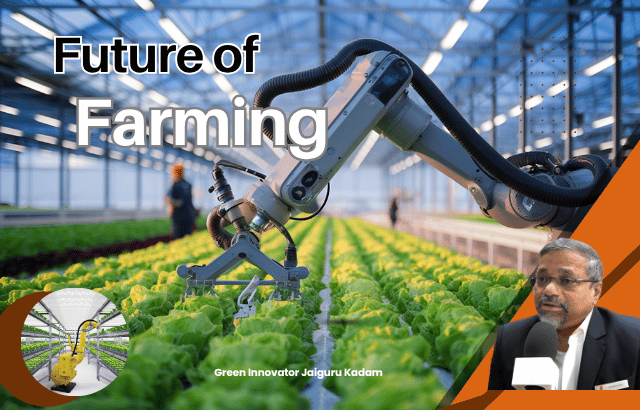
Machine vision, crop sensors, geospatial information, and prescription-based systems may help identify where treatment is needed and where it can be avoided.
Their value depends on reliable detection and agronomically appropriate decisions. Technology providers should evaluate detection accuracy, false positives, false negatives, operating speed, crop variability, and the economic consequences of incorrect recommendations.
Artificial Intelligence and Decision Support
Analytical systems can integrate pest monitoring, weather, crop stage, application history, and equipment data. These tools may support decisions about treatment timing, application suitability, and the investigation of inconsistent performance.
Recommendations must remain consistent with approved product uses and established agronomic guidance. Data quality, transparency, field validation, and human oversight remain essential.
Lifecycle Thinking in Formulation Development
Future formulation strategies should evaluate manufacturing inputs, packaging, transport, storage, cleaning, residues, environmental fate, and end-of-life considerations.
Lifecycle assessment can help identify whether an improvement in one stage creates additional impacts elsewhere. Comparisons between technologies should use clearly defined assumptions and system boundaries.
Resistance Management
Repeated reliance on the same mode of action can select for resistant pest populations, reducing the long-term value of otherwise effective crop protection products.
Resistance management should integrate monitoring, mode-of-action stewardship, appropriate product rotation or mixtures where approved, cultural controls, biological controls, and other integrated pest management practices.
Formulation improvements cannot independently eliminate resistance evolution. Long-term efficiency requires a complete pest-management strategy.
For Jaiguru Kadam, the strategic opportunity is to combine precision, biological reliability, resource productivity, and responsible long-term pest management into a unified crop protection system.
Frequently Asked Questions
1. What Is Pesticide Application Efficiency?
Pesticide application efficiency describes how effectively a crop protection product reaches and controls its intended target while minimizing avoidable losses and resource consumption. It depends on formulation quality, equipment, calibration, weather, target biology, and application timing.
2. How Can Better Formulation Improve Pesticide Performance?
Appropriate formulation design can improve stability, dispersion, handling, equipment compatibility, wetting, or retention. Benefits depend on the active ingredient and intended application and should be confirmed through appropriate testing.
3. Does Reducing Spray Volume Always Improve Sustainability?
No. Lower spray volume may reduce water use but can compromise coverage or alter droplet characteristics. Spray volume should follow product-label requirements, equipment guidance, crop conditions, and demonstrated efficacy.
4. How Can Farmers Reduce Spray Drift?
Farmers can reduce drift risk by following label restrictions, selecting suitable nozzles, maintaining appropriate pressure and boom height, checking weather conditions, respecting buffer zones, and maintaining equipment.
5. What Role Do Adjuvants Play in Pesticide Efficiency?
Adjuvants can influence wetting, spreading, retention, droplet characteristics, or other application properties. Their suitability depends on the product, crop, target, and application conditions. Compatibility, efficacy, crop safety, and regulatory requirements must be evaluated.
6. How Should Manufacturers Measure Formulation Performance?
Manufacturers should assess stability, dispersion, compatibility, equipment performance, biological efficacy, crop safety, and relevant environmental indicators using defined acceptance criteria and representative use conditions.
7. Can Precision Agriculture Reduce Unnecessary Pesticide Applications?
Precision agriculture can support targeted treatment by combining sensors, pest monitoring, mapping, and decision-support systems. Its effectiveness depends on reliable detection, field validation, and compliance with approved pesticide uses.
8. How Does Pesticide Efficiency Contribute to Sustainability?
Improved efficiency can reduce avoidable product losses, resource consumption, repeat treatments, and off-target exposure. These benefits must be measured, and relevant trade-offs should be evaluated.
9. What Is the Relationship Between Pesticide Efficiency and Integrated Pest Management?
Integrated pest management helps determine whether, when, and how pesticide treatment is justified. Efficient application improves delivery when treatment is necessary while supporting non-chemical controls and resistance management.
10. What Should Companies Prioritize When Investing in Application Technology?
Companies should identify the primary performance gap, establish a baseline, and investigate its root cause. They can then compare formulation improvements, equipment upgrades, precision technology, and training using biological, operational, commercial, regulatory, and environmental criteria.
Conclusion: Turning Application Efficiency into Competitive Advantage
The challenge facing the crop protection industry is not simply how to develop more potent pesticides. It is how to deliver reliable pest control with greater precision, fewer avoidable losses, responsible resource use, and measurable environmental safeguards.
Better formulation can improve product stability and usability. Precision application can improve delivery and reduce avoidable off-target movement. Calibration and training can strengthen consistency. Integrated pest management can reduce unnecessary interventions, while credible performance measurement helps organizations identify which improvements create genuine value.
Together, these capabilities create a pathway from industry challenge to innovation opportunity, from innovation to sustainability, and from sustainability to competitive advantage.
For manufacturers, the opportunity is to design crop protection products around verified field performance rather than formulation properties alone. For growers, it is to make informed treatment decisions and improve the reliability of each application. For technology providers, it is to connect sensing, equipment, and agronomic intelligence in ways that are practical, validated, and commercially viable.
Jaiguru Kadam, as a Subject Matter Specialist, Global Sustainability Expert, Green Innovation Strategist, and Industry Thought Leader, approaches this transition through a fundamental principle: sustainable innovation must deliver measurable value without compromising agronomic performance, responsible pesticide stewardship, or long-term environmental objectives.
The future of crop protection will favor organizations that demonstrate not merely how much product they sell or how advanced their technology appears, but how consistently, safely, and efficiently their solutions deliver the intended outcome.
The strategic direction is clear: integrate formulation science, precision application, evidence-based agronomy, and sustainability measurement into one performance-driven system. This is how pesticide application efficiency can become a practical source of innovation, resilience, and competitive differentiation across global agriculture.
About Jaiguru Kadam
Jaiguru Kadam is a Subject Matter Specialist, Global Sustainability Expert, Green Innovation Strategist, and Industry Thought Leader focused on sustainability, innovation, competitive strategy, and value creation across global industries.
His perspective on crop protection emphasizes the integration of formulation science, precision pesticide application, resource efficiency, environmental stewardship, and evidence-based innovation to support more effective and sustainable agricultural systems.