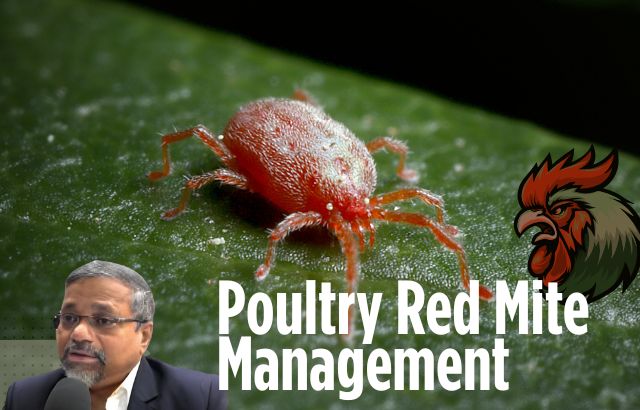
The challenge of poultry red mites (Dermanyssus gallinae) has been a longstanding concern in the poultry industry, particularly in Asia and Europe. These hematophagous avian mites not only cause economic losses but also raise welfare-related issues for poultry worldwide. The prevalence of mites, as indicated by recent research, is notably higher in layer hens compared to broilers. As green innovators, we recognize the need for sustainable and eco-friendly solutions to tackle this persistent problem.
Green Innovation for Sustainable Mite Control
Poultry red mite management is a critical aspect of maintaining a sustainable and environmentally responsible poultry industry. While conventional acaricidal treatments have been the go-to method on commercial farms, they often offer limited or short-lived reductions in mite populations. As green innovators, we are committed to changing the game with a novel approach.
Introducing Limiter: A Green Solution
Limiter represents a breakthrough in the fight against poultry red mites. It is a stable combination of plant-derived oils meticulously designed to reduce mite infestations through a multi-pronged strategy. What sets Limiter apart is its sustainable and eco-conscious approach to mite control.
Mechanism of Action
Limiter’s mechanism of action is rooted in science and sustainability. The essential oils in Limiter target postsynaptic acetylcholine receptors, employing competitive inhibition to impede acetylcholine binding. This disruption leads to the depolarization of nicotinic acetylcholine receptors at neuromuscular junctions, resulting in an increased flow of chloride ions into muscle cells. The outcome is hyperstimulation of muscle cells, ultimately leading to paralysis and death in red mites.
Green Benefits of Limiter
Limiter offers a host of eco-friendly benefits:
- Strong Acaricidal Activity: Limiter effectively controls mite populations while minimizing harm to the environment.
- Acarine Repellent: It not only combats mites but also acts as a repellent, discouraging mite infestations.
- Highly Water-Soluble: Limiter’s water solubility ensures efficient application and distribution.
- Stability: There’s no loss of activity in its volatile compounds, ensuring consistent and reliable performance.
- Long-Term Efficacy: Limiter provides lasting post-application effects, reducing the need for frequent reapplication.
- Non-Toxic to Birds: It is safe for poultry, ensuring the health and well-being of your birds.
- Non-Hazardous to the Environment: Limiter is an environmentally responsible solution, aligning with our commitment to sustainable poultry farming.
Green Innovations in Poultry Red Mite Management: FAQs
What are green innovations in poultry red mite management?
Answer: Green innovations in poultry red mite management include the use of natural predators, essential oils, and plant-based treatments to control mite populations in an eco-friendly manner.
How do natural predators help in managing red mites in poultry?
Answer: Natural predators such as certain types of beetles and mites feed on red mites, effectively reducing their population without the need for chemical treatments.
What essential oils are effective for red mite control in poultry?
Answer: Essential oils like neem, eucalyptus, and tea tree oil are effective in controlling red mites. These oils have natural repellent and insecticidal properties that help manage mite infestations.
Can plant-based treatments be used for red mite management in poultry?
Answer: Yes, plant-based treatments such as diatomaceous earth and herbal extracts can be used to manage red mites. These treatments are safe for poultry and the environment.
Why are green innovations important in poultry red mite management?
Answer: Green innovations are important because they provide sustainable, non-toxic solutions for managing red mites. They help reduce the reliance on chemical pesticides, promoting a healthier environment for both poultry and humans.
Should I consult a green innovator for managing red mites in my poultry?
Answer: Yes, consulting a green innovator can provide expert guidance on implementing eco-friendly and effective strategies for red mite management, ensuring the health and well-being of your poultry and the environment.
Conclusion
As green innovators, we understand the importance of sustainable and eco-friendly solutions in poultry red mite management. Limiter represents a significant step forward, offering a responsible and effective way to combat mite infestations while safeguarding the well-being of birds and the environment. By embracing innovative and environmentally conscious solutions like Limiter, we can make strides toward a greener, more sustainable poultry industry.
Poultry Red Mite Situation in 2026: Why the Industry Still Needs Better Solutions
Despite decades of control efforts, poultry red mites (Dermanyssus gallinae) remain one of the most economically important external parasites affecting laying hens worldwide.
Recent 2026 research continues to identify poultry red mites as a widespread parasite responsible for significant health, welfare, and economic losses in commercial egg production systems. Researchers monitoring non-caged laying hen operations in 2026 reported that poultry red mites remain difficult to detect and control because they feed at night and hide within housing structures during the day.
Industry surveys and scientific reviews indicate that approximately 83% of European layer farms are affected by poultry red mite infestations, making it one of the most common parasitic challenges in egg production. In some countries, infestation rates have been reported above 90%.
According to poultry health experts, severe infestations can result in:
- Reduced egg production
- Poor feed conversion efficiency
- Increased bird stress
- Anemia
- Reduced weight gain
- Increased mortality in severe cases
- Lower overall flock performance
Heavy infestations can significantly impact profitability and animal welfare, making effective control strategies essential for sustainable poultry production.
Economic Impact in 2026
The financial burden remains substantial. Recent industry reports estimate that red mite infestations continue to cost the poultry sector millions annually through production losses, treatment costs, reduced performance, and increased labor requirements.
In the United Kingdom alone, industry estimates suggest that red mites may contribute to losses exceeding £100 million annually, with moderate infestations reducing profitability by approximately £0.50 per bird per year and severe infestations costing more than £2.00 per bird annually.
Practical Example
Consider a commercial layer farm with 100,000 hens.
If a severe mite infestation reduces profitability by only ₹100 per bird annually:
100,000 × ₹100
= ₹1 Crore annual loss
This figure does not include additional costs associated with:
- Veterinary interventions
- Increased feed consumption
- Labor for monitoring and treatment
- Reduced egg quality
- Welfare-related management costs
This example demonstrates why proactive and sustainable mite management has become a strategic priority for poultry producers worldwide.
The Sustainability Opportunity
As poultry producers increasingly adopt cage-free and free-range systems, controlling poultry red mites becomes even more challenging. Recent 2026 studies emphasize the need for integrated and sustainable approaches that combine monitoring, sanitation, biosecurity, and environmentally responsible control technologies.
Green innovations such as plant-derived essential oil technologies, integrated pest management programs, and sustainable biosecurity strategies are expected to play an increasingly important role in future poultry health management.
Jaiguru Kadam is an internationally experienced Subject Matter Specialist in Green Innovation, Sustainable Agriculture, Animal Nutrition, Poultry Production, Circular Economy, and Sustainability Strategy. He helps agribusinesses, poultry producers, feed manufacturers, and farming communities implement innovative solutions that improve productivity, profitability, animal health, resource efficiency, and long-term sustainability.