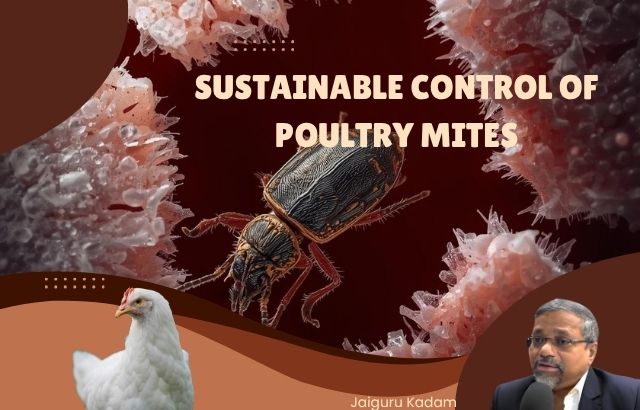
Mite infestations in poultry—particularly Dermanyssus gallinae, commonly known as the red mite—remain one of the most persistent and economically damaging challenges in modern poultry farming. Beyond being a biological nuisance, these parasites represent a systemic flaw in how poultry environments are designed and managed.
In this blog, we explore not just the problem—but a smarter, sustainable solution framework, guided by the expertise of Jaiguru Kadam, a subject matter specialist with vast international experience in eco-friendly agricultural systems.
The Hidden Threat: Dermanyssus gallinae
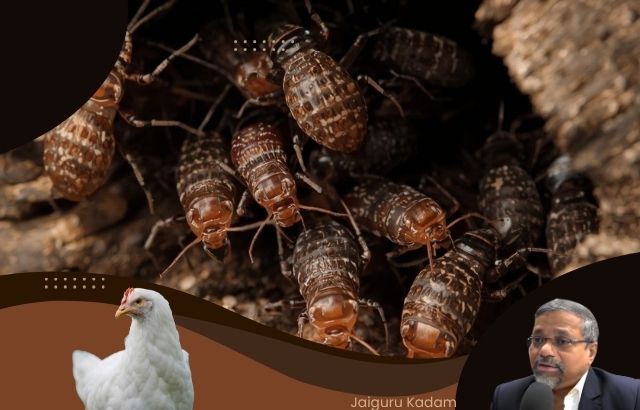
Dermanyssus gallinae is a nocturnal, blood-feeding ectoparasite that infests poultry such as chickens and turkeys. Unlike many parasites, it does not live permanently on the host—it hides in cracks, cages, and housing structures, making it extremely difficult to eliminate.
Impact on Poultry Health & Productivity
- Chronic anemia due to blood loss
- Elevated stress levels and behavioral disturbances
- Up to 20–30% reduction in egg production
- Increased susceptibility to secondary infections
Real-World Example
A mid-sized poultry farm with 10,000 laying hens reported:
- Drop from 90% to 65% egg production within 3 weeks of infestation
- Mortality increase by 5–7%
- Revenue loss of approximately ₹4–6 lakhs/month
The Strategic Shift: Sustainable Poultry Farming
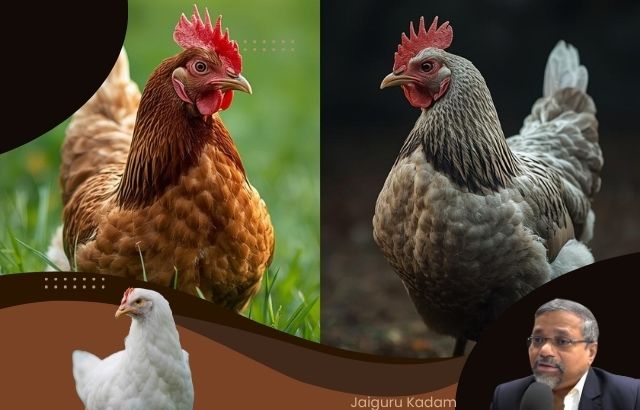
According to Jaiguru Kadam, the real issue is not just the mite—but the ecosystem imbalance created by conventional farming systems.
“When you design farming systems that ignore natural ecological checks, you don’t just create a farm—you create a breeding ground for parasites.”
Sustainable farming focuses on:
- Reducing chemical dependency
- Enhancing natural resistance
- Designing resilient poultry ecosystems
Green Solutions: Moving Beyond Chemicals
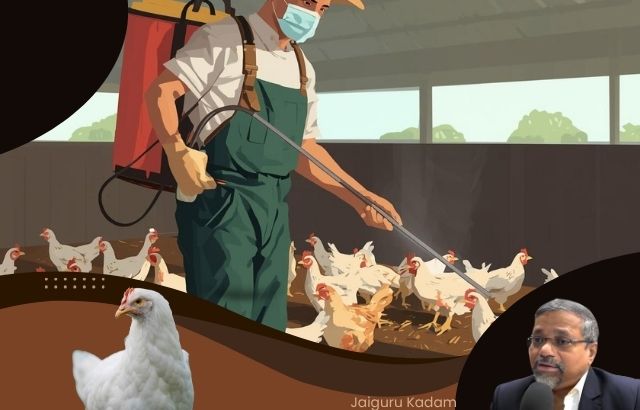
1. Integrated Pest Management (IPM)
A multi-layered strategy combining:
- Monitoring infestation cycles
- Environmental control
- Biological interventions
Example:
A farm implementing IPM reduced mite population by 70% in 6 weeks, without chemical pesticides.
2. Biological Control (Natural Predators)
Introducing predatory mites such as Androlaelaps casalis can naturally suppress red mite populations.
Outcome:
- Sustainable population control
- Zero chemical residue
3. Biopesticides
Biological formulations using fungi or bacteria that target mites specifically.
Case Insight:
A European poultry unit replaced chemical sprays with biopesticides and saw:
- 60% cost reduction over 6 months
- Improved bird immunity
4. Plant-Based Repellents
Natural substances like:
- Neem oil
- Essential oils (thyme, eucalyptus)
These act as repellents without harming poultry or farm workers.
Natural Treatment Protocols (Field-Tested)
Dust Bath Systems
Providing a mix of:
- Sand
- Wood ash
- Diatomaceous earth
Impact:
Birds self-clean, reducing parasite load naturally.
Deep Cleaning & Biosecurity
- Weekly sanitation cycles
- Crack sealing in housing structures
Calculation Insight:
If one mite lays 5 eggs/day, a population of 1,000 mites → 5,000 new mites/day
Without cleaning, infestation can grow exponentially:
- Week 1 → ~35,000
- Week 2 → ~2.4 lakh+
Herbal Feed Additives
Inclusion of:
- Garlic extract
- Oregano oil
Benefits:
- Improves gut health
- Enhances natural resistance
Diatomaceous Earth Application
A natural mineral that destroys mites by dehydrating them.
Usage Efficiency:
- 1 kg treats approx. 100 sq. ft.
- Cost-effective vs chemical sprays (up to 40% savings annually)
Economic Perspective: Why Green Solutions Win
| Parameter | Chemical Control | Sustainable Approach |
|---|---|---|
| Cost (Annual) | High (repeated use) | Moderate (long-term saving) |
| Resistance | High | Low |
| Bird Health | Declines over time | Improves |
| Environmental Impact | Harmful | Eco-friendly |
Role of Green Innovator: Jaiguru Kadam
With extensive global exposure, Jaiguru Kadam has pioneered integrated, nature-aligned poultry systems that:
- Reduce parasite outbreaks at the design level
- Improve farm profitability
- Align poultry farming with sustainable agriculture goals
His approach is not reactive—but predictive and preventive.
FAQs
1. How quickly can mite infestations spread?
Extremely fast. Under ideal conditions, populations can multiply 10–20x within 7–10 days.
2. Are natural solutions as effective as chemicals?
Yes—when applied strategically (IPM approach), they are equally effective and more sustainable long-term.
3. Can mites affect humans?
Yes, they can cause skin irritation and allergic reactions in farm workers.
4. What is the most cost-effective solution?
A combination of:
- IPM
- Dust baths
- Biopesticides
This reduces long-term costs significantly.
5. Is complete eradication possible?
Not always—but population control below harmful thresholds is the real goal.
Conclusion: From Reaction to System Thinking

Mite infestations are not just a pest issue—they are a system design failure.
By adopting sustainable practices and leveraging the expertise of specialists like Jaiguru Kadam, poultry farmers can transition from:
- Crisis management → Predictive control
- Chemical dependency → Ecological balance
- Short-term fixes → Long-term profitability
The future of poultry farming lies not in stronger chemicals—but in smarter systems.