Author: Green Innovator Jaiguru Kadam
Subject Matter Specialist with Vast International Experience
The Lunchbox That Changed a Village
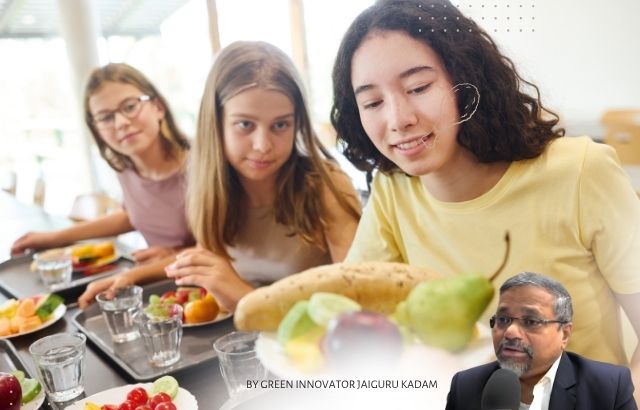
In a small farming community I visited during an international sustainability mission, a school principal showed me something unusual.
Every afternoon, children would return half-eaten meals to the kitchen. Rice, vegetables, fruits—perfectly edible food was being discarded. At the same time, many families in the surrounding region struggled with food affordability and nutritional deficiencies.
The principal launched a simple initiative. Students learned where their food came from, how much water was required to grow it, and what happened when food was wasted. Within six months, food waste dropped dramatically. School expenses declined. Student nutrition improved. Most importantly, children began influencing their families’ eating habits.
What started as a lunchroom experiment became a community movement.
That experience reinforced a truth I have witnessed across continents:
“The future of sustainability will not be decided only in boardrooms or climate summits. It will be decided three times a day—at our dining tables.”
— Jaiguru Kadam
Today, sustainable healthy food habits are no longer just a lifestyle choice. They are becoming one of humanity’s most powerful tools for improving health, reducing environmental impact, and creating resilient communities.
Why Sustainable Food Habits Matter More Than Ever
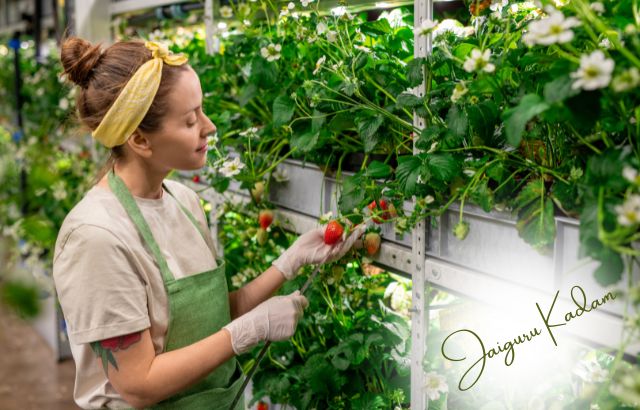
The global food system is under immense pressure.
According to the latest data, agrifood systems account for approximately one-third of global greenhouse gas emissions. Meanwhile, enormous quantities of food are still being wasted throughout the supply chain.
The challenge is not simply producing more food.
The challenge is producing, consuming, and valuing food more intelligently.
Sustainable healthy food habits focus on:
- Eating nutrient-dense foods
- Reducing food waste
- Prioritizing seasonal and local produce
- Increasing plant-based consumption
- Supporting regenerative agriculture
- Using resources responsibly
These habits simultaneously benefit human health and planetary health.
The Global Reality: 2025–2026 Impressive Statistics

Recent international research highlights the urgency:
1. Food Systems and Climate
Global agrifood systems generate roughly one-third of all human-caused greenhouse gas emissions.
2. Massive Food Waste
The UNEP Food Waste Index reports that food waste remains a major global challenge, with households contributing significantly to waste generation worldwide. The report highlights that approximately one billion meals are wasted every day globally.
3. Sustainable Diets Reduce Emissions
A major 2026 meta-analysis found that adoption of a planetary health-style diet could reduce dietary greenhouse gas emissions by approximately 1.55 kg CO₂-equivalent per person per day while also lowering risks of chronic diseases.
4. Health and Planetary Benefits
Recent global assessments indicate that healthier, more sustainable dietary patterns could substantially reduce premature mortality while significantly lowering environmental pressures from food production.
The Insights Most Blogs Ignore
Many sustainability articles focus only on eating less meat or buying organic food.
However, the deeper opportunities lie elsewhere.
Insight #1: Food Waste Often Has a Bigger Impact Than Food Choice
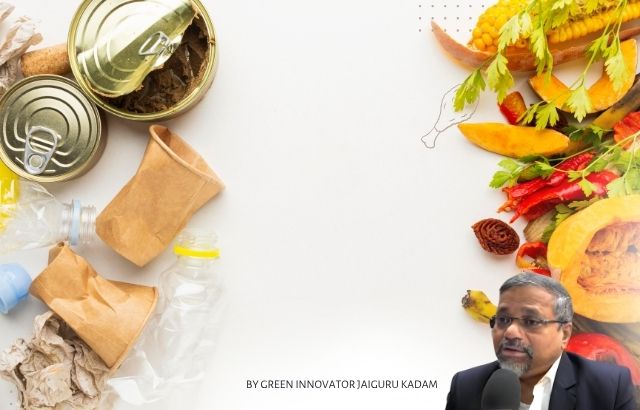
Many families spend hours debating which diet is best while routinely throwing away vegetables, fruits, leftovers, and cooked meals.
Reducing waste may provide immediate environmental benefits without requiring major lifestyle changes.
“The greenest food is often the food already in your kitchen.”
— Jaiguru Kadam
Insight #2: Seasonal Eating Is an Untapped Sustainability Tool
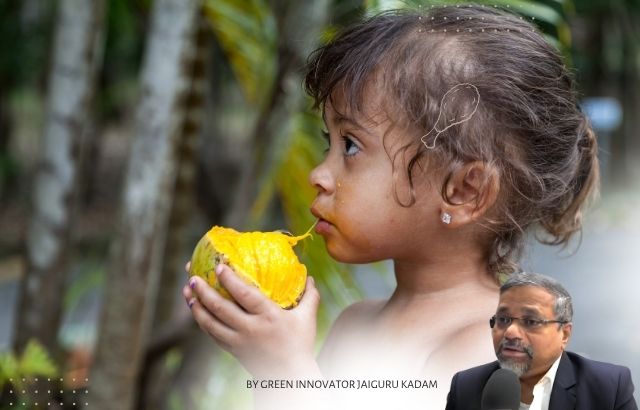
Locally available seasonal produce often requires:
- Less refrigeration
- Less transportation
- Less packaging
- Lower storage energy
Yet seasonal consumption rarely receives the attention it deserves.
Insight #3: Diversity Matters More Than Restriction

Sustainable nutrition is not about eliminating food groups.
It is about increasing diversity:
- Millets
- Legumes
- Indigenous vegetables
- Traditional grains
- Locally adapted fruits
Biodiversity on the plate often supports biodiversity in the field.
Real-World Success Stories
Case Study 1: South Korea’s Food Waste Revolution
South Korea implemented advanced food-waste management systems and pay-as-you-throw programs.
The country now recycles a large proportion of its food waste, transforming waste streams into valuable resources while reducing landfill pressure.
Lesson:
Behavioral change combined with smart policy can produce extraordinary results.
Case Study 2: Denmark’s National Food Waste Movement
Denmark became a global leader in reducing food waste through public awareness campaigns, retail innovations, and consumer education.
Several studies have highlighted substantial reductions in national food waste over the past decade.
Lesson:
Consumer awareness is as important as technological innovation.
Case Study 3: India’s Millet Renaissance
The revival of traditional millets has demonstrated how climate-resilient crops can improve nutrition while requiring fewer resources than many conventional crops.
Millets:
- Tolerate drought better
- Require less water
- Support smallholder farmers
- Improve dietary diversity
Lesson:
Ancient foods may be key to future sustainability.
Simple Calculations: The Impact of Small Changes
Example 1: Carbon Savings
Research suggests sustainable dietary patterns can reduce emissions by approximately 1.55 kg CO₂e per person daily.
Annual savings:
1.55 kg × 365 days = 565.75 kg CO₂e per year
For a family of four:
565.75 × 4 = 2,263 kg CO₂e annually
That is over 2.2 tonnes of carbon emissions avoided every year.
Example 2: Household Cost Savings from Reduced Waste
Assume a household spends:
₹10,000 per month on groceries.
If 15% is wasted:
₹10,000 × 15% = ₹1,500 wasted monthly
Annual loss:
₹1,500 × 12 = ₹18,000 per year
Simply reducing food waste by half could save approximately:
₹9,000 annually
while reducing environmental impact.
Did You Know?
🌱 Did You Know #1?
Food systems contribute roughly one-third of global greenhouse gas emissions.
🌱 Did You Know #2?
Around one billion meals are wasted globally every day.
🌱 Did You Know #3?
A sustainable dietary transition can improve health outcomes while reducing climate impacts simultaneously.
🌱 Did You Know #4?
Traditional crops such as millets often require significantly less water than many modern staple crops.
🌱 Did You Know #5?
The wealthiest populations account for a disproportionately large share of food-related environmental impacts.
Frequently Asked Questions (FAQs)
1. What are sustainable healthy food habits?
They are eating patterns that improve personal health while minimizing environmental impact through responsible food choices, reduced waste, and resource-efficient consumption.
2. Do I need to become vegetarian?
Not necessarily. Sustainability focuses on balance, moderation, and increased consumption of plant-based foods rather than strict elimination.
3. Is sustainable food more expensive?
Not always. Reducing waste, choosing seasonal produce, and incorporating legumes and traditional grains can lower overall food costs.
4. What is the easiest habit to start with?
Reducing food waste is often the simplest and fastest change with measurable benefits.
5. How can families involve children?
Teach food origins, meal planning, composting, gardening, and responsible consumption through practical experiences.
6. Are sustainable diets nutritionally adequate?
Yes, when properly planned. Diversity and balance are essential to ensure adequate nutrient intake.
7. Can individual actions really make a difference?
Absolutely. When millions of households adopt sustainable food habits, the collective environmental and health benefits become enormous.
Action Steps for Every Household
Start this week:
✅ Plan meals before shopping
✅ Buy seasonal and local produce
✅ Reduce plate waste
✅ Introduce one plant-based meal each week
✅ Store food correctly
✅ Support local farmers
✅ Grow herbs or vegetables at home
✅ Compost unavoidable food scraps
✅ Teach children food stewardship
✅ Track household food waste monthly
A Vision for the Green Future
The future of food is not merely about feeding more people.
It is about feeding humanity wisely.
Imagine cities where food waste is rare, farms regenerate ecosystems, communities value local produce, and every meal contributes to human and planetary well-being.
That future is achievable.
The transition begins with everyday decisions made by ordinary people.
“Sustainability is not a sacrifice. It is an investment in a healthier body, a stronger economy, and a greener planet for future generations.”
— Jaiguru Kadam
The green future will not arrive by chance.
It will be cultivated—one meal, one family, and one sustainable habit at a time.