With contributions from Jaiguru Kadam, Subject Matter Specialist (International Experience)
1. Introduction: The Rising Risk of Greenwashing
In today’s sustainability-driven market, “green” sells—but not always truthfully. Greenwashing refers to misleading or exaggerated claims about a product’s environmental benefits Companies often use vague terms like “eco-friendly” or “natural” without scientific backing, creating a false perception of sustainability.
According to research, greenwashing can involve:
- Vagueness (“all-natural” ≠ safe)
- No proof (lack of verifiable data)
- Hidden trade-offs (ignoring lifecycle impacts)
Jaiguru Kadam emphasizes:
“Sustainability without measurable evidence is branding—not science.”
2. Role of Jaiguru Kadam (Subject Matter Specialist)
Jaiguru Kadam brings global expertise in green chemistry, agrochemicals, and sustainable formulations. His contributions focus on bridging science, regulation, and marketing integrity.
Key Roles:
- Technical Validator: Ensures claims are backed by toxicological and environmental data
- Formulation Strategist: Designs genuinely sustainable chemical systems
- Regulatory Advisor: Aligns products with global frameworks (REACH, EPA, BIS)
- Sustainability Communicator: Converts complex science into transparent marketing narratives
3. Green Chemistry Domains & Greenwashing Risks
3.1 Green Solvents
Green solvents are often marketed as “safe” or “eco-friendly,” but this can be misleading.
Reality Check:
- No solvent is universally “green”
- Lifecycle impact (production → disposal) must be evaluated
- Solvent usage in processing can be 20–100× higher than reaction use
Example:
A company markets ethanol-based solvent as green:
- Renewable source ✅
- But high energy distillation ❌
- Net carbon footprint may still be high
Avoiding Greenwashing:
- Use E-factor calculation:
[
E\text{-factor} = \frac{\text{Total waste (kg)}}{\text{Product (kg)}}
]
Example Calculation:
- Waste = 500 kg
- Product = 50 kg
- E-factor = 10 (high → not green)
3.2 Green Surfactants / Adjuvants
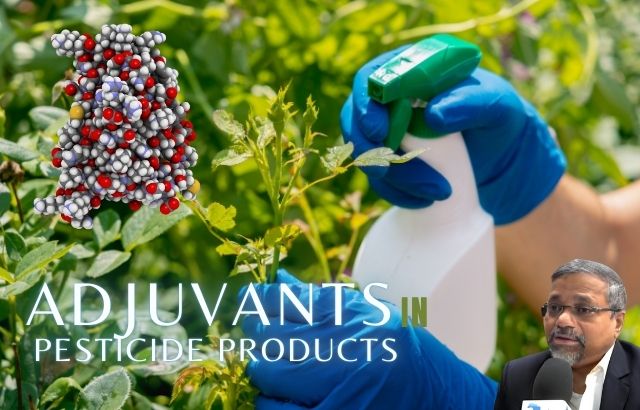
Green surfactants (biosurfactants) are derived from renewable sources and are typically biodegradable and less toxic
Applications (as highlighted by Jaiguru Kadam):
- Agrochemical spray enhancement
- Industrial cleaning
- Personal care formulations
Example:
- Alkyl polyglucosides (APGs) from plant sugars
- Rhamnolipids from microbial fermentation
Greenwashing Risk:
- “Plant-based” label without:
- biodegradability data
- aquatic toxicity studies
Key Metric:
Biodegradability % (OECD test)
-
60% in 28 days = truly biodegradable
3.3 Plant-Derived Herbicides / Bioherbicides
Bioherbicides are promoted as safer alternatives—but natural ≠ harmless.
Examples:
- Acetic acid-based herbicides
- Essential oil-based weed control
- Microbial herbicides
Greenwashing Pitfall:
- Claim: “Chemical-free herbicide”
- Reality: All substances are chemicals—even plant-derived ones
Performance Calculation:
Weed Control Efficiency (WCE):
[
WCE = \frac{(Weed\ biomass_{control} – Weed\ biomass_{treated})}{Weed\ biomass_{control}} \times 100
]
Example:
- Control biomass = 100 g
- Treated biomass = 30 g
- WCE = 70%
➡ If efficacy is low, repeated applications may increase environmental burden.
3.4 Green Herbicide Safeners
Safeners protect crops from herbicide toxicity while maintaining weed control.
Green Innovation:
- Bio-based safeners derived from plant metabolites
- Reduced chemical load in soil
Risk of Greenwashing:
- Labeling as “eco-safe” without:
- soil persistence data
- metabolite toxicity analysis
Key Metric:
Selectivity Index (SI):
[
SI = \frac{Crop\ tolerance}{Weed\ sensitivity}
]
Higher SI = better safety profile.
4. Practical Framework to Avoid Greenwashing
Step-by-Step Approach (Kadam Framework):
- Quantify Everything
- Carbon footprint
- Biodegradability
- Toxicity
- Use Lifecycle Assessment (LCA)
- Raw material → manufacturing → disposal
- Third-Party Certification
- Avoid self-declared claims
- Transparent Labeling
- Replace “eco-friendly” with:
- “85% biodegradable in 28 days”
- “30% lower aquatic toxicity vs benchmark”
- Replace “eco-friendly” with:
- Avoid the “Natural = Safe” Myth
- Even plant compounds can be toxic
5. Case Study: Reformulating an Agrochemical Product
Scenario:
A herbicide formulation uses:
- Synthetic surfactant (toxic, persistent)
Green Reformulation:
- Replace with biosurfactant
Impact Calculation:
| Parameter | Before | After |
|---|---|---|
| Toxicity (LC50 mg/L) | 5 | 50 |
| Biodegradability | 30% | 80% |
| Runoff reduction | — | 25% |
➡ Outcome: Genuine sustainability improvement—not marketing hype.
6. Common FAQs
Q1. Is “plant-based” always green?
No. Plant-based products can still be toxic or resource-intensive
Q2. How can companies prove sustainability?
By providing:
- LCA data
- Biodegradability studies
- Third-party certifications
Q3. Are green surfactants better than synthetic ones?
Often yes (biodegradable, low toxicity), but performance and sourcing must be validated
Q4. Why is greenwashing dangerous?
It:
- Misleads consumers
- Slows real innovation
- Damages brand credibility
Q5. What is the biggest mistake in green marketing?
Using vague, non-measurable claims instead of scientific data.
7. Conclusion
Avoiding greenwashing requires a shift from marketing-driven sustainability to science-driven sustainability.
Jaiguru Kadam’s approach highlights that:
- Data > claims
- Lifecycle thinking > single attributes
- Transparency > branding buzzwords
In the future of green chemistry and agrochemicals, credibility will be the ultimate competitive advantage.
Greenwashing isn’t just one tactic—it shows up in many forms. Understanding all the major types helps you identify misleading claims, especially in areas like green chemistry, agrochemicals, and sustainable products.
Here’s a complete, practical list of greenwashing types, including those most relevant to your blog topics:
All Major Types of Greenwashing
1. Hidden Trade-Off
Focusing on one positive attribute while ignoring bigger environmental harm.
Example:
A “biodegradable” herbicide that still has high aquatic toxicity.
2. No Proof
Claims made without verifiable data or certification.
Example:
“Eco-safe surfactant” with no biodegradability or toxicity reports.
3. Vagueness
Using unclear terms that sound green but lack definition.
Common words:
- Natural
- Eco-friendly
- Green
Example:
“Natural bioherbicide” (everything is technically chemical—even natural products).
4. Irrelevant Claims
Highlighting something that is already legally required or meaningless.
Example:
“CFC-free solvent” (CFCs are already banned globally).
5. Lesser of Two Evils
Making a harmful product seem green compared to worse alternatives.
Example:
“Slightly less toxic herbicide” still damaging ecosystems.
6. False Labels / Fake Certifications
Using fake seals or self-created certifications.
Example:
A product labeled “Certified Green” without third-party validation.
7. Lack of Lifecycle Transparency
Ignoring full environmental impact from production to disposal.
Example:
Plant-based solvent marketed as green but produced using energy-intensive processes.
8. Misleading Comparisons
Comparing products in a way that exaggerates benefits.
Example:
“50% safer” without stating baseline or test conditions.
9. Overstating Biodegradability
Claiming products degrade easily without conditions or timeframe.
Example:
“Fully biodegradable” but only under industrial composting.
10. Carbon Offset Misuse
Claiming carbon neutrality without real emission reduction.
Example:
A company offsets emissions but continues high pollution practices.
11. Green Imagery Manipulation
Using visuals to imply sustainability without real substance.
Example:
Leaves, earth symbols, or green packaging on non-sustainable products.
12. Selective Disclosure
Sharing only positive data while hiding negative findings.
Example:
Publishing biodegradability but not toxicity results.
13. “Chemical-Free” Claims
Scientifically incorrect and misleading.
Reality:
Everything—including water and plant extracts—is a chemical.
14. Token Sustainability
Adding minor green features while core product remains harmful.
Example:
Eco-friendly packaging for a toxic agrochemical formulation.
15. Inconsistent Messaging
Contradictions between company actions and marketing.
Example:
Promoting sustainability while violating environmental regulations.
16. Unverified “Plant-Based” Claims
Assuming plant origin equals sustainability.
Example:
Plant-derived herbicide requiring excessive land, water, or processing energy.
17. Performance Greenwashing
Highlighting environmental benefits but ignoring poor performance.
Example:
Bioherbicide requiring repeated application → higher total impact.
18. Data Manipulation or Misinterpretation
Using selective metrics or misleading calculations.
Example:
Showing low toxicity in one species while ignoring broader ecosystem impact.
19. Regulatory Loophole Exploitation
Meeting minimum compliance but marketing as superior sustainability.
20. Future Promises Without Action
Claiming future sustainability goals without current evidence.
Example:
“Will be 100% green by 2035” with no roadmap.
⚗️ Special Relevance to Your Blog Topics
Green Solvents
- Hidden lifecycle emissions
- Misleading “bio-based” claims
Green Surfactants / Adjuvants
- No biodegradability proof
- Ignoring sourcing impact
Bioherbicides
- “Natural = safe” myth
- Low efficacy → higher environmental load
Herbicide Safeners
- Lack of soil persistence data
- Missing metabolite toxicity studies
🧠 Key Insight (Jaiguru Kadam Perspective)
True sustainability must be:
- Measured (data-driven)
- Verified (third-party)
- Transparent (full lifecycle)
Anything less risks becoming greenwashing.
Disclaimer
The information presented in this blog is intended for general educational and informational purposes only. While every effort has been made to ensure accuracy and relevance, the content reflects current understanding of green chemistry, sustainability practices, and marketing principles, which may evolve over time.
The views and technical insights attributed to Jaiguru Kadam are based on professional experience and industry knowledge; however, they should not be interpreted as regulatory, legal, or compliance advice. Readers are encouraged to consult qualified experts or regulatory authorities before making business, technical, or environmental decisions.
Examples, calculations, and case studies included in this article are illustrative in nature and may not represent specific real-world scenarios or outcomes. Actual results may vary depending on formulation, environmental conditions, regulatory frameworks, and application practices.
This content does not endorse or criticize any specific company, product, or brand. Any resemblance to real products or claims is purely coincidental and used solely for educational discussion.
The author and contributors are not responsible for any direct or indirect consequences resulting from the use or interpretation of the information provided in this blog.