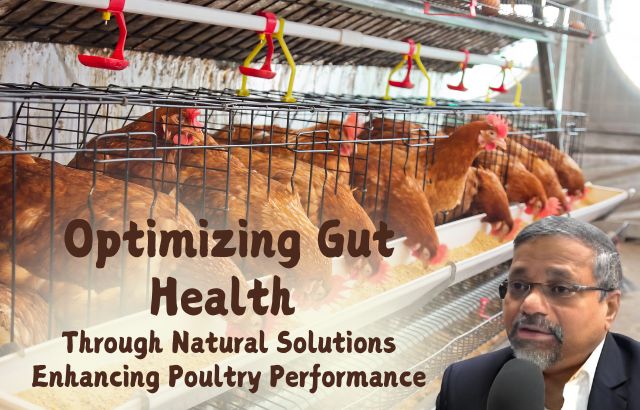
Gut health is crucial to the success of poultry production, impacting growth, feed efficiency, immune response, and overall bird performance. With increasing demand for more sustainable practices, natural additives are gaining popularity for their ability to enhance gut health without relying on antibiotics. This blog explores key natural additives that promote optimal gut health in poultry, alongside real-life examples, calculations, and practical strategies.
The Importance of Gut Health in Poultry
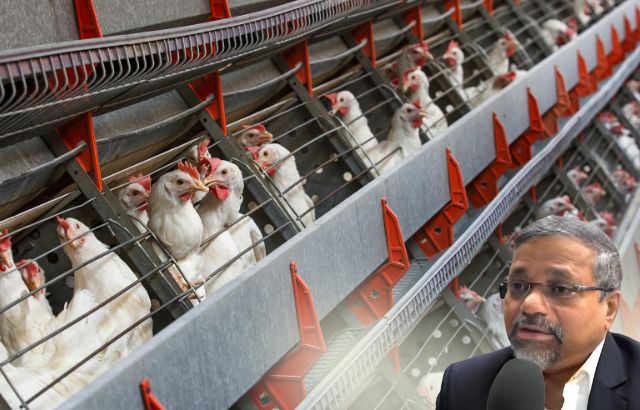
A healthy gut microbiome is essential for poultry to efficiently digest feed, absorb nutrients, and defend against harmful pathogens. When the gut environment is balanced, poultry can experience improved weight gain, better feed conversion ratios (FCR), and reduced mortality rates. Natural additives help maintain this balance, supporting long-term bird health and performance.
Key Natural Additives for Gut Health
- Probiotics:
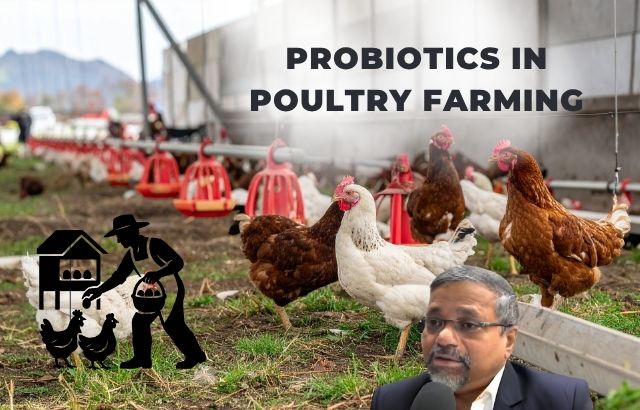
Probiotics are live microorganisms that benefit the host by restoring gut flora balance, improving nutrient absorption, and boosting immunity.
Example: Bacillus subtilis is a popular probiotic used in broilers. It has been shown to improve growth rates and feed conversion. - Prebiotics:
Prebiotics are non-digestible fibers that promote the growth of beneficial gut bacteria. They serve as food for probiotics, improving gut health.
Example: Fructooligosaccharides (FOS) is a prebiotic that helps improve gut health and growth performance in poultry. - Essential Oils:
Essential oils have antimicrobial properties that control harmful gut bacteria while supporting beneficial microbes.
Example: Oregano oil has been proven to enhance gut health and reduce pathogenic bacteria in broilers. - Herbal Extracts:
Certain herbs contain anti-inflammatory and antioxidant compounds that support digestion and immune function.
Example: Turmeric and ginger extracts have been shown to improve digestion and boost immunity in poultry. - Digestive Enzymes:
Digestive enzymes, such as protease and amylase, break down proteins and carbohydrates, improving nutrient absorption and feed efficiency.
Example: Protease and amylase enzymes enhance digestion, contributing to better feed conversion.
Calculating the Financial Impact of Natural Additives
Let’s look at an example of how probiotics can improve feed efficiency and generate cost savings.
Example Calculation: Feed Conversion Ratio (FCR) Improvement
- Without Additives:
FCR = 2.0 (2 kg of feed to produce 1 kg of body weight)
For 1,000 birds growing to 2 kg each, the total weight is:
[
\text{Total Weight} = 1,000 \text{ birds} \times 2 \text{ kg/bird} = 2,000 \text{ kg}
]
Feed required without additives:
[
\text{Feed} = 2,000 \text{ kg} \times 2.0 = 4,000 \text{ kg}
] - With Probiotics:
If probiotics improve FCR to 1.8, the feed required is:
[
\text{Feed with Additives} = 2,000 \text{ kg} \times 1.8 = 3,600 \text{ kg}
] - Feed Savings:
[
\text{Savings} = 4,000 \text{ kg} – 3,600 \text{ kg} = 400 \text{ kg}
]
If feed costs $0.30 per kg, the total savings would be:
[
\text{Total Savings} = 400 \text{ kg} \times 0.30 = 120 \text{ USD}
]
This simple calculation demonstrates that a small improvement in FCR can lead to significant feed cost savings.
The Role of subject expert: Green Innovators in Poultry Production
In the evolving poultry industry, subject expert like Jaiguru Kadam, a Green Innovator, are playing a crucial role in guiding producers toward sustainable, cost-effective solutions. By promoting the use of natural additives and focusing on sustainability, they help producers improve production while minimizing environmental impact.
Here’s how Green Innovators make a difference:
- Promoting Sustainable Solutions:
Jaiguru Kadam focuses on natural additives like probiotics, prebiotics, and essential oils. These alternatives reduce the reliance on antibiotics and synthetic chemicals, making poultry farming more eco-friendly and animal-welfare focused. - Research and Development:
Green Innovators prioritize R&D to develop new natural additives. By collaborating with research institutes and experts, they ensure that these products meet both scientific standards and market needs, addressing challenges like antibiotic resistance and feed efficiency. - Cost Optimization:
By incorporating natural additives, poultry producers can see a return on investment through improved feed conversion ratios and reduced mortality rates. Strategic partnerships with suppliers help make these additives affordable for farmers, thus improving profitability. - Market Differentiation:
Consumers are increasingly seeking antibiotic-free, sustainably raised poultry. By using natural additives, producers can market their products as cleaner, healthier, and environmentally responsible, which appeals to a growing segment of conscious consumers. - Data-Driven Insights:
Green strategists like Jaiguru Kadam leverage data analytics to track performance metrics, ensuring that natural additives are used optimally. This approach helps identify the best combination of probiotics, prebiotics, and other additives for each specific farm. - Education and Training:
Jaiguru Kadam emphasizes the importance of educating poultry producers about the benefits and safe use of natural additives. Training programs ensure that farmers are well-equipped to make informed decisions about their poultry health strategies. - Compliance with Regulations:
As regulations around sustainability and animal welfare evolve, Green Innovators help poultry producers stay compliant with certifications like antibiotic-free or organic labels. This alignment with consumer and regulatory trends opens up new market opportunities.
Conclusion: The Path Forward for Sustainable Poultry Production
Optimizing gut health through natural additives is a powerful way to improve poultry performance and meet the demand for sustainable, antibiotic-free products. Probiotics, prebiotics, essential oils, herbal extracts, and digestive enzymes are key to enhancing feed efficiency, boosting growth rates, and reducing mortality.
Sustainability strategists like Jaiguru Kadam play a pivotal role in guiding the poultry industry toward these natural solutions, helping producers not only improve their profitability but also reduce their environmental footprint. As the poultry industry continues to evolve, these innovations will help shape a future where poultry farming is both sustainable and economically viable.
FAQs on Gut Health Solutions
Q1: What are probiotics, and how do they benefit poultry?
Probiotics are live microorganisms that help restore the balance of gut bacteria, improving nutrient absorption and immunity, which leads to better poultry performance.
Q2: What is the difference between prebiotics and probiotics?
Prebiotics are non-digestible fibers that feed beneficial gut bacteria (probiotics), helping them thrive and improve gut health.
Q3: Can essential oils replace antibiotics in poultry?
While essential oils can help control harmful gut bacteria, they should be part of a broader health strategy, not a full replacement for antibiotics.
Q4: Are herbal extracts safe for poultry?
Yes, herbal extracts like turmeric and ginger are safe when used appropriately. They have anti-inflammatory and antioxidant properties that support gut health.
Q5: How do digestive enzymes impact feed efficiency?
Digestive enzymes like protease and amylase improve the breakdown of proteins and carbohydrates, which enhances nutrient absorption and feed conversion.
Solutions for Enhancing Gut Health
To optimize poultry gut health, consider these strategies:
- Balanced Diet: Include natural additives like probiotics, prebiotics, and digestive enzymes in poultry diets.
- Regular Monitoring: Track bird health and performance metrics to ensure optimal gut health.
- Education and Training: Equip poultry producers with knowledge on the safe use of natural additives.
- Integrate Natural Solutions: Combine probiotics, prebiotics, and essential oils for a synergistic effect on gut health.
- Ongoing Research: Stay updated with the latest advancements in natural additives to improve poultry health.
By integrating these strategies, poultry producers can optimize gut health and achieve better performance while maintaining sustainability.