By Green Innovator Jaiguru Kadam
Subject Matter Specialist: Jaiguru Kadam | Vast International Experience in Green Innovation, Sustainable Chemistry, Agricultural Solutions and Industrial Formulation Technologies
1. Introduction: Why Green Innovation Requires an Industry-Specific Strategy
Green innovation is no longer limited to replacing conventional chemicals with environmentally friendly alternatives. It represents a comprehensive transformation of industrial technologies, product formulations, manufacturing processes, raw material selection, resource utilization, waste management and business models.
Every industry has different environmental challenges, regulatory requirements, technical limitations and customer expectations. Therefore, a green innovation strategy that works effectively in agriculture may not necessarily be suitable for pharmaceuticals, textiles, oil and gas, water treatment or personal care.
For example:
- The agrochemical industry focuses on developing effective, safer and environmentally responsible crop protection solutions.
- The pharmaceutical industry prioritizes solvent recovery, sustainable extraction and contamination control.
- The textile industry focuses on reducing water consumption, chemical discharge and energy requirements.
- The fertilizer industry aims to improve nutrient-use efficiency and reduce environmental losses.
- The home care industry emphasizes biodegradable surfactants and effective green cleaning formulations.
The central objective remains the same: achieve industrial performance while reducing environmental impact throughout the product lifecycle.
This article explores how green innovation strategies differ across 20 major industries, with practical examples, formulation considerations, business opportunities, calculations and frequently asked questions.
2. What Is a Green Innovation Strategy?

A green innovation strategy is a systematic approach to developing, manufacturing and commercializing products, technologies and processes that reduce environmental impact while maintaining or improving economic and technical performance.
It includes five major dimensions:
1. Green Raw Materials
Replacing fossil-based or environmentally problematic raw materials with renewable, recycled, bio-based or responsibly sourced alternatives.
2. Green Formulation Technologies
Developing biodegradable surfactants, bio-based solvents, green dispersants, natural emulsifiers and safer functional additives.
3. Sustainable Manufacturing
Reducing energy, water, emissions, hazardous waste and unnecessary processing steps.
4. Circular Economy
Improving recycling, reuse, recovery, resource efficiency and responsible end-of-life management.
5. Green Product Innovation
Designing products that provide effective performance with a lower environmental footprint.
3. How Green Innovation Strategy Varies Across 20 Industries
The following 20 industries demonstrate how sustainability principles can be translated into different technical and commercial applications.
1. Agrochemical Industry

Major green innovation focus: Green herbicides, safeners, surfactants, pesticide adjuvants and bio-based formulations.
The agrochemical industry requires green innovation that balances crop protection efficacy, formulation stability, application efficiency and environmental compatibility.
Conventional agrochemical formulations may contain solvents, surfactants and additives that create environmental concerns.
Green innovation opportunities include:
- Bio-based solvents for agrochemical formulations.
- Readily biodegradable nonionic surfactants.
- Environmentally compatible pesticide adjuvants.
- Improved wetting and spreading agents.
- Lower-solvent and water-based formulations.
- Safener technologies designed to improve crop selectivity.
Practical example:
A conventional herbicide formulation may use a petroleum-derived solvent and conventional surfactant. A green reformulation could investigate a renewable-origin solvent and a readily biodegradable surfactant while maintaining herbicide efficacy.
Key performance indicators:
- Herbicide efficacy.
- Crop safety.
- Rainfastness.
- Formulation stability.
- Aquatic toxicity profile.
- Biodegradability.
- Environmental exposure.
Business opportunity: Development of green formulation ingredients for herbicide, fungicide and insecticide manufacturers.
2. Biopesticide & Bioherbicide Industry
Major green innovation focus: Plant-derived weed control, microbial herbicides and botanical crop protection.
This industry represents one of the most promising areas of biological innovation.
Instead of relying exclusively on conventional synthetic chemistry, manufacturers explore biological organisms, microbial metabolites, botanical extracts and naturally derived active substances.
Key opportunities:
- Plant-derived herbicidal ingredients.
- Microbial crop protection formulations.
- Botanical insecticides.
- Natural formulation stabilizers.
- Bio-based wetting agents.
- Biodegradable encapsulation materials.
Practical example:
A microbial biopesticide formulation may use a compatible biodegradable carrier and protective stabilizing system to improve shelf life and maintain microbial viability.
The formulation must be evaluated for microbial compatibility, contamination control and storage stability.
Key challenge: Biological activity can be sensitive to temperature, pH, UV exposure and formulation ingredients.
3. Green Chemicals & Specialty Chemicals Industry
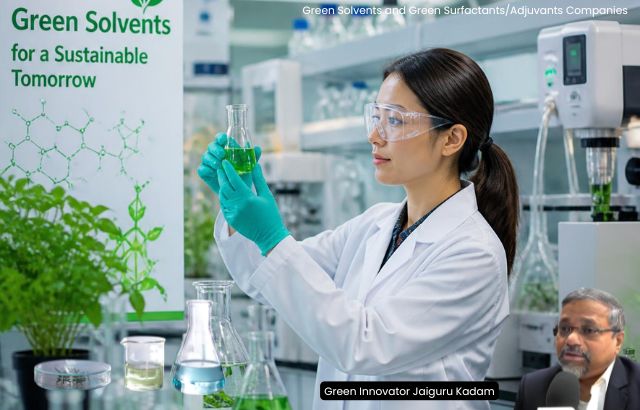
Major green innovation focus: Bio-based solvents, biodegradable surfactants and environmentally friendly chemical intermediates.
This industry acts as an innovation supplier to numerous other sectors.
Green specialty chemicals can enable sustainable transformation across agriculture, textiles, personal care, pharmaceuticals, detergents and industrial manufacturing.
Important development areas include:
- Renewable-origin solvents.
- Biodegradable surfactants.
- Green dispersants.
- Bio-based emulsifiers.
- Low-toxicity processing aids.
- Renewable chemical intermediates.
- Recycled and circular feedstocks.
Practical example:
A specialty chemical manufacturer replaces a conventional petroleum-derived solvent with a bio-based solvent after assessing solvency, flash point, viscosity, compatibility, worker exposure and environmental profile.
Business opportunity: Developing multifunctional green ingredients that can serve multiple industrial applications.
4. Agricultural Biotechnology Industry
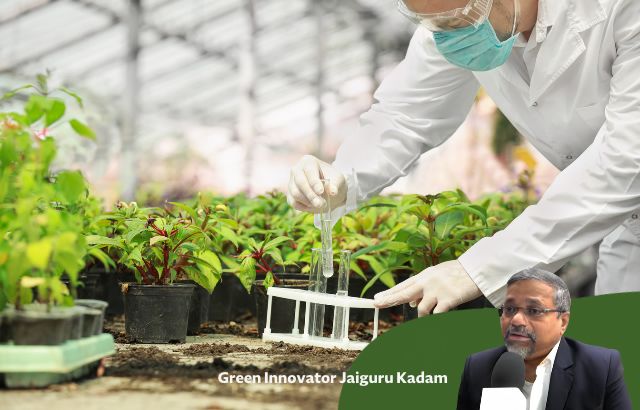
Major green innovation focus: Microbial formulations, biostimulants, biofertilizers and plant-based crop protection.
Agricultural biotechnology integrates biological sciences, microbial technologies and formulation engineering.
Green innovation includes:
- Microbial biofertilizers.
- Plant growth-promoting microorganisms.
- Seaweed-based biostimulants.
- Amino-acid-based plant nutrition.
- Botanical crop protection.
- Biological soil improvement products.
Practical example:
A microbial biofertilizer can be developed using a compatible carrier that maintains microbial viability during storage and application.
Important parameters:
- Microbial count.
- Contamination levels.
- Shelf life.
- pH compatibility.
- Moisture content.
- Field performance.
5. Seed Treatment Industry
Major green innovation focus: Eco-friendly seed coatings, seed protectants and safener formulations.
Seed treatment offers opportunities to improve agricultural input efficiency because ingredients are delivered directly to the seed.
Green innovation areas:
- Biodegradable seed coatings.
- Water-based polymer systems.
- Bio-based binders.
- Microbial seed treatment formulations.
- Low-dust coating technologies.
- Environmentally compatible colorants.
Practical example:
A conventional seed coating may be redesigned using a biodegradable polymer system that provides adequate coating strength, flowability and seed germination performance.
Key consideration: The coating must not adversely affect germination, emergence or seed storage quality.
6. Fertilizer Industry
Major green innovation focus: Green additives, nutrient delivery enhancers and biodegradable fertilizer coatings.
The fertilizer industry needs innovations that improve nutrient-use efficiency and reduce nutrient losses.
Potential developments:
- Biodegradable controlled-release coatings.
- Bio-based granule binders.
- Nutrient stabilization technologies.
- Humic and fulvic substances.
- Bio-based wetting agents.
- Soil-compatible formulation additives.
Practical example:
A fertilizer manufacturer replaces a conventional coating material with a biodegradable coating system, provided it delivers the required nutrient-release profile and agronomic performance.
Key KPIs: Nutrient release, dissolution rate, coating integrity, nutrient-use efficiency and environmental degradation profile.
7. Pharmaceutical Industry
Major green innovation focus: Green solvents, sustainable extraction chemicals and bio-based chemical intermediates.
The pharmaceutical industry requires extremely high standards of purity, consistency and quality assurance.
Green innovation opportunities include:
- Solvent substitution.
- Solvent recovery and recycling.
- Bio-based extraction solvents.
- Continuous manufacturing.
- Lower-waste synthesis routes.
- Energy-efficient purification.
Practical example:
A pharmaceutical manufacturer evaluates replacing a conventional organic solvent with a greener alternative in an extraction or purification process.
The replacement must meet requirements for residual solvents, impurity profiles, process validation and product quality.
Important consideration: Green chemistry cannot compromise patient safety or pharmaceutical quality.
8. Personal Care & Cosmetics Industry
Major green innovation focus: Plant-derived surfactants, natural emulsifiers and biodegradable cleansing agents.
Consumers increasingly evaluate cosmetic products based on ingredient origin, environmental impact, packaging and product performance.
Green innovation opportunities:
- Plant-derived surfactants.
- Natural emulsifiers.
- Bio-based emollients.
- Biodegradable cleansing agents.
- Sustainable preservatives.
- Recyclable packaging.
Practical example:
A facial cleanser can be reformulated using a plant-derived surfactant blend, a naturally derived thickening system and an appropriate preservation system.
The formulation must still deliver cleansing efficiency, skin compatibility, stability and microbiological safety.
9. Home Care & Detergent Industry
Major green innovation focus: Biodegradable surfactants, green cleaning agents and eco-friendly detergents.
The detergent industry has substantial potential to improve sustainability through formulation efficiency and reduced environmental loading.
Green innovation opportunities:
- Readily biodegradable surfactants.
- Bio-based solvents.
- Enzyme-compatible formulations.
- Concentrated detergents.
- Low-temperature washing solutions.
- Refillable packaging.
- Reduced packaging waste.
Practical example:
A detergent manufacturer develops a concentrated formulation that provides equivalent cleaning performance at a lower recommended dose.
The objective is to reduce packaging, transportation and material consumption per wash.
10. Textile & Dyeing Industry
Major green innovation focus: Green solvents, bio-based wetting agents, dispersants and textile auxiliaries.
Traditional textile processing can require considerable water, energy and chemical inputs.
Green innovation focuses on:
- Biodegradable wetting agents.
- Bio-based dispersants.
- Low-impact textile auxiliaries.
- Enzyme-assisted processing.
- Low-temperature processing.
- Water recycling.
- Lower-impact dyeing systems.
Practical example:
A textile processing facility introduces an improved wetting-agent system to achieve the required fabric wetting at a lower chemical dosage.
The process is evaluated for absorbency, shade uniformity, fabric quality and wastewater characteristics.
11. Paints, Coatings & Inks Industry
Major green innovation focus: Bio-based solvents, green dispersants and low-VOC formulation ingredients.
The coatings industry is moving towards improved environmental performance without sacrificing durability or application quality.
Opportunities include:
- Low-VOC solvents and formulations.
- Bio-based resin systems.
- Green pigment dispersants.
- Waterborne coatings.
- Renewable-origin additives.
- Recyclable coating systems.
Practical example:
A paint manufacturer redesigns a solvent-based product into a waterborne formulation.
The new formulation must be assessed for viscosity, pigment dispersion, film formation, adhesion, drying time and durability.
12. Food Processing Industry
Major green innovation focus: Food-compatible extraction solvents, natural processing aids and bio-based cleaning solutions.
Green innovation in food processing must satisfy strict food safety requirements.
Key development opportunities:
- Food-compatible extraction technologies.
- Natural processing aids.
- Enzyme-based processing.
- Bio-based cleaning chemicals.
- Water-efficient sanitation.
- By-product valorization.
- Sustainable packaging.
Practical example:
A food processor explores extracting valuable compounds from agricultural by-products using an appropriate food-grade solvent system.
This can create additional revenue while reducing waste.
13. Pulp & Paper Industry
Major green innovation focus: Biodegradable process chemicals, green surfactants and environmentally friendly defoamers.
The pulp and paper industry has opportunities to improve water efficiency, process performance and chemical management.
Potential innovations:
- Bio-based defoamers.
- Biodegradable wetting agents.
- Green retention aids.
- Sustainable bleaching technologies.
- Recycled-fiber processing aids.
- Wastewater treatment chemicals.
Practical example:
A paper manufacturer evaluates a biodegradable defoamer that maintains foam-control performance while improving the environmental profile of process chemicals.
14. Oil & Gas Industry
Major green innovation focus: Bio-based drilling fluid additives, biodegradable surfactants and green cleaning chemicals.
The oil and gas industry faces challenges involving chemical use, spills, wastewater and operational emissions.
Green innovation opportunities include:
- Biodegradable drilling-fluid additives.
- Environmentally improved lubricants.
- Bio-based surfactants.
- Green industrial cleaning agents.
- Lower-impact corrosion inhibitors.
- Improved produced-water treatment.
Practical example:
An operator evaluates a biodegradable surfactant for industrial cleaning applications, considering cleaning efficiency, material compatibility, aquatic toxicity and biodegradation.
15. Water & Wastewater Treatment Industry
Major green innovation focus: Bio-based flocculants, biodegradable treatment chemicals and environmentally friendly cleaning agents.
Water treatment is central to sustainable industrial development.
Important innovations:
- Bio-based flocculants.
- Natural coagulants.
- Biodegradable cleaning agents.
- Low-impact antiscalants.
- Membrane-cleaning solutions.
- Water-reuse technologies.
- Resource recovery from wastewater.
Practical example:
A treatment facility evaluates a plant-derived coagulant as an alternative or complement to conventional treatment chemicals.
Performance is assessed through turbidity reduction, sludge production, residual concentrations and treatment cost.
16. Bioplastics & Biopolymers Industry
Major green innovation focus: Bio-based chemical building blocks, green processing aids and biodegradable additives.
Bioplastics provide opportunities to reduce dependence on fossil-based feedstocks, although bio-based and biodegradable concepts are not interchangeable.
Green innovation areas:
- Renewable polymer feedstocks.
- Bio-based plasticizers.
- Biodegradable processing aids.
- Natural fillers.
- Sustainable polymer additives.
- Improved recycling technologies.
Practical example:
A packaging manufacturer develops a bio-based polymer blend and evaluates mechanical strength, barrier properties, processing temperature and end-of-life performance.
17. Mining & Mineral Processing Industry
Major green innovation focus: Green flotation agents, biodegradable wetting agents and eco-friendly process chemicals.
Mining operations use process chemicals for mineral separation, extraction and cleaning.
Green innovation opportunities include:
- Biodegradable flotation additives.
- Bio-based wetting agents.
- Improved mineral-processing reagents.
- Water-reuse chemicals.
- Sustainable dust-control agents.
- Mine wastewater treatment.
Practical example:
A mining company evaluates a lower-impact flotation reagent, comparing mineral recovery, concentrate quality, selectivity, consumption and environmental compatibility.
18. Biofuel & Renewable Energy Industry
Major green innovation focus: Green extraction solvents, bio-based process chemicals and biomass conversion aids.
The biofuel industry requires technologies that convert renewable feedstocks into valuable energy products efficiently.
Innovation opportunities:
- Green biomass extraction solvents.
- Bio-based catalysts.
- Fermentation process aids.
- Enzyme-based conversion.
- Biomass pretreatment chemicals.
- By-product valorization.
Practical example:
A biorefinery investigates recovering valuable compounds from biomass before converting the remaining material into biofuel.
This improves the potential economic value of the overall biomass stream.
19. Animal Feed & Veterinary Agriculture Industry
Major green innovation focus: Botanical additives, natural preservatives and sustainable animal-health formulations.
The industry can use green innovation to improve feed quality, ingredient sourcing and resource efficiency.
Development areas:
- Botanical feed additives.
- Natural antioxidants.
- Sustainable preservatives.
- Fermentation-derived ingredients.
- Bio-based feed processing aids.
- Responsible veterinary formulation ingredients.
Practical example:
A feed manufacturer evaluates a plant-derived antioxidant to improve oxidative stability, subject to animal safety, regulatory approval and demonstrated feed-quality benefits.
20. Environmental Remediation Industry
Major green innovation focus: Plant-derived remediation agents, biosurfactants and biodegradable soil-cleaning chemicals.
Environmental remediation uses technologies to manage contaminated soil, groundwater and industrial waste.
Green innovation opportunities:
- Biosurfactants.
- Bioremediation technologies.
- Phytoremediation.
- Bio-based soil-cleaning agents.
- Biodegradable treatment chemicals.
- Biological waste treatment.
Practical example:
A contaminated soil treatment project evaluates a biosurfactant-based washing approach to improve the mobilization and removal of selected contaminants.
The treatment must be assessed for contaminant recovery, secondary waste generation and ecological impact.
4. Comparative Analysis: How Green Innovation Differs Across Industries
The following table summarizes the main differences.
| Industry | Primary Green Innovation Priority | Major Technology |
|---|---|---|
| Agrochemicals | Crop protection with lower environmental impact | Green adjuvants |
| Biopesticides | Biological crop protection | Microbial formulations |
| Green chemicals | Sustainable chemical ingredients | Bio-based solvents |
| Agricultural biotechnology | Biological crop nutrition | Microbial formulations |
| Seed treatment | Sustainable seed protection | Biodegradable coatings |
| Fertilizers | Nutrient-use efficiency | Green coatings |
| Pharmaceuticals | Sustainable synthesis | Green solvents |
| Cosmetics | Sustainable ingredients | Plant-derived surfactants |
| Home care | Biodegradable cleaning | Green surfactants |
| Textiles | Reduced chemical and water impact | Green auxiliaries |
| Paints and inks | Lower VOC emissions | Waterborne systems |
| Food processing | Safe, efficient processing | Green extraction |
| Pulp and paper | Sustainable process chemicals | Biodegradable defoamers |
| Oil and gas | Lower-impact operations | Green additives |
| Water treatment | Efficient purification | Bio-based flocculants |
| Bioplastics | Renewable polymers | Bio-based building blocks |
| Mining | Cleaner mineral processing | Green flotation agents |
| Biofuels | Biomass conversion | Green solvents |
| Animal feed | Sustainable nutrition | Botanical additives |
| Remediation | Environmental restoration | Biosurfactants |
5. Green Innovation Strategy: Five Important Technical Calculations
A successful green innovation project should be supported by measurable technical and economic data.
The following illustrative calculations demonstrate how industrial organizations can quantify sustainability improvements.
Calculation 1: Reduction in Solvent Consumption
Consider a chemical manufacturing company using 10,000 kg of solvent annually.
After process optimization, solvent consumption decreases to 7,000 kg.
Formula:
Reduction (%) = [(Original consumption − New consumption) / Original consumption] × 100
= [(10,000 − 7,000) / 10,000] × 100
Result: 30% reduction
The company reduces annual solvent consumption by 3,000 kg.
Business impact: Lower raw material consumption, reduced solvent handling and potentially lower waste generation.
Calculation 2: Reduction in Water Consumption
A textile processing plant consumes 500,000 litres of water per month.
Following process optimization, monthly consumption decreases to 350,000 litres.
Water saving = 500,000 − 350,000
= 150,000 litres/month
Saving (%) = (150,000 / 500,000) × 100
Result: 30% water saving
Annual water savings:
150,000 × 12 = 1,800,000 litres
Result: 1.8 million litres of water saved annually.
Calculation 3: Carbon Emission Reduction
Suppose a manufacturing facility consumes 100,000 kWh of electricity annually.
Assume the electricity emission factor is 0.70 kg CO₂e/kWh for this illustrative calculation.
Original emissions:
100,000 × 0.70 = 70,000 kg CO₂e
After energy optimization, electricity consumption decreases by 20%.
New consumption:
100,000 × 0.80 = 80,000 kWh
New emissions:
80,000 × 0.70 = 56,000 kg CO₂e
Annual emissions reduction:
70,000 − 56,000 = 14,000 kg CO₂e
Result: 14 tonnes CO₂e avoided
Note: The emission factor is hypothetical. Actual calculations should use the appropriate electricity-grid factor and reporting methodology.
Calculation 4: Economic Benefit of Green Raw Material Substitution
Consider a specialty chemical manufacturer purchasing 20,000 kg of a conventional ingredient annually.
- Conventional ingredient price: ₹120/kg.
- Green alternative price: ₹105/kg.
- Annual consumption: 20,000 kg.
Original cost:
20,000 × 120 = ₹24,00,000
New cost:
20,000 × 105 = ₹21,00,000
Annual savings:
₹24,00,000 − ₹21,00,000 = ₹3,00,000
Result: ₹3,00,000 annual savings
Percentage cost reduction:
(3,00,000 / 24,00,000) × 100 = 12.5%
This demonstrates that green innovation can also create measurable economic benefits when the alternative meets all technical and regulatory requirements.
Calculation 5: Green Product Market Contribution
Suppose a specialty chemical company generates annual revenue of ₹50 crore.
Its green product portfolio contributes ₹10 crore.
Green revenue share:
(10 / 50) × 100 = 20%
Result: 20% green portfolio contribution
If green product revenue increases to ₹15 crore while total revenue remains ₹50 crore:
(15 / 50) × 100 = 30%
The green product contribution increases from 20% to 30%.
Strategic implication: Green innovation can become a measurable driver of business transformation rather than simply a sustainability initiative.
6. How to Develop a Successful Green Innovation Strategy
An effective green innovation strategy should follow a structured development process.
Step 1: Identify Environmental Challenges
Understand the industry’s major environmental issues, including emissions, water consumption, hazardous substances, waste and resource efficiency.
Step 2: Identify Suitable Green Alternatives
Evaluate bio-based solvents, biodegradable surfactants, renewable raw materials, microbial ingredients and environmentally compatible additives.
Step 3: Conduct Technical Feasibility Studies
Evaluate:
- Solubility.
- Stability.
- Viscosity.
- Compatibility.
- Performance.
- Shelf life.
- Processing conditions.
Step 4: Develop Laboratory Prototypes
Prepare laboratory formulations and compare them with existing commercial benchmarks.
Step 5: Conduct Performance Validation
Evaluate real-world functionality through laboratory, pilot-scale and field testing as appropriate.
Step 6: Perform Environmental Assessment
Use life-cycle assessment where appropriate to evaluate impacts from raw material sourcing through manufacturing, use and end-of-life.
Step 7: Assess Regulatory Compliance
Review applicable environmental, chemical, product-safety and industry-specific requirements.
Step 8: Commercialize and Scale Up
Establish manufacturing feasibility, raw material supply, quality specifications, customer acceptance and economic viability.
7. Major Challenges in Green Innovation
Although green innovation offers significant opportunities, its implementation requires careful technical and commercial planning.
| Challenge | Possible Solution |
|---|---|
| Higher raw material cost | Optimize formulation and sourcing |
| Lower initial performance | Improve formulation design |
| Limited availability | Develop alternative supply chains |
| Shelf-life limitations | Improve stabilization technologies |
| Regulatory complexity | Conduct early compliance assessment |
| Scale-up difficulties | Pilot-scale validation |
| Greenwashing risks | Substantiate environmental claims |
| Customer resistance | Demonstrate measurable performance |
One important principle must be emphasized: a material should not be considered environmentally superior simply because it is bio-based or biodegradable.
Its environmental performance must be evaluated using appropriate scientific evidence, including toxicity, biodegradation, lifecycle impacts and actual application conditions.
8. Future Opportunities in Green Innovation
Several technological developments are likely to influence green industrial innovation over the coming years.
A. Bio-Based Specialty Chemicals
Renewable feedstocks and biological production pathways can create new opportunities for industrial ingredients.
B. Advanced Biodegradable Surfactants
New surfactant technologies can serve agriculture, home care, personal care, textiles and industrial cleaning.
C. AI-Assisted Green Formulation Development
Artificial intelligence can support ingredient screening, formulation optimization, experimental planning and predictive performance analysis.
D. Sustainable Agricultural Formulations
Microbial products, botanical formulations, green adjuvants and controlled-release technologies can support more resource-efficient agriculture.
E. Circular Chemical Manufacturing
Recovery, reuse and recycling of solvents, process chemicals and industrial by-products can improve resource efficiency.
F. Life-Cycle-Based Product Innovation
Companies will increasingly need to demonstrate environmental benefits through measurable product lifecycle data rather than relying only on marketing claims.
9. Strategic Recommendations for Industrial Companies
Based on the technical and commercial considerations discussed in this guide, companies should prioritize the following:
- Identify the most environmentally significant processes in their operations.
- Develop a pipeline of green raw material alternatives.
- Invest in green formulation research and development.
- Establish measurable sustainability KPIs.
- Integrate regulatory and environmental assessments into product development.
- Collaborate with biotechnology companies, specialty chemical manufacturers and research institutions.
- Conduct pilot-scale trials before commercial implementation.
- Develop scientifically substantiated environmental claims.
- Evaluate total cost of ownership rather than only raw material purchase price.
- Build green innovation into long-term business strategy.
10. Frequently Asked Questions (FAQs)

Q1. What is green innovation in the chemical industry?
Green innovation in the chemical industry involves developing safer, more sustainable and resource-efficient chemical products, manufacturing processes and technologies. Examples include bio-based solvents, biodegradable surfactants, green dispersants and low-impact chemical intermediates.
Q2. How does green innovation differ between agrochemicals and pharmaceuticals?
Agrochemical innovation focuses on crop protection efficacy, crop safety, environmental exposure and formulation performance.
Pharmaceutical innovation focuses on sustainable synthesis, solvent recovery, chemical purity, impurity control and patient safety.
Q3. What are the most promising green chemicals for industrial applications?
Promising categories include:
- Bio-based solvents.
- Biodegradable surfactants.
- Green emulsifiers.
- Bio-based dispersants.
- Biosurfactants.
- Natural processing aids.
- Renewable chemical intermediates.
Their suitability depends on application-specific performance and environmental assessment.
Q4. Are bio-based chemicals always biodegradable?
No. Bio-based describes the origin of a material, whereas biodegradability describes its ability to break down biologically under specified conditions.
A bio-based chemical is not automatically biodegradable, and a biodegradable chemical may be produced from fossil-based feedstocks.
Q5. How can companies calculate the benefits of green innovation?
Companies can measure benefits through:
- Percentage reduction in raw material consumption.
- Water savings.
- Energy savings.
- Carbon emissions avoided.
- Waste reduction.
- Improvement in recycling rates.
- Green product revenue contribution.
- Total cost savings.
Q6. Which industries offer the greatest opportunities for green specialty chemicals?
Agriculture, home care, personal care, textiles, paints and coatings, water treatment, pharmaceuticals and industrial cleaning offer important opportunities for sustainable specialty chemical development.
However, the commercial potential depends on market demand, technical feasibility, regulation and customer adoption.
Q7. What is the difference between green formulation and green manufacturing?
Green formulation focuses on the ingredients and design of the final product.
Green manufacturing focuses on how the product is produced, including energy, water, emissions, waste and process efficiency.
Both are essential for genuine sustainability improvements.
Q8. How can small and medium-sized companies implement green innovation?
SMEs can begin with:
- Replacing selected high-impact ingredients.
- Improving production efficiency.
- Reducing water and energy consumption.
- Optimizing packaging.
- Introducing biodegradable ingredients where technically appropriate.
- Measuring environmental performance.
A phased approach can reduce investment risk.
Q9. What role do surfactants play in green innovation?
Surfactants are important in agriculture, detergents, cosmetics, textiles, paints, oil and gas, and environmental remediation.
Green surfactant innovation focuses on renewable sourcing, biodegradation, toxicity profiles, performance and environmental compatibility.
Q10. What is the future of green innovation in industrial chemistry?
The future will increasingly involve bio-based ingredients, biotechnology, circular manufacturing, advanced formulation science, AI-assisted research, low-carbon processes and lifecycle-based product development.
Q11. Can green innovation improve profitability?
Yes. Green innovation can reduce raw material consumption, energy use, water requirements, waste treatment expenses and logistics costs. It can also create new premium products and market opportunities. However, the economic benefits must be validated for each application.
Q12. Why is life-cycle assessment important in green innovation?
Life-cycle assessment evaluates environmental impacts across different stages of a product’s life, from raw material sourcing and manufacturing to transportation, use and disposal.
It helps prevent situations where an improvement in one stage creates a larger environmental burden elsewhere.
11. Conclusion: Green Innovation Is an Industry-Specific Transformation Strategy
Green innovation is not a single technology or a universal formulation approach. It is an industry-specific transformation strategy that combines chemistry, biotechnology, materials science, process engineering, environmental science and commercial innovation.
The 20 industries discussed in this article demonstrate how different sectors can create sustainability opportunities through specialized technologies.
For agrochemicals, the opportunities include green herbicides, safeners, surfactants and pesticide adjuvants.
For agricultural biotechnology, the emphasis is on microbial formulations, biostimulants and biofertilizers.
For specialty chemicals, the opportunities involve bio-based solvents, biodegradable surfactants and environmentally improved intermediates.
For pharmaceuticals, textiles, personal care, detergents, water treatment, mining and other industrial sectors, the focus shifts according to specific technical requirements and environmental challenges.
The real opportunity lies in developing products that deliver three essential outcomes:
Technical Performance
The product must work effectively.
Environmental Responsibility
Its environmental advantages must be scientifically substantiated.
Commercial Viability
The technology must be scalable and economically sustainable.
The future of industrial innovation will belong to companies that successfully integrate these three dimensions into their research, product development and business strategies.
About the Author

Jaiguru Kadam
Green Innovator | Subject Matter Specialist | Vast International Experience
Jaiguru Kadam, Green Innovator and Subject Matter Specialist, brings a global industry-oriented perspective to green innovation and sustainable industrial development.
His professional focus encompasses the intersection of green chemistry, agricultural innovation, specialty chemicals, formulation technologies and sustainable industrial solutions.
Through an application-oriented approach, Jaiguru Kadam emphasizes the importance of connecting scientific innovation with industrial performance, environmental responsibility and commercial scalability.
His guiding philosophy is that green innovation should not simply replace conventional materials; it should create better-performing, more sustainable and commercially viable industrial solutions.
Author: Green Innovator Jaiguru Kadam
Subject Matter Specialist: Jaiguru Kadam