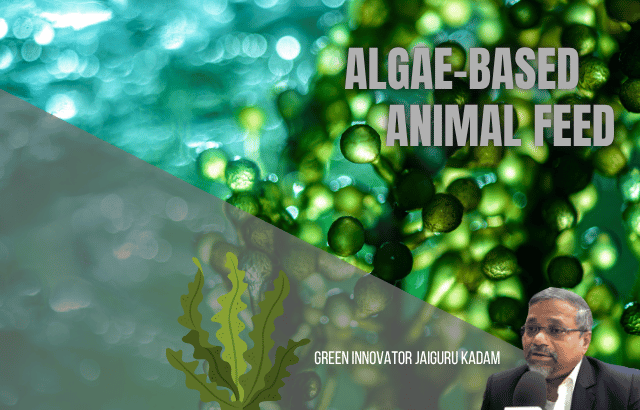
As global demand for animal protein continues to grow, the agriculture industry faces a major challenge: how can we produce more meat, milk, eggs, and seafood without placing additional pressure on land, water, oceans, and other natural resources?
One increasingly promising answer is algae-based animal feed.
Microalgae and cyanobacteria such as Spirulina, Chlorella, Nannochloropsis, and other marine microalgae contain protein, lipids, vitamins, minerals, pigments, and other bioactive compounds. Depending on the species and processing method, algae can be incorporated into animal diets as a protein ingredient, nutritional supplement, or source of omega-3 fatty acids.
Research suggests that algae could help diversify feed supplies and, particularly in aquaculture, reduce dependence on marine-derived ingredients such as fishmeal and fish oil. However, algae are not a universal replacement for conventional feed ingredients. Cost, production scale, digestibility, regulatory requirements, and species-specific nutritional needs still determine where algae make the most sense.
Why Is Algae Attracting Attention in Animal Feed?
Traditional livestock and aquaculture feed can depend heavily on ingredients such as soybean meal, fishmeal, and fish oil. Producing these ingredients at the scale required by a growing global food system can create environmental and supply-chain challenges.
Algae offer several interesting characteristics:
- High nutritional density: Some microalgae contain substantial levels of protein, while particular species are also rich in lipids and omega-3 fatty acids.
- Potentially efficient production: Microalgae can be cultivated in controlled systems that do not necessarily require the same amount of agricultural land as conventional crops.
- Omega-3 production: Marine microalgae are the original biological source of EPA and DHA that ultimately enter marine food webs.
- Feed diversification: Algae can provide an additional source of nutrients and reduce reliance on a limited number of conventional ingredients.
- Potential functional benefits: Research is investigating effects on immunity, gut health, antioxidant status, growth, and product quality.
A 2026 review of microalgae in aquaculture highlighted species including Spirulina, Chlorella, and Nannochloropsis as promising feed ingredients because of their protein and lipid profiles.
Examples of Algae Used in Animal Feed
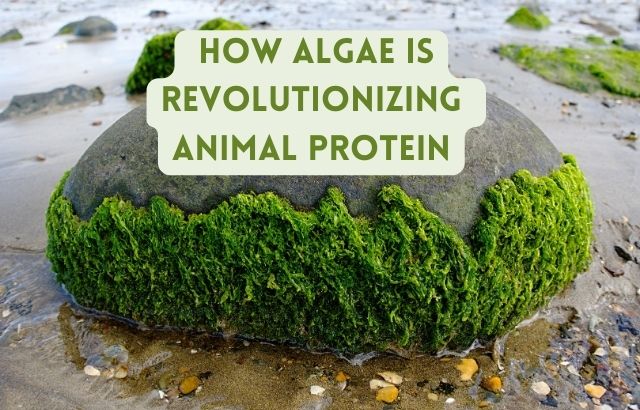
1. Spirulina
Spirulina is a protein-rich cyanobacterium that has been investigated extensively as an ingredient in poultry, livestock, aquaculture, and other animal diets.
Research suggests that Spirulina can potentially contribute protein and bioactive compounds to animal diets. However, results vary according to inclusion level, animal species, feed formulation, and processing method.
A review of Spirulina as animal feed found that it has potential in poultry, pigs, and aquaculture, while also emphasizing that productivity and product-quality effects can differ between production systems.
2. Chlorella
Chlorella is another microalga being investigated as a source of protein and other nutrients.
Studies have examined its use in livestock diets and its potential effects on fermentation, nutrient utilization, and methane production. Importantly, promising laboratory or experimental results should not automatically be interpreted as proof of equivalent effects under commercial farm conditions.
3. Marine Microalgae
Species such as Nannochloropsis and other marine microalgae are particularly interesting for aquaculture because some can provide valuable fatty acids.
Marine algae are also being used commercially to produce concentrated algal oils containing EPA and DHA, creating an alternative to conventional fish oil.
Algae in Fish Farming
Aquaculture is one of the most promising areas for algae-based feed innovation.
Farmed fish traditionally obtain important nutrients through feed ingredients such as fishmeal and fish oil. Although modern aquafeeds have already reduced dependence on these marine ingredients, alternatives remain important as aquaculture production grows.
Algal oil can provide EPA and DHA without requiring these omega-3 fatty acids to first pass through wild-caught fish.
A Real-World Example: Veramaris
One commercial example is Veramaris, which produces omega-3 algal oil from marine microalgae.
The company’s production facility in Blair, Nebraska, began commercial-scale production in 2019. Its algal oil is designed for aquaculture feed and contains concentrated EPA and DHA. The company says its oil can be used as an alternative to fish oil in fish and shrimp diets.
The European Union’s Blue Economy Observatory reported in 2026 that commercial producers such as Veramaris and Corbion are already supplying algal ingredients and that major aquafeed companies have incorporated algal oils into formulations. The same source notes that cost and production scale remain challenges for wider adoption.
Case Study 1: Algal Oil in Kampachi Aquaculture
A useful example comes from research involving Kampachi, a marine fish species used in aquaculture.
In a three-month trial involving 480 juvenile Kampachi, diets were compared with conventional fishmeal/fish-oil diets and alternatives containing algal oil. According to the reported trial, fish receiving a diet without fishmeal and fish oil but using algal oil performed comparably to the control group in measures including growth, feed conversion ratio, fillet yield, and survival.
Why it matters
The study demonstrates an important principle: algae-derived ingredients do not necessarily have to function only as minor supplements. Under appropriate formulations, they can contribute to replacing conventional marine-derived feed ingredients.
The result should not, however, be generalized to every fish species or every algae product. Feed formulation and species-specific nutritional requirements remain critical.
Algae in Livestock Feed
The livestock sector is also investigating algae as a nutritional and environmental tool.
Researchers are examining whether algae can contribute protein, improve feed characteristics, influence rumen fermentation, and potentially reduce methane emissions.
However, this area requires particular care when interpreting results. Not every algae species has the same composition, and not every algae-based feed additive produces the same effect.
Research on Methane Reduction
A 2024 study examined an algae-based feed additive containing bromoform in cattle. The researchers evaluated its effects on enteric methane and carbon dioxide emissions as well as diet digestibility in Jersey cows.
Separate research examining Spirulina and Chlorella as replacements for soybean meal found that Spirulina replacement showed potential for reducing methane yield in an in-vitro rumen fermentation experiment.
These findings are promising, but they should not be converted into a universal claim that “algae reduces cattle methane by X%.” Results depend on the algae species, active compounds, inclusion rate, diet, animal, and experimental conditions.
Case Study 2: Microalgae and Rumen Fermentation
Researchers have also investigated whether Chlorella pyrenoidosa and Spirulina platensis can replace soybean meal in cattle diets.
In a 2024 laboratory fermentation study using rumen fluid from lactating Holstein cows, replacing soybean meal with algae affected gas production and nutrient fermentation. Spirulina showed a potential methane-reduction effect under the experimental conditions.
The lesson for farmers
This research suggests that algae may eventually have a role in reducing the environmental footprint of some livestock diets. But laboratory fermentation studies are not equivalent to full-scale farm trials. More field research is needed before making broad claims about commercial methane reductions.
The Role of Green Innovators
The development of algae-based animal feed depends on researchers, farmers, feed manufacturers, biotechnology companies, nutritionists, and agricultural innovators working together.
Innovators in sustainable agriculture can contribute by:
- Developing locally suitable algae cultivation systems
- Identifying algae strains with desirable nutritional characteristics
- Improving harvesting and processing technologies
- Developing cost-effective feed formulations
- Testing algae under real farm conditions
- Measuring effects on animal performance and product quality
- Evaluating the complete environmental footprint of algae production
- Building commercially viable supply chains
The contribution of an individual innovator or researcher should ideally be supported by identifiable publications, field trials, patents, or independently verifiable farm results. This is particularly important when making claims about methane reductions, productivity improvements, or environmental savings.
Is Algae Really More Sustainable?
Potentially—but sustainability is not automatic.
One of the biggest advantages of algae is the possibility of producing nutrients without relying exclusively on conventional agricultural land or wild fish stocks. However, the environmental performance of an algae system depends heavily on how the algae are cultivated, harvested, processed, and transported.
Energy use, nutrient inputs, freshwater requirements, cultivation technology, and downstream processing can all affect the final environmental footprint.
Therefore, it is more accurate to say that algae can offer sustainability advantages in particular applications rather than claiming that every algae-based feed is automatically more sustainable than soy, fishmeal, or other ingredients.
Can Algae Replace Fishmeal and Fish Oil?
In some applications, yes—but usually not as a simple one-for-one replacement.
Different algae provide different nutrients. Some are particularly useful as protein sources, while others are valuable primarily for oils such as EPA and DHA.
Commercial aquaculture already provides examples of algal oil replacing fish oil. Research has also investigated combinations of algae and other alternative ingredients to reduce or eliminate fishmeal and fish oil in specific fish diets.
The appropriate formulation depends on:
- Animal species
- Growth stage
- Nutritional requirements
- Algae species
- Protein and amino-acid profile
- Fatty-acid composition
- Digestibility
- Feed cost
- Processing technology
Important Safety and Regulatory Considerations
Not all algae are suitable for animal feed.
Some blue-green algae can produce toxins such as microcystins. The U.S. Food and Drug Administration, for example, warns that certain blue-green algae products can become contaminated with microcystin-producing organisms and emphasizes the importance of testing.
Feed ingredients also have to comply with applicable animal-feed regulations in the relevant country. In the United States, animal food ingredients are regulated under the Federal Food, Drug, and Cosmetic Act, with FDA requirements applying to animal feed and ingredients.
For commercial applications, producers therefore need to consider strain identification, contamination, toxin testing, quality control, stability, and regulatory approval.
FAQs About Algae-Based Animal Feed

What types of algae are used in animal feed?
Commonly studied examples include Spirulina, Chlorella, Nannochloropsis, and other microalgae. Different species have different nutritional profiles, so they are not interchangeable.
Is Spirulina a good protein source for animals?
Spirulina is protein-rich and has been extensively studied as an alternative feed ingredient. However, its suitability depends on the animal species, inclusion rate, feed formulation, cost, and processing method.
Can algae completely replace soybean meal?
Usually, algae should not be viewed as a universal replacement for soybean meal. Research is investigating partial and, in some cases, substantial replacement, but nutritional composition and economics must be considered for each species and diet.
Can algae replace fish oil?
Certain marine algal oils can replace fish oil as a source of EPA and DHA in aquaculture diets. Commercial products are already being used for this purpose.
Can algae reduce methane emissions from cattle?
Some algae and algae-derived compounds have demonstrated methane-reduction potential in experimental research. However, the effect varies considerably depending on the algae, dosage, diet, and production system. Research should therefore not be interpreted as a universal percentage reduction for all cattle.
Is algae feed better than traditional feed?
There is no single answer. Algae can offer specific nutritional and environmental advantages, but they can also be more expensive and may face production and scalability challenges. The appropriate comparison depends on the animal, feed ingredient, production system, and environmental boundary being measured.
Is algae-based animal feed commercially available?
Yes. Algal ingredients and algal oils are already commercially available for applications including aquaculture. Commercial adoption is more advanced in some applications than others.
Is algae suitable for poultry and pigs?
Researchers have studied Spirulina and other algae in poultry and pig diets. Results vary with inclusion rate and production system, so algae are generally better viewed as specialized feed ingredients rather than automatic replacements for conventional protein sources.
Does algae require farmland?
Some algae cultivation systems can produce biomass without conventional cropland, but this does not mean every algae production system has a low environmental footprint. Land, water, energy, nutrients, and processing requirements all need to be considered.
What is the biggest challenge for algae-based feed?
Cost and scale remain major challenges. Algal ingredients must compete economically with established feed ingredients while delivering consistent nutritional quality and meeting safety and regulatory requirements. The EU’s 2026 assessment also identified cost and production capacity as important barriers to broader adoption.
The Future of Algae in Animal Agriculture
Algae are unlikely to replace every conventional feed ingredient. Their greater opportunity may be in strategic substitution—using the right algae-derived nutrient in the right animal production system.
For aquaculture, algal oil can provide a particularly compelling route to reduce dependence on wild-caught fish oil while maintaining supplies of EPA and DHA. For livestock, research is exploring algae as protein ingredients and as sources of compounds that may influence rumen fermentation and methane emissions.
The next stage of development will depend on reducing production costs, improving cultivation efficiency, demonstrating benefits through large-scale farm trials, and measuring sustainability across the entire life cycle.
Algae therefore represent not simply another feed ingredient, but a developing platform for more diversified, resilient, and potentially sustainable animal nutrition.
As biotechnology improves and commercial production expands, algae could become an increasingly important component of the global animal-feed system—particularly where they can deliver specific nutrients that are difficult to obtain sustainably from conventional sources.