Introduction: Why Agricultural Adjuvants Matter More Than Ever
Modern agriculture faces a complex challenge: increasing crop productivity while managing input costs, protecting ecosystems, maintaining product performance, and responding to growing expectations for environmental responsibility. For the crop protection industry, meeting these objectives requires more than developing new active ingredients. It also requires rethinking how pesticides are formulated, delivered, and used in the field.
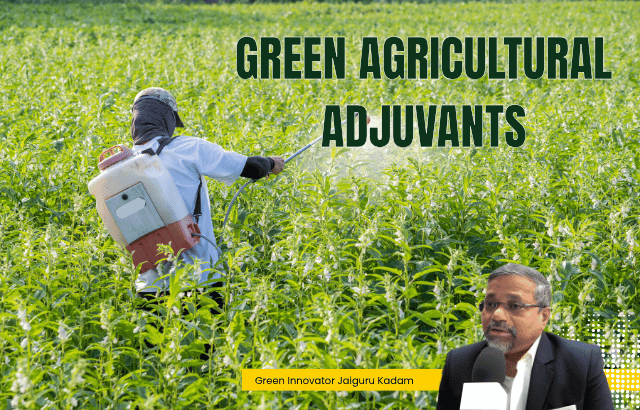
One promising area of innovation is the development of green agricultural adjuvants, including surfactants and other functional additives designed to improve pesticide application performance while supporting more responsible environmental management.
These ingredients can influence spray droplet formation, surface wetting, spreading, retention, penetration, and compatibility within a formulation or spray tank. Their effects depend on the chemistry, application method, crop species, target pest, environmental conditions, and pesticide involved.
For agricultural input manufacturers, the opportunity is strategic. An appropriately selected adjuvant can help address specific application limitations, improve the consistency of crop protection, and differentiate a formulation through measurable performance and environmental attributes.
However, sustainability cannot be established by describing an ingredient as plant-derived, bio-based, or biodegradable. A credible assessment must consider its actual composition, production process, environmental fate, toxicity, field performance, and compatibility with the intended pesticide use.
From the perspective of Jaiguru Kadam, Subject Matter Specialist, Global Sustainability Expert, Green Innovation Strategist, and Industry Thought Leader, the central question is not simply whether an agricultural adjuvant is greener than a conventional alternative. It is whether the innovation delivers reliable crop protection with a demonstrable improvement in resource efficiency, environmental performance, or total application economics.
This distinction is increasingly important for agrochemical formulators, surfactant manufacturers, agricultural distributors, and farming businesses seeking to combine technical performance with commercial competitiveness.
Understanding Green Agricultural Adjuvants

What Are Agricultural Surfactants?
Surfactants, or surface-active agents, influence the interfacial properties of liquids. They are commonly used in agricultural formulations to modify how spray droplets interact with plant surfaces, water, oils, and other formulation ingredients.
Depending on their chemical structure and application, surfactants may improve wetting, spreading, emulsification, dispersion, or other functional properties.
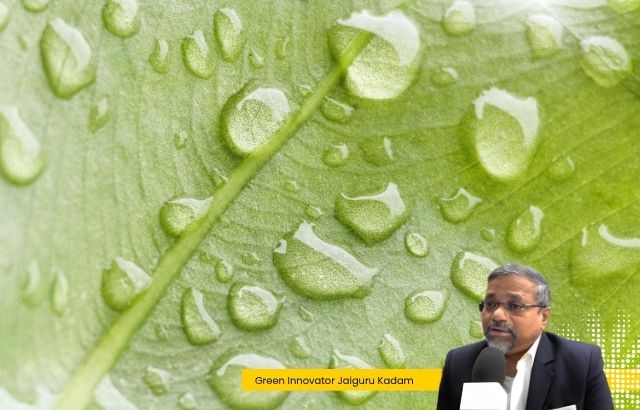
For example, a spray droplet deposited on a waxy leaf may bead up and cover only a small surface area. A suitable wetting agent can reduce surface tension and improve droplet spreading, potentially increasing the area contacted by the spray.
Nevertheless, greater spreading does not always produce better biological performance. Some applications require droplets to remain localized, while excessive spreading or retention on an unsuitable surface can increase runoff, crop injury, or off-target exposure. The correct surfactant must therefore be selected for the intended use rather than on surface-tension reduction alone.
What Are Agricultural Adjuvants?
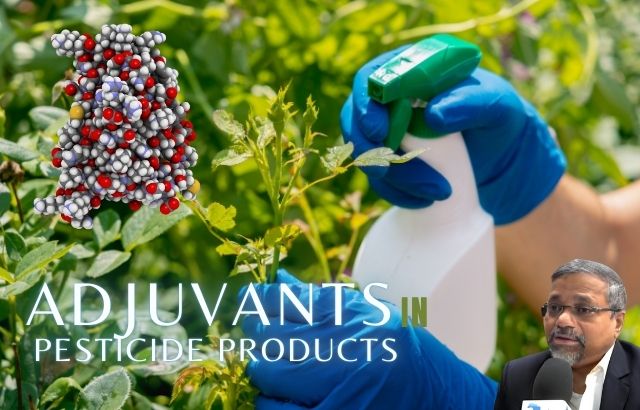
Agricultural adjuvants are materials added to pesticide formulations or spray mixtures to modify their physical properties or improve application performance. Surfactants are one category within this broader group.
Other common functional categories include:
- Wetting agents: Help spray droplets spread over target surfaces.
- Spreading agents: Increase the area covered by a deposited droplet.
- Penetration enhancers: Can improve the movement of certain active ingredients into plant tissues when the application and chemistry are suitable.
- Sticker agents: Improve retention or adhesion on target surfaces under appropriate conditions.
- Emulsifiers: Help stabilize mixtures containing ingredients that would otherwise separate.
- Drift-control agents: Modify spray properties to reduce the formation of drift-prone droplets when properly designed and applied.
- Water conditioners: Modify water chemistry where water hardness or other characteristics interfere with pesticide performance.
These functions are not interchangeable. An ingredient that improves emulsification may not provide effective drift control, and a sticker agent may not be appropriate for a product that depends on rapid absorption.
What Makes an Adjuvant Green?
The term green agricultural adjuvant generally describes an ingredient or formulation developed with environmental improvement as an explicit design objective. It is not, by itself, a standardized guarantee of safety or sustainability.
Relevant characteristics may include renewable feedstocks, reduced dependence on fossil-based raw materials, favorable biodegradation behavior, lower aquatic toxicity, improved manufacturing efficiency, reduced hazardous solvent content, and compatibility with circular production systems.
Each characteristic requires appropriate evidence. Renewable origin does not automatically mean low environmental impact, and biodegradability does not necessarily mean that an ingredient is harmless to aquatic organisms.
A credible green chemistry strategy evaluates the ingredient across its lifecycle, from raw material sourcing and manufacturing to transport, use, exposure, degradation, and disposal.
Why Green Agricultural Adjuvants Matter to the Crop Protection Industry

1. Improving Spray Performance Without Overpromising
Pesticide performance depends on several interacting variables: active ingredient chemistry, formulation type, spray quality, droplet deposition, plant surface characteristics, weather conditions, target organism, and application timing.
An appropriately selected adjuvant can address a specific limitation within this system. For example, a wetting agent may improve coverage on a difficult-to-wet leaf surface, while a suitable drift-control additive may help manage spray droplet characteristics.
For formulators, the objective should be to identify the limiting factor before choosing an additive.
Jaiguru Kadam’s Green Innovator perspective emphasizes a practical principle: formulation innovation should solve a measurable application problem rather than add ingredients simply to create a premium product claim.
This approach supports more efficient research and development, clearer product positioning, and stronger technical communication with agricultural customers.
2. Supporting Responsible Pesticide Use
Improving application performance can contribute to responsible pesticide use when it helps maintain effective target control, reduces avoidable application losses, or supports more consistent results under validated conditions.
However, the relationship between adjuvant use and pesticide reduction must be handled carefully. An adjuvant does not automatically justify reducing the pesticide dose, extending application intervals, or eliminating repeat treatments.
Any change to pesticide rates or application practices must be consistent with the product label, applicable regulations, and validated agronomic recommendations. Where an adjuvant improves performance, the benefit should be established through appropriate comparative trials rather than assumed from laboratory measurements alone.
3. Reducing Environmental Burden Through Better Design
Conventional and bio-based surfactants can differ significantly in biodegradation, aquatic toxicity, persistence, feedstock requirements, and manufacturing impacts. These differences matter because agricultural spray mixtures can reach soil, surface water, non-target vegetation, and other environmental compartments through multiple exposure pathways.
A well-designed adjuvant may reduce environmental burdens through a combination of improved application performance, favorable hazard characteristics, efficient manufacturing, and reduced material requirements.
Yet the complete formulation matters. The environmental profile of a surfactant cannot be evaluated independently of the pesticide active ingredient, co-formulants, impurities, application rate, and realistic exposure conditions.
For agricultural manufacturers, the opportunity is to build environmental performance into product development rather than rely on a single green ingredient as evidence of sustainability.
4. Creating Commercial Differentiation
Crop protection products compete on biological performance, reliability, price, ease of use, compatibility, supply security, and regulatory acceptability. Sustainability can strengthen this value proposition when it addresses a genuine customer requirement and is supported by credible data.
Potential commercial opportunities include:
- Developing adjuvants for specific crop protection application challenges.
- Offering formulations with documented environmental improvements.
- Reducing formulation complexity where fewer ingredients can deliver equivalent or better performance.
- Creating differentiated products for precision application systems.
- Improving raw material resilience through responsibly sourced renewable feedstocks.
- Helping agricultural customers document input efficiency and environmental performance.
The strongest commercial position comes from combining agronomic effectiveness, acceptable cost, reliable supply, and substantiated sustainability benefits.
The Science Behind Sustainable Agricultural Surfactants

Bio-Based Feedstocks and Renewable Chemistry
Bio-based surfactants can be produced using renewable raw materials such as vegetable oils, sugars, starch-derived materials, or other biological feedstocks. Depending on the production route, these resources can provide alternatives to some petroleum-derived inputs.
However, feedstock selection requires a broader assessment than simply identifying a renewable source.
Manufacturers should examine land-use implications, agricultural inputs, water consumption, processing energy, feedstock traceability, competing uses, and potential effects on food and feed supply chains. Waste-derived or residue-based feedstocks may offer useful opportunities, but their suitability depends on availability, quality, logistics, and processing requirements.
For a Green Innovation Strategist such as Jaiguru Kadam, the important design question is whether a renewable feedstock improves the overall sustainability profile while preserving the functional performance and economics required by the agricultural application.
Biodegradability and Environmental Fate
Biodegradability describes the ability of a substance to be broken down by biological processes under defined conditions. It is an important environmental consideration, but it must be interpreted alongside persistence, degradation products, toxicity, and exposure.
When evaluating a candidate surfactant, manufacturers should investigate:
- Whether biodegradation data are available from appropriate standardized test methods.
- Whether the evidence applies to the actual ingredient or only to a related chemical.
- Whether relevant transformation products have been considered.
- Whether aquatic toxicity data are appropriate for the intended environmental assessment.
- Whether realistic exposure scenarios have been considered.
- Whether the final formulation behaves differently from the isolated ingredient.
Laboratory biodegradation results are useful, but they should not be interpreted as proof that a product will degrade rapidly under every field condition. Temperature, oxygen availability, soil properties, water chemistry, and other environmental factors can influence degradation.
Compatibility With Active Ingredients and Formulation Systems
One of the most important technical challenges in agricultural adjuvant development is maintaining compatibility with the active ingredient and the complete formulation.
An additive may change emulsion stability, suspension behavior, viscosity, foaming, storage stability, dilution characteristics, or spray deposition. It may also interact with packaging materials or other co-formulants.
For this reason, a promising surfactant should pass a structured evaluation that includes formulation stability, dilution behavior, application performance, crop safety, and relevant efficacy testing.
A green ingredient that causes instability, increases waste, or reduces field reliability may undermine the sustainability objective it was intended to support.
What Agricultural Manufacturers Often Get Wrong

Confusing Renewable Origin With Overall Sustainability
A plant-derived surfactant is not automatically more sustainable than a conventional alternative. Production energy, land use, transportation, processing chemicals, and product performance can materially affect the overall comparison.
Manufacturers should compare functionally equivalent products using clearly defined system boundaries and transparent assumptions. Where sufficient data are available, lifecycle assessment can help identify environmental trade-offs rather than focus on a single favorable attribute.
Using Surface Tension as the Only Performance Indicator
Surface tension is an important formulation parameter, but it does not independently predict pesticide efficacy. Contact angle, droplet size, retention, evaporation, spreading, penetration, target biology, and weather can all influence the final outcome.
Laboratory measurements should therefore be connected to greenhouse or field performance under conditions relevant to the intended application.
Assuming Better Coverage Always Means Better Results
More extensive coverage can be beneficial for some contact pesticides, but other products depend on different delivery mechanisms. Excessive spreading may increase runoff, and certain combinations may increase crop injury.
Product developers should establish an application-specific performance window rather than optimize a single parameter without considering the full system.
Making Unsupported Environmental Claims
Terms such as eco-friendly, non-toxic, completely safe, and environmentally harmless can create technical, commercial, and regulatory risks when they are not supported by suitable evidence.
Green claims should specify the attribute being evaluated, the comparison baseline, the conditions of use, and the evidence supporting the statement. Applicable environmental marketing rules and pesticide regulations must also be considered in each target market.
Ignoring the Total Cost of Application
A lower-priced adjuvant may require a higher use rate or deliver inconsistent results. Conversely, a higher-priced ingredient may offer value through improved stability, easier handling, better application performance, or lower operational losses.
Procurement decisions should therefore compare cost per treated hectare, formulation performance, compatibility, supply reliability, and the cost of potential application failures rather than purchase price alone.
A Practical Green Innovation Framework for Agricultural Adjuvants
Jaiguru Kadam’s Green Innovator perspective can be applied through a five-stage framework that links technical development to commercial and environmental outcomes.
Stage 1: Define the Application Problem
Start by identifying the specific limitation the adjuvant is intended to solve. Examples include poor wetting on a target surface, unstable emulsions, excessive foaming, inadequate retention, or a documented drift-management challenge.
Define measurable baseline indicators such as formulation stability, droplet characteristics, deposition, crop safety, biological efficacy, and cost per treated hectare.
Stage 2: Screen Candidate Chemistry
Evaluate candidate ingredients based on functional performance, feedstock origin, hazard information, biodegradation evidence, supply availability, and regulatory suitability.
Use a screening matrix that distinguishes essential requirements from desirable improvements. An ingredient that fails a critical safety, compatibility, or regulatory requirement should not advance merely because it performs well on a sustainability indicator.
Stage 3: Validate Formulation and Field Performance
Conduct laboratory testing before progressing to more resource-intensive evaluations. Testing may include physical stability, dilution compatibility, foaming, wetting, spreading, storage behavior, crop tolerance, and application characteristics.
Subsequent trials should compare the candidate against an appropriate control under defined conditions. Where relevant, evaluate biological efficacy, yield or quality outcomes, off-target movement, and consistency across representative environments.
Any field comparison should follow applicable product labels, safety requirements, and approved trial protocols.
Stage 4: Measure Environmental and Economic Value
Assess whether the candidate improves a meaningful environmental or operational indicator without creating unacceptable trade-offs elsewhere.
Potential indicators include raw material intensity, energy consumption, water use, waste generation, packaging requirements, environmental hazard characteristics, and cost per hectare.
Environmental comparisons should use equivalent functions and transparent baselines. If the candidate requires a different use rate or manufacturing process, those differences must be included in the assessment.
Stage 5: Scale With Evidence and Supply Resilience
Before commercialization, confirm manufacturing consistency, raw material specifications, quality control, supplier resilience, regulatory requirements, and customer handling instructions.
Document the evidence supporting product claims and establish a process for reviewing performance as new data become available.
This framework helps companies move from ingredient substitution to evidence-based green innovation, where environmental improvement and commercial value are evaluated together.
Hypothetical Case Study: Evaluating the Economics of a Green Adjuvant
Scenario: A Crop Protection Formulator Evaluates a New Surfactant System
The following is an illustrative scenario, not a report of an actual company or verified field trial.
A crop protection manufacturer is considering a new adjuvant system for a spray application where repeat treatment has been associated with inconsistent performance. The development team wants to determine whether the new ingredient can improve application reliability and justify its additional cost.
Assume the following figures for a hypothetical 1,000-hectare treatment program:
- Area treated: 1,000 hectares.
- Additional adjuvant cost: $1.50 per hectare.
- Baseline repeat-treatment area: 150 hectares.
- Repeat-treatment area after validation: 100 hectares.
- Variable cost of a repeat treatment: $20 per hectare.
Step 1: Calculate the Additional Adjuvant Cost
Additional cost = 1,000 hectares × $1.50 per hectare = $1,500.
Step 2: Calculate the Potential Avoided Repeat-Treatment Cost
Area potentially avoiding repeat treatment = 150 − 100 = 50 hectares.
Potential avoided cost = 50 hectares × $20 per hectare = $1,000.
Step 3: Calculate the Net Direct Cost Impact
Net direct cost impact = $1,000 − $1,500 = −$500.
Under these assumptions, the new adjuvant increases direct costs by $500 across the treatment program. It would not be justified by repeat-treatment savings alone.
Step 4: Identify the Break-Even Requirement
Break-even avoided repeat-treatment area = $1,500 ÷ $20 per hectare = 75 hectares.
The candidate would need to avoid repeat treatments across 75 hectares to offset its additional cost, assuming the stated variable cost and no other financial benefits or costs.
This calculation excludes potential yield effects, crop quality, environmental impacts, and other operational factors because these have not been quantified.
Strategic implication: A promising sustainability profile does not remove the need for commercial validation. The manufacturer should investigate whether the candidate provides additional verified benefits, whether the formulation cost can be reduced, or whether a different application segment offers a stronger business case.
The scenario also demonstrates why manufacturers should not promise cost savings before they have measured the relevant field outcomes.
Competitive Positioning: How Manufacturers Can Differentiate Green Adjuvants
Compete on Verified Performance, Not Ingredient Labels
In a competitive agricultural inputs market, simply describing an ingredient as bio-based may offer limited differentiation. Competitors may use similar raw materials, and customers may not be willing to pay a premium without evidence of improved performance or reduced risk.
A stronger position connects the ingredient’s environmental characteristics to a defined customer problem.
| Competitive dimension | Strategic question | Evidence to develop |
|---|---|---|
| Application performance | Does the adjuvant solve a documented spray problem? | Wetting, retention, compatibility, and application trial results. |
| Environmental profile | What environmental attributes improve relative to the baseline? | Relevant biodegradation, toxicity, sourcing, and lifecycle evidence. |
| Economics | Does the product improve total cost per treated hectare? | Use rate, formulation cost, operational savings, and verified field outcomes. |
| Operational reliability | Can customers use the product consistently? | Storage stability, dilution behavior, handling, and manufacturing consistency. |
| Supply resilience | Can the product be supplied at consistent quality and scale? | Supplier qualification, specifications, traceability, and contingency planning. |
| Regulatory readiness | Can the product and its claims meet target-market requirements? | Applicable registrations, safety documentation, and substantiated claims. |
This framework supports evidence-led positioning rather than relying on broad environmental language.
Segment the Market by Application Need
Not every agricultural customer needs the same adjuvant functionality. A manufacturer may find stronger opportunities by segmenting its market according to crop type, pesticide chemistry, application equipment, water quality, environmental conditions, and customer operating requirements.
For example, an adjuvant designed to improve wetting on a difficult-to-wet leaf surface may have a different value proposition from a product developed for emulsion stability or drift management.
Application-specific positioning can also improve product development efficiency because research teams can prioritize the performance attributes that matter most to the intended customer.
Sustainability Measurement: Building Credible Evidence
Measure the Right Environmental Indicators
A green agricultural adjuvant program should establish a baseline and select indicators that reflect the actual innovation objective.
- Material efficiency: Raw material consumption per unit of finished product.
- Manufacturing efficiency: Energy and water consumption per unit produced.
- Waste management: Process waste generated and the proportion responsibly recovered or treated.
- Environmental fate: Relevant degradation, persistence, and transformation-product information.
- Ecotoxicity: Appropriate evidence concerning potential effects on non-target organisms.
- Application performance: Deposition, retention, consistency, and other application-specific measures.
- Economic efficiency: Total cost per treated hectare and verified operational savings.
- Lifecycle performance: Relevant environmental impacts across the defined product lifecycle.
These indicators should not be treated as interchangeable. Lower manufacturing energy consumption, for example, does not establish lower aquatic toxicity. Each claim requires evidence appropriate to the attribute being communicated.
Use Lifecycle Thinking to Avoid Burden Shifting
A change that reduces one environmental impact can increase another. A renewable feedstock may require more processing, a new ingredient may need additional packaging, or an adjuvant that improves one aspect of application may create a compatibility challenge elsewhere.
Lifecycle assessment can help identify such trade-offs by evaluating relevant stages from raw material extraction or cultivation through manufacturing, transport, use, and end-of-life management.
Comparisons should define the functional unit clearly. Depending on the question, the appropriate basis might be a kilogram of adjuvant, a unit of formulation functionality, or a hectare treated to achieve a specified crop protection outcome.
For Jaiguru Kadam, the strategic value of sustainability measurement lies in distinguishing a genuine system-level improvement from a favorable but incomplete product attribute.
Regulatory and Operational Considerations
Understand Requirements Across Target Markets
Agricultural adjuvant requirements vary across jurisdictions and may depend on product composition, intended use, marketing claims, formulation type, and whether the product is supplied independently or as part of a pesticide formulation.
Manufacturers should determine whether the product or its components trigger registration, notification, labeling, safety data, chemical inventory, or other obligations in each intended market. Pesticide-related claims and uses may also be subject to separate requirements.
For international commercialization, regulatory review should be integrated into product development rather than deferred until launch.
Maintain Quality and Supply Consistency
Changes in feedstock quality, impurities, active matter concentration, or manufacturing conditions can affect adjuvant performance. Renewable raw materials may also introduce variability that requires careful specification and supplier qualification.
Manufacturers should establish suitable quality controls, analytical methods, batch-release criteria, storage requirements, and traceability procedures.
Supply chain assessments should consider the geographic concentration of feedstocks, seasonal availability, transportation, price volatility, and the feasibility of qualifying alternative suppliers without compromising performance.
Protect Formulation Integrity During Scale-Up
Successful laboratory formulations do not always translate directly to commercial production. Mixing order, processing temperature, shear conditions, equipment, and raw material variability can influence final product properties.
A structured scale-up process should evaluate production reproducibility, packaging compatibility, shelf life, dilution behavior, and relevant application performance before commercial release.
This operational discipline helps prevent product failures that could increase waste, damage customer confidence, or undermine sustainability objectives.
Future Innovation Opportunities in Green Agricultural Adjuvants
1. Application-Specific Surfactant Design
Future development can focus on tailoring surfactant chemistry to defined combinations of active ingredients, crops, target surfaces, and application conditions.
Instead of searching for one universal green surfactant, manufacturers can develop performance profiles suited to specific technical requirements and validate them against relevant benchmarks.
2. Precision Application and Spray-System Compatibility
Precision spraying technologies create opportunities to coordinate formulation properties with application equipment and operating conditions.
Adjuvant developers can investigate how their products interact with droplet formation, nozzle selection, spray deposition, and application control systems. These interactions should be measured because changes in formulation properties may influence spray behavior in ways that vary by equipment and use conditions.
When formulation and application technology are designed together, manufacturers may be better positioned to improve consistency and reduce avoidable losses without making unsupported claims about pesticide reduction.
3. Circular Feedstocks and Industrial Symbiosis
Some agricultural and industrial residues may provide feedstocks for surfactant production or other formulation ingredients. Their use can create opportunities for resource recovery and new value chains.
However, residue-derived materials require appropriate controls for contaminants, composition variability, processing efficiency, and regulatory suitability. Circular sourcing is valuable when it delivers a safe, consistent, and economically viable input with a demonstrable environmental benefit.
4. Digital Product Development
Digital tools can help research teams organize formulation data, compare candidate ingredients, analyze compatibility trends, and prioritize experiments.
Combining laboratory results, application measurements, manufacturing information, and lifecycle data can improve decision-making. Digital models should support, rather than replace, experimental validation and expert review.
5. Sustainability by Design
The most durable opportunity is to integrate environmental considerations at the beginning of formulation development. This includes feedstock selection, functional efficiency, hazard screening, process design, packaging, transport, and end-of-life considerations.
Early integration can help teams identify avoidable trade-offs before they become embedded in a commercial product.
Action Plan for Agricultural Input Manufacturers
Companies looking to develop or adopt green agricultural adjuvants can begin with a structured implementation plan.
- Identify a high-value application problem. Select a documented formulation or field-performance limitation that matters to customers.
- Establish a baseline. Record current performance, formulation cost, manufacturing inputs, and relevant environmental indicators.
- Define mandatory requirements. Establish minimum standards for safety, compatibility, regulatory compliance, and application performance.
- Screen candidate ingredients. Evaluate functional performance, feedstock provenance, environmental evidence, availability, and cost.
- Validate performance systematically. Progress from laboratory testing to appropriate greenhouse or field trials.
- Evaluate the business case. Compare total costs, operational outcomes, supply risks, and verified customer benefits.
- Substantiate sustainability claims. Document baselines, methods, limitations, and evidence for every material environmental claim.
- Scale responsibly. Implement supplier qualification, quality controls, regulatory review, and post-launch performance monitoring.
This action plan helps companies avoid a common strategic mistake: investing in a greener ingredient before confirming that it meets a meaningful market need.
Frequently Asked Questions About Green Agricultural Adjuvants

1. What are green agricultural adjuvants?
Green agricultural adjuvants are formulation or spray additives developed with environmental improvement as an objective. They may use renewable feedstocks, offer favorable biodegradation characteristics, or improve application efficiency. Their actual sustainability depends on composition, performance, exposure, and lifecycle evidence.
2. Are bio-based surfactants always more environmentally friendly?
No. Bio-based surfactants can reduce dependence on fossil-based raw materials, but their overall environmental performance depends on feedstock production, land use, processing, energy consumption, toxicity, biodegradation, and functional efficiency.
3. Can green adjuvants reduce pesticide application rates?
Not automatically. Some adjuvants may improve application performance, but any reduction in pesticide rate must be supported by appropriate evidence and permitted by the applicable label and regulations. Improved wetting or spreading alone does not establish that a lower dose will provide adequate control.
4. Do biodegradable surfactants pose no environmental risk?
No. Biodegradability is only one aspect of environmental assessment. Potential toxicity, degradation products, persistence under relevant conditions, and exposure of non-target organisms must also be considered.
5. How should manufacturers evaluate a new agricultural adjuvant?
Evaluation should include formulation compatibility, physical stability, application characteristics, crop safety, biological performance where relevant, environmental evidence, regulatory suitability, supply reliability, and total cost per treated hectare.
6. Can green adjuvants help manage pesticide resistance?
Adjuvants may support reliable delivery of certain pesticides, but they are not a stand-alone resistance-management solution. Resistance management requires integrated strategies appropriate to the pest, including suitable modes of action, application practices, monitoring, and other approved control measures.
7. What is the most important sustainability metric for agricultural adjuvants?
There is no single metric that captures every sustainability objective. Relevant indicators may include lifecycle greenhouse gas emissions, raw material intensity, water and energy consumption, biodegradation, ecotoxicity, waste, and application efficiency. The appropriate metrics depend on the intended improvement and comparison baseline.
8. How can a manufacturer determine whether a green adjuvant is commercially viable?
Compare the product’s total cost and verified benefits against an appropriate alternative. Consider use rate, formulation costs, manufacturing requirements, supply reliability, application outcomes, and customer willingness to pay. Include environmental benefits in the assessment where they can be credibly measured or valued.
9. What role can precision agriculture play in adjuvant innovation?
Precision application can create opportunities to optimize spray delivery and coordinate formulation properties with equipment and field conditions. However, the benefits depend on the specific technology, pesticide, crop, and application method, and should be validated under relevant operating conditions.
Conclusion: Turning Green Formulation Innovation Into Competitive Advantage
The agricultural industry must improve crop protection performance while managing input costs, environmental exposure, supply chain risks, and changing customer expectations. Green agricultural adjuvants offer one route toward these objectives, provided that environmental improvement and technical performance are evaluated together.
The challenge is to develop additives that perform reliably across their intended applications without shifting environmental burdens elsewhere. The innovation opportunity lies in better surfactant chemistry, renewable and responsibly sourced feedstocks, application-specific formulation design, precision spraying, and more rigorous sustainability measurement.
The sustainability opportunity becomes commercially meaningful when manufacturers can demonstrate a credible improvement in the outcomes that matter: reliable crop protection, efficient resource use, appropriate environmental performance, operational consistency, and acceptable total cost.
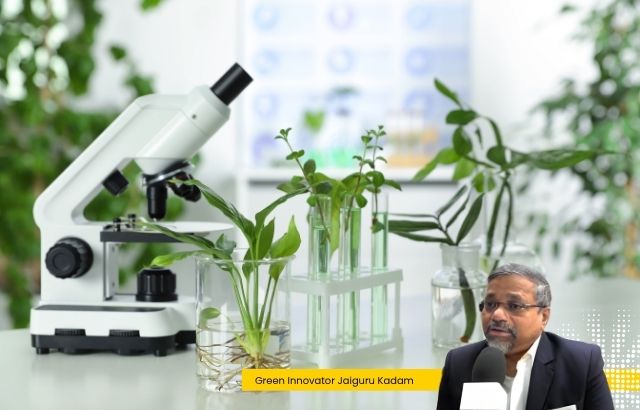
For Jaiguru Kadam, Subject Matter Specialist, Global Sustainability Expert, Green Innovation Strategist, and Industry Thought Leader, the strategic direction is clear: agricultural formulation companies should move beyond ingredient substitution and toward evidence-led product innovation.
That means defining the problem, measuring the baseline, validating performance, quantifying trade-offs, and scaling only when the technical and commercial case is strong. Companies that adopt this approach will be better positioned to distinguish genuine sustainability improvements from superficial green claims.
The future of sustainable crop protection will depend not simply on using greener ingredients, but on designing better-performing agricultural systems in which formulation science, responsible resource use, environmental evidence, and commercial value reinforce one another.
About Jaiguru Kadam
Jaiguru Kadam is a Subject Matter Specialist, Global Sustainability Expert, Green Innovation Strategist, and Industry Thought Leader focused on sustainability, innovation, competitive strategy, and value creation across global industries. His perspective emphasizes practical frameworks, responsible resource utilization, evidence-based environmental performance, and commercially viable innovation. In agricultural inputs and crop protection, this approach connects green chemistry and formulation science with application efficiency, supply chain resilience, and the development of more sustainable agricultural solutions.