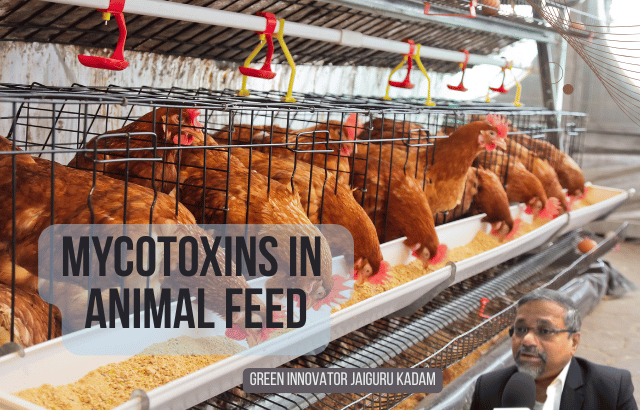
Mycotoxin contamination in animal feed is a persistent challenge for the global livestock industry. It affects feed safety, animal health, production efficiency, ingredient quality, and the economic performance of feed manufacturers and livestock producers. As climate variability, agricultural sourcing patterns, and feed formulation requirements continue to evolve, managing mycotoxin risk has become an essential part of modern animal nutrition.
Mycotoxins are toxic compounds produced by certain fungi that can contaminate agricultural commodities before harvest, during transportation, or throughout storage and processing. Commonly affected ingredients include maize, wheat, barley, rice, oilseeds, and other plant-derived materials used in animal feed.
The challenge is not limited to detecting contamination. Different mycotoxins have different chemical properties, toxicological effects, and interactions with animal species. Contamination may also involve several mycotoxins simultaneously, making risk assessment and mitigation more complex.
For feed manufacturers, nutritionists, procurement teams, and livestock producers, effective mycotoxin management requires an integrated strategy combining prevention, representative sampling, laboratory testing, appropriate ingredient handling, and scientifically validated mitigation technologies.
From the perspective of Jaiguru Kadam, Subject Matter Specialist, Global Sustainability Expert, and Green Innovation Strategist, mycotoxin management should be approached as a strategic capability that connects feed safety with resource efficiency, operational resilience, and sustainable livestock production.
This article explores the major types of mycotoxins in animal feed, their sources, contamination pathways, effects on livestock, detection methods, prevention strategies, and the role of responsible feed innovation.
1. What Are Mycotoxins in Animal Feed?
Mycotoxins are naturally occurring toxic secondary metabolites produced by certain species of fungi, particularly those belonging to the genera Aspergillus, Fusarium, and Penicillium.
These fungi may grow on crops under suitable environmental conditions. However, fungal growth and mycotoxin production are not identical processes. Visible mold does not reliably indicate the concentration of toxins, and contaminated feed may contain mycotoxins without obvious visual signs.
Mycotoxins can enter animal feed through contaminated grains, oilseeds, forage, by-products, and other agricultural ingredients. Once present, some toxins may remain relatively stable during conventional feed processing, making prevention and ingredient screening particularly important.
The risk associated with a contaminated feed ingredient depends on several factors:
The identity and concentration of the mycotoxin.
The quantity of contaminated material included in the complete diet.
The animal species, age, and physiological condition.
The duration and frequency of exposure.
The presence of other mycotoxins or environmental stressors.
The nutritional composition and overall quality of the feed.
Consequently, mycotoxin risk cannot be evaluated solely by checking whether an ingredient contains a detectable toxin. The concentration, intended use, total dietary exposure, animal susceptibility, and applicable regulatory requirements must also be considered.
2. Major Types of Mycotoxins Found in Animal Feed
Several mycotoxins are particularly important in animal nutrition because of their occurrence in agricultural commodities and their potential effects on animal health and productivity.
2.1 Aflatoxins
Aflatoxins are produced primarily by certain strains of Aspergillus flavus and Aspergillus parasiticus. They are commonly associated with maize, groundnuts, cottonseed, and other susceptible agricultural commodities.
Aflatoxin B1 is particularly important because it can cause liver toxicity and is classified as a human carcinogen. Animal exposure may also affect immune function, growth, feed utilization, and overall health, depending on the dose and duration.
In dairy cattle, aflatoxin B1 consumed in feed can be metabolized into aflatoxin M1, which may subsequently appear in milk. This creates an important food-safety concern for dairy supply chains.
Aflatoxin risk management therefore requires careful ingredient sourcing, representative sampling, appropriate analytical testing, and compliance with applicable feed and food regulations.
2.2 Deoxynivalenol (DON)
Deoxynivalenol, commonly known as DON or vomitoxin, is a trichothecene mycotoxin produced by certain Fusarium species.
It is associated particularly with wheat, maize, barley, and other cereals affected by Fusarium infection.
In susceptible animals, DON exposure can reduce feed intake and affect growth performance. Pigs are particularly sensitive to its feed-intake effects, although the consequences depend on exposure level, diet, and other conditions.
DON management requires attention to crop quality, sourcing conditions, laboratory results, and the suitability of the complete diet for the intended animal species.
2.3 Zearalenone (ZEN)
Zearalenone is another Fusarium-associated mycotoxin. It has estrogenic activity, meaning it can interfere with reproductive physiology.
Pigs are particularly susceptible to its reproductive effects. Depending on exposure, these may include vulvar swelling, reproductive disturbances, and other estrogen-related clinical signs.
Zearalenone may occur alongside other Fusarium mycotoxins, so testing and risk assessment should consider the broader contamination profile rather than focusing exclusively on one compound.
2.4 Fumonisins
Fumonisins, particularly fumonisin B1, are commonly associated with maize contaminated by certain Fusarium species.
Their effects vary considerably by animal species. Horses are highly susceptible to certain fumonisin-associated neurological conditions, while pigs may develop pulmonary complications at significant exposure levels. Poultry and other livestock can also be affected.
Because maize is widely used in animal feed, fumonisin monitoring can be important for manufacturers sourcing grain from regions where contamination is a recognized risk.
2.5 Ochratoxin A
Ochratoxin A is produced by certain Aspergillus and Penicillium species and may occur in cereals and other agricultural commodities.
Its principal toxicological concern is kidney toxicity. The significance of exposure varies by animal species, concentration, and duration.
Storage conditions are important because some fungi capable of producing ochratoxin A can develop under unsuitable post-harvest conditions. Drying, moisture control, storage hygiene, and supplier management therefore remain important preventive measures.
2.6 T-2 and HT-2 Toxins
T-2 and HT-2 toxins are trichothecenes associated with certain Fusarium species and can occur in cereal grains, including oats and other small grains.
Depending on exposure, they may affect feed intake, gastrointestinal tissues, immune function, and animal health.
Their occurrence and significance vary across crops, geographical regions, and seasons. Risk-based monitoring is therefore more useful than assuming that every ingredient has the same contamination profile.
3. Where Does Mycotoxin Contamination Originate?
Mycotoxin contamination can develop at multiple points along the agricultural and feed supply chain. Understanding these pathways helps businesses identify where preventive controls can have the greatest impact.
3.1 Pre-Harvest Contamination
Some fungal infections occur while crops are growing in the field.
Temperature, rainfall patterns, humidity, drought stress, insect damage, crop variety, and agricultural practices can influence fungal infection and toxin production.
For example, some aflatoxin risks are associated with heat and drought stress, while certain Fusarium mycotoxins are associated with crop infection under conducive field conditions. These relationships vary by fungal species, crop, and environmental conditions.
Climate variability may alter contamination patterns across regions and seasons, but the direction and magnitude of change are not uniform for every toxin.
Practical prevention measures include:
Appropriate crop management.
Suitable harvesting schedules.
Pest management and reduction of insect damage.
Supplier-level monitoring.
Selection of appropriate crop varieties and agricultural practices.
3.2 Contamination During Harvesting
Delayed harvesting, damaged grain, unsuitable harvesting conditions, and inadequate handling can increase the likelihood of quality deterioration.
Harvesting equipment and collection systems may also introduce foreign material or allow contaminated material to mix with otherwise acceptable lots.
Feed businesses can reduce uncertainty by establishing supplier specifications, reviewing harvest practices where practical, and using documented acceptance criteria for incoming ingredients.
3.3 Post-Harvest Drying and Storage
Moisture management is one of the most important elements of mycotoxin prevention.
When harvested grain is not dried appropriately, or when stored ingredients become wet through leaks, condensation, or moisture migration, conditions may support fungal growth and additional toxin formation.
Preventive controls include:
Drying commodities to moisture levels appropriate for the crop, storage duration, and local conditions.
Monitoring moisture and temperature during storage.
Maintaining suitable aeration where applicable.
Inspecting storage structures for leaks and condensation.
Controlling pests and removing accumulated residues.
Applying first-in, first-out (FIFO) inventory practices where appropriate.
Preventing moisture exposure during transport and handling.
These measures help reduce risk, but they cannot guarantee that previously formed mycotoxins will disappear.
3.4 Transportation and Feed Manufacturing
Contamination risks can continue during transportation, ingredient transfer, milling, and feed production.
Residual materials in equipment, inadequate cleaning, unsuitable storage conditions, and cross-contamination can complicate quality management.
Manufacturers should maintain documented cleaning procedures, supplier traceability, controlled ingredient handling, and suitable quality-assurance systems.
It is also important to recognize that ordinary milling, pelleting, and heat treatment cannot be assumed to destroy all mycotoxins. The effect of processing depends on the toxin and the specific treatment conditions.
3.5 Contaminated Agricultural By-Products
Agricultural by-products can contribute useful nutrients and support resource-efficient feed formulation. However, their safety depends on the source material, processing conditions, and quality-control procedures.
Ingredients such as bran, oilseed meals, distillers’ products, and other processing co-products may carry mycotoxins originating from the original crop. Processing can also alter toxin concentrations or redistribute them among product streams.
The appropriate response is not to reject all by-products automatically, but to assess their suitability through representative sampling, analytical testing, supplier controls, and compliance with applicable requirements.
4. How Mycotoxins Affect Livestock Health and Productivity
The consequences of mycotoxin exposure vary across livestock species and production systems. The same toxin concentration may not create the same biological response in every animal.
4.1 Effects on Poultry
In poultry, certain mycotoxins may reduce feed intake, impair growth, affect organ function, and influence immune responses.
The severity of the effect depends on the toxin profile, concentration, duration of exposure, age of the birds, and other dietary or environmental stressors.
For commercial poultry producers, mycotoxin management is relevant to flock uniformity, feed efficiency, health monitoring, and production consistency.
4.2 Effects on Dairy Cattle
Mycotoxin exposure in dairy cattle may affect feed intake, rumen function, animal health, and productivity, depending on the toxin and exposure conditions.
Aflatoxin B1 deserves particular attention because of its conversion to aflatoxin M1 and the potential for milk contamination.
Dairy operations should combine feed testing, supplier controls, appropriate ration formulation, and monitoring of milk-safety requirements.
4.3 Effects on Swine
Pigs are susceptible to several important mycotoxins, including DON and zearalenone.
Depending on exposure, effects may include reduced feed consumption, impaired growth, gastrointestinal disturbances, and reproductive abnormalities.
Because reduced feed intake can have significant commercial consequences, ingredient screening and toxin-specific risk assessment are important components of swine-feed management.
4.4 Effects on Beef Cattle and Other Ruminants
The rumen microbiome can transform some mycotoxins, potentially reducing the toxicity of certain compounds under particular conditions.
However, this does not provide complete protection against all mycotoxins. Susceptibility varies according to the toxin, animal condition, dietary factors, and exposure.
Risk management remains important for forage, silage, grain, and other feed components.
4.5 Effects on Aquaculture
Plant-derived ingredients are widely used in many formulated aquaculture feeds. These ingredients may introduce mycotoxin risks that vary according to their origin and processing history.
Potential effects depend on the aquatic species, toxin, exposure concentration, and duration. Species-specific evidence is essential when selecting control measures.
Across all livestock sectors, mycotoxin management should be integrated into wider nutritional, veterinary, and production-management programs rather than treated as an isolated intervention.
5. Why Mycotoxin Contamination Is an Economic Challenge
Mycotoxin contamination can affect profitability through several pathways.
First, contaminated ingredients may require additional testing, segregation, rejection, or alternative sourcing. These actions can increase procurement costs and disrupt production schedules.
Second, exposure to certain mycotoxins can reduce feed intake or impair animal performance. The commercial consequences may include poorer growth, lower production consistency, and additional management costs.
Third, food-safety concerns can create risks for downstream products, particularly where contaminants or their metabolites may enter milk, meat, eggs, or other food products.
Fourth, variable ingredient quality makes formulation and supplier planning more difficult.
The financial impact is not identical for every operation. It depends on the contamination profile, the quantity of affected material, available alternatives, animal susceptibility, regulatory requirements, and the effectiveness of existing controls.
A useful business assessment should distinguish between:
Prevention and monitoring costs: Routine sampling, laboratory testing, supplier audits, and quality assurance.
Contaminated ingredient costs: Testing, segregation, rejection, and lawful disposal where necessary.
Alternative sourcing costs: Replacement ingredients, procurement changes, and production disruption.
Potential production losses: Verified effects attributable to mycotoxin exposure.
Mitigation technology costs: Additive purchases, implementation, handling, and monitoring.
Verified benefits: Avoided losses, improved ingredient utilization, and measurable production outcomes.
This approach supports more informed purchasing and risk-management decisions than evaluating mycotoxin control solely by the price of a feed additive.
6. How to Detect Mycotoxins in Animal Feed
Reliable detection begins with a representative sample. Even a highly accurate laboratory method can produce misleading conclusions if the sample does not reflect the ingredient or feed lot being assessed.
6.1 Step 1: Develop a Risk-Based Sampling Plan
Mycotoxins may be distributed unevenly within grain lots and finished feed. Sampling procedures should account for lot size, physical characteristics, handling conditions, and the intended decision.
A representative sampling plan should define how incremental samples are collected, combined where appropriate, prepared, and submitted for analysis.
6.2 Step 2: Select an Appropriate Analytical Method
Common testing approaches include:
Rapid screening tests: These can support routine monitoring and preliminary decisions when appropriately validated for the relevant matrix and concentration range.
ELISA-based methods: Enzyme-linked immunosorbent assays can provide useful screening results, although performance depends on the assay, sample preparation, and possible cross-reactivity.
High-performance liquid chromatography (HPLC): This technique can support the measurement of selected mycotoxins using an appropriately validated method.
Liquid chromatography-tandem mass spectrometry (LC-MS/MS): This technique can provide detailed analytical information and support multi-mycotoxin analysis when validated for the relevant feed matrix.
No single method should be assumed to be optimal for every toxin or decision.
6.3 Step 3: Interpret Results in Context
A laboratory result should be assessed against the applicable regulatory requirements, internal acceptance criteria, intended animal species, and expected dietary exposure.
Where several ingredients contribute to the complete ration, nutrition teams may need to evaluate their combined contribution to total dietary exposure.
Results near decision thresholds, unexpected findings, or conflicting measurements may require confirmatory analysis or further investigation.
6.4 Step 4: Maintain Traceability
Records should connect analytical results to the supplier, ingredient lot, collection date, storage location, laboratory method, and decision taken.
This information helps identify recurring risks, assess supplier performance, and improve future procurement decisions.
Testing should be treated as part of a preventive management system, not as a substitute for good agricultural practices, storage controls, or regulatory compliance.
7. Mycotoxin Prevention Strategies for Feed Manufacturers
Prevention is generally preferable to relying exclusively on downstream mitigation. A structured prevention program addresses risk before contamination affects feed quality and production decisions.
7.1 Strengthen Supplier Qualification
Feed manufacturers should assess suppliers using appropriate criteria, including ingredient origin, quality history, traceability, storage practices, and documented testing procedures.
Supplier performance should be reviewed over time so that monitoring intensity can be adjusted according to risk.
7.2 Apply Risk-Based Ingredient Testing
Testing priorities should reflect the ingredient, geographical origin, seasonal conditions, supplier history, and intended feed application.
High-risk materials may require more intensive monitoring, while consistently controlled materials may be managed under a different verification schedule.
Sampling frequency and acceptance criteria should be documented and scientifically justified.
7.3 Improve Moisture and Storage Management
Drying, moisture monitoring, storage hygiene, temperature management, and pest control help reduce conditions favorable to fungal development.
Facilities should investigate water ingress, condensation, damaged packaging, and unexplained moisture changes promptly.
Where contamination has already occurred, storage improvements alone should not be assumed to eliminate existing toxins.
7.4 Maintain Ingredient Traceability
Traceability enables manufacturers to identify affected lots, isolate materials where necessary, and communicate effectively with suppliers and customers.
A robust traceability system should support the movement of information from ingredient receipt through feed production and dispatch.
7.5 Establish Clear Response Procedures
Feed manufacturers should define what happens when analytical results exceed internal or regulatory limits.
Procedures may include:
Confirming analytical results where necessary.
Placing affected lots on hold.
Investigating the source of contamination.
Notifying responsible personnel and relevant parties.
Assessing lawful disposition options.
Documenting corrective and preventive actions.
Materials that are prohibited or unsuitable for their intended use must not be made acceptable merely by adding a binder or blending them into other feed.
8. The Role of Mycotoxin Binders and Mitigation Technologies
Even strong preventive systems cannot eliminate every contamination event. Appropriate mitigation technologies may therefore form part of an integrated risk-management strategy.
8.1 Mineral-Based Adsorbents
Certain clay minerals and aluminosilicate materials can adsorb selected mycotoxins, particularly aflatoxins under suitable conditions.
Their effectiveness depends on mineral composition, surface properties, toxin chemistry, inclusion rate, and conditions in the gastrointestinal tract.
Performance against one toxin should not be generalized to all mycotoxins.
8.2 Yeast-Derived Materials
Selected yeast-derived materials contain components that can interact with particular mycotoxins. Their performance depends on the source, manufacturing process, composition, and conditions of use.
Product-specific evidence is needed to establish efficacy and compatibility with the intended diet.
8.3 Enzymatic and Microbial Biotransformation
Certain enzymes or microorganisms can transform selected mycotoxins into other compounds.
Unlike adsorption, biotransformation changes the chemical structure of the target toxin. However, the disappearance of the original compound does not automatically prove that the resulting products are harmless.
Evaluation should address transformation products, residual biological activity, reaction specificity, stability, and effectiveness under relevant conditions.
8.4 Multi-Component Products
Some formulations combine different ingredients or mechanisms to address multiple risks.
Such products should be assessed according to their demonstrated performance against the relevant toxin profile, rather than the number of components listed on the label.
A sound evaluation considers:
Efficacy against the target mycotoxins.
Animal safety and product quality.
Nutrient interactions and nutritional compatibility.
Regulatory status and permitted uses.
Handling, storage, and inclusion requirements.
Total cost and verified commercial benefits.
Mycotoxin mitigation technologies should complement preventive controls. They must not be used as a blanket justification for feeding contaminated ingredients that fail applicable safety or regulatory requirements.
9. Green Innovation and Sustainable Mycotoxin Management
Mycotoxin management also presents an opportunity to improve resource productivity across the feed supply chain.
Agricultural production requires land, water, energy, fertilizers, labor, and transportation. When usable ingredients are lost because of contamination or inadequate storage, some of the resources used to produce and transport them may also be wasted.
An effective management strategy can help preserve the value of suitable feed materials, improve purchasing decisions, and reduce avoidable disruption.
From a Green Innovation perspective, five priorities are particularly relevant.
9.1 Prevention Before Intervention
Reduce contamination risks through appropriate crop management, harvesting, drying, storage, and supplier controls.
9.2 Evidence-Based Technology Selection
Match mitigation products to verified contamination profiles and intended applications. Product selection should be supported by appropriate scientific evidence rather than broad marketing claims.
9.3 Nutritional Compatibility
Ensure that interventions do not create unacceptable interactions with essential nutrients or other feed components.
9.4 Responsible Resource Use
Consider the sourcing, manufacturing, transport, inclusion rate, and end-of-life implications of mitigation technologies.
9.5 Measurable Sustainability Outcomes
Track relevant indicators such as ingredient losses, additive consumption, feed production costs, and validated animal-performance measures.
Environmental benefits should not be assumed from additive use alone. Where sustainability claims are important, a transparent assessment should consider the amount of loss avoided, the resources embodied in affected ingredients, the additive’s environmental footprint, and the appropriate system boundary.
Jaiguru Kadam’s sustainability-oriented perspective emphasizes that technical effectiveness and environmental responsibility should be evaluated together. The objective is to identify interventions that address genuine feed-safety risks while supporting measurable improvements in resource efficiency and operational resilience.
10. How to Build an Integrated Mycotoxin Management Program
A successful program combines technical, operational, and commercial controls into a repeatable decision-making process.
10.1 Stage 1: Identify Priority Risks
Map key ingredients, suppliers, geographical origins, seasonal patterns, target toxins, and susceptible animal groups.
10.2 Stage 2: Establish Baseline Information
Review existing analytical results, contamination incidents, ingredient losses, feed-quality records, and relevant production indicators.
10.3 Stage 3: Strengthen Preventive Controls
Improve supplier qualification, representative sampling, drying, storage, transportation, and traceability procedures.
10.4 Stage 4: Select Appropriate Mitigation Technologies
Evaluate suitable products against the identified toxin profile, technical evidence, animal safety, nutrient compatibility, regulatory requirements, and operating conditions.
10.5 Stage 5: Define Measurable Success Criteria
Determine in advance how the program will be evaluated. Depending on the objective, indicators may include analytical findings, ingredient rejection rates, additive costs, feed production consistency, and relevant animal-performance outcomes.
10.6 Stage 6: Review Commercial Value
Compare verified incremental benefits with the costs of testing, monitoring, additives, handling, and implementation.
10.7 Stage 7: Continuously Improve
Use the findings to refine sourcing strategies, supplier requirements, storage controls, analytical plans, and mitigation decisions.
This framework makes mycotoxin management a continuous improvement capability rather than a reactive purchasing decision.
11. Common Mistakes in Mycotoxin Risk Management
Several misconceptions can undermine otherwise well-designed feed safety programs.
11.1 Assuming Visible Mold Indicates Toxin Concentration
Mycotoxins may be present without obvious mold, and visible fungal growth does not establish the toxin concentration.
11.2 Assuming All Mycotoxin Binders Work Against Every Toxin
Efficacy depends on the specific toxin, additive characteristics, and conditions of use.
11.3 Relying on a Single Laboratory Result Without Considering Sampling Quality
Uneven contamination can make an unrepresentative sample misleading.
11.4 Assuming Feed Processing Destroys All Mycotoxins
Conventional processing may not eliminate many important toxins. The effectiveness of processing depends on the specific toxin and treatment conditions.
11.5 Using Mitigation Products Instead of Prevention
Binders and other mitigation technologies do not replace drying, storage management, testing, or supplier controls.
11.6 Making Unsupported Sustainability Claims
Environmental benefits require suitable data, clearly defined boundaries, and a defensible assessment method.
11.7 Ignoring Regulatory Requirements
Contaminant limits, additive authorizations, and permitted uses vary across jurisdictions and must be verified for the intended market.
Avoiding these mistakes strengthens both feed safety and the commercial credibility of the management program.
12. The Future of Mycotoxin Management in Animal Nutrition
Advances in analytical technologies, risk prediction, supply-chain traceability, and biological mitigation may improve the way feed businesses manage mycotoxin risks.
Rapid analytical methods may support faster ingredient screening when properly validated. Data-driven risk models may help prioritize sampling and monitoring. Improved traceability may make it easier to connect contamination findings with suppliers, growing regions, and storage conditions.
At the same time, enzyme-based and microbial technologies may provide additional options for selected toxins where their safety and effectiveness are established.
The greatest value is likely to come from integrating these tools into existing feed safety and quality-management systems, rather than treating any single technology as a complete solution.
For feed manufacturers and livestock producers, innovation should be judged by its practical contribution to reliable risk assessment, appropriate mitigation, animal safety, and measurable commercial outcomes.
Frequently Asked Questions About Mycotoxins in Animal Feed
1. What Are the Most Common Mycotoxins in Animal Feed?
Important mycotoxins include aflatoxins, deoxynivalenol (DON), zearalenone (ZEN), fumonisins, ochratoxin A, and T-2 and HT-2 toxins. Their occurrence varies by crop, region, season, and storage conditions.
2. Which Ingredients Are Most Vulnerable to Mycotoxin Contamination?
Cereals such as maize, wheat, and barley, as well as groundnuts, cottonseed, oilseed meals, forage, and various agricultural by-products, may be affected. The specific risk depends on the crop, growing conditions, handling practices, and storage environment.
3. Can Mycotoxins Be Destroyed During Feed Processing?
Some processing methods may reduce certain mycotoxins under particular conditions, but conventional milling, pelleting, and heat treatment cannot be assumed to eliminate them. Control measures should be toxin-specific and supported by evidence.
4. How Can Feed Manufacturers Test for Mycotoxins?
Options include validated rapid screening tests, ELISA-based assays, and chromatographic techniques such as LC-MS/MS. Appropriate sampling and sample preparation are essential to obtaining meaningful results.
5. Are Mycotoxin Binders Effective Against All Toxins?
No. Adsorption varies with toxin chemistry and the characteristics of the additive. Some products are more effective against particular toxins than others, so manufacturers should review product-specific evidence.
6. Can Mycotoxins Affect Animal Productivity?
Yes. Depending on the toxin and exposure, effects may include reduced feed intake, impaired growth, reproductive disturbances, organ toxicity, and changes in immune function. The magnitude of the effect varies by animal species and production conditions.
7. Can Contaminated Feed Be Made Safe by Adding a Binder?
Not automatically. A binder should not be used to justify feeding materials that exceed applicable limits or are otherwise unsafe or prohibited. Ingredient suitability must be established before any mitigation strategy is considered.
8. How Does Mycotoxin Prevention Support Sustainability?
Preventing contamination can reduce avoidable ingredient losses and help preserve the resources invested in agricultural production. The net environmental benefit depends on the effectiveness of the controls and the environmental impacts of the complete intervention.
9. How Often Should Feed Ingredients Be Tested?
Testing frequency should be based on ingredient risk, supplier history, geographical origin, seasonality, previous results, and the intended application. Sampling plans should be documented and adjusted as conditions change.
10. What Is the Most Effective Approach to Mycotoxin Management?
The most reliable approach combines preventive agricultural and storage practices, representative sampling, suitable analytical testing, regulatory compliance, and validated toxin-specific mitigation where appropriate.
Conclusion: Building a Safer and More Sustainable Feed Supply Chain
Mycotoxin contamination remains a significant challenge for feed manufacturers, livestock producers, and the wider agricultural supply chain. Its implications extend beyond feed quality to animal health, production economics, ingredient utilization, food safety, and environmental resource efficiency.
Addressing this challenge requires a systematic approach. Businesses must understand the contamination risks associated with their ingredients, strengthen preventive controls, implement representative testing, interpret results appropriately, and select mitigation technologies based on scientific evidence.
For Jaiguru Kadam, Subject Matter Specialist, Global Sustainability Expert, and Green Innovation Strategist, mycotoxin management represents an opportunity to connect responsible feed safety practices with measurable operational and sustainability outcomes.
The strategic objective is not simply to introduce another additive into a feed formulation. It is to establish a reliable management system that protects animal health, supports appropriate feed utilization, strengthens supply-chain resilience, and avoids unsupported performance or environmental claims.
As the animal nutrition industry evolves, businesses that combine evidence-led technology selection, responsible sourcing, strong quality assurance, and transparent performance measurement will be better positioned to manage contamination risks and pursue sustainable growth.
Ultimately, effective mycotoxin management begins with prevention, depends on reliable evidence, and succeeds through continuous improvement across the entire feed supply chain.