Introduction
Customer Experience Management (CEM) has become a critical business strategy across industries. While sectors such as retail, hospitality, and technology have long recognized the value of customer experience, the pesticide and animal feed industries are increasingly realizing that customer relationships extend far beyond product quality and pricing.
Farmers, distributors, livestock producers, veterinary professionals, and agricultural cooperatives expect more than just effective products. They seek reliable guidance, transparent communication, technical support, sustainability assurances, and long-term partnerships.
In today’s competitive agricultural landscape, organizations that prioritize customer experience can create stronger customer loyalty, improve market reputation, increase repeat purchases, and achieve sustainable growth.
According to Green Innovator Jaiguru Kadam, a globally recognized sustainability expert and green innovation strategist, agricultural businesses must move beyond transaction-based selling and adopt experience-driven engagement models that deliver measurable value to customers throughout the farming and livestock production cycle.
Understanding Customer Experience Management in Agriculture
What Customer Experience Means in the Pesticide Industry
In the pesticide sector, customer experience encompasses every interaction between a farmer and a company.
These interactions may include:
- Product awareness campaigns
- Dealer recommendations
- Technical consultations
- Product demonstrations
- Crop protection guidance
- Application support
- Complaint resolution
- Product performance reviews
A farmer’s perception of a pesticide brand is often influenced not only by pest-control effectiveness but also by the quality of advice and support received before, during, and after product application.
For example, a pesticide may deliver excellent pest control. However, if a farmer struggles to understand dosage instructions or receives delayed technical support when crop damage occurs, the overall customer experience becomes negative.
What Customer Experience Means in Animal Feed Management
In the animal feed sector, customer experience includes interactions involving:
- Feed recommendations
- Nutritional guidance
- Delivery reliability
- Feed quality consistency
- Veterinary support
- Performance monitoring
- Farmer education programs
Livestock farmers depend heavily on feed suppliers because feed quality directly affects animal health, milk production, growth rates, and profitability.
A feed manufacturer that provides ongoing nutritional guidance and performance analysis often earns significantly greater trust than competitors that simply sell products.
Why Customer Experience Management Matters in the Pesticide Industry
Building Farmer Trust
Agriculture involves substantial risk.
Farmers invest heavily in:
- Seeds
- Fertilizers
- Pesticides
- Irrigation
- Labor
A poor recommendation can lead to significant crop losses.
Because of this, trust becomes one of the most valuable assets for pesticide companies.
Practical Example
Imagine two pesticide suppliers.
Company A:
- Sells products through distributors.
- Provides minimal technical guidance.
- Rarely visits farms.
Company B:
- Conducts field demonstrations.
- Provides crop monitoring support.
- Offers pest identification assistance.
- Sends seasonal advisory alerts.
Even if both companies offer similar products, farmers are more likely to remain loyal to Company B because the overall experience reduces uncertainty and risk.
Increasing Customer Retention
Farmers often continue purchasing from brands they trust.
Consider a farmer growing cotton on 50 acres.
Annual pesticide expenditure:
₹6,000 per acre
Total annual expenditure:
50 × ₹6,000
= ₹300,000
If a company retains this customer for ten years:
₹300,000 × 10
= ₹3,000,000
This simple calculation demonstrates why customer retention is more valuable than continuously acquiring new customers.
Green Innovator Jaiguru Kadam frequently highlights that sustainable growth in agricultural businesses depends heavily on long-term customer relationships rather than short-term sales volumes.
Customer Experience in Animal Feed Management
Improving Farm Productivity
Animal feed companies influence livestock performance directly.
Customers expect support in areas such as:
- Feed conversion efficiency
- Weight gain optimization
- Milk yield improvement
- Poultry growth performance
- Disease prevention
A feed supplier that actively contributes to farm success creates a superior customer experience.
Real-World Scenario
A dairy farmer purchases feed from two different suppliers.
Supplier A:
- Delivers feed on time.
- Provides invoices.
Supplier B:
- Delivers feed.
- Conducts monthly herd assessments.
- Provides nutritional recommendations.
- Tracks milk production improvements.
- Offers feed efficiency reports.
Supplier B becomes a strategic partner rather than a vendor.
This distinction significantly improves customer loyalty.
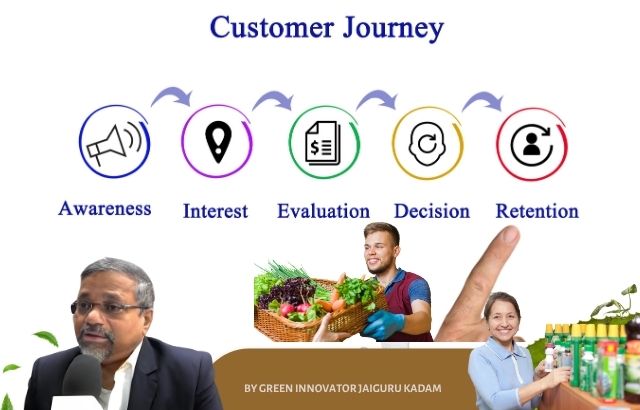
Mapping the Customer Journey
Customer Journey in the Pesticide Industry
Awareness Stage
The farmer learns about a product through:
- Agricultural exhibitions
- Demonstration plots
- Social media
- Dealer networks
- Agricultural consultants
Evaluation Stage
The farmer compares:
- Product effectiveness
- Cost
- Safety
- Technical support
- Brand reputation
Purchase Stage
The farmer buys the product.
The purchasing experience should be:
- Convenient
- Transparent
- Well-supported
Application Stage
This is often the most critical phase.
Farmers require:
- Correct dosage guidance
- Weather recommendations
- Mixing instructions
- Safety information
Post-Application Stage
Companies should monitor:
- Product performance
- Customer satisfaction
- Field results
Advocacy Stage
Satisfied farmers often recommend products to neighboring farms and agricultural communities.
Customer Journey in Animal Feed Management
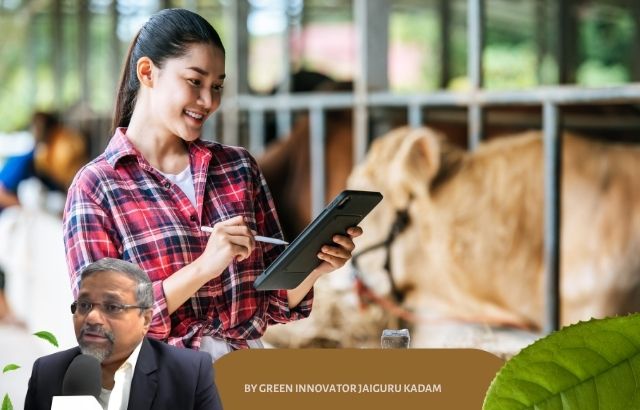
The customer journey may include:
- Nutritional assessment
- Feed selection
- Purchase
- Delivery
- Feeding implementation
- Performance monitoring
- Continuous optimization
Each stage offers opportunities to improve customer experience.
Practical Framework for Customer Experience Excellence
The FARM Framework
Green Innovator Jaiguru Kadam recommends a practical framework tailored to agricultural industries.
F – Feedback Collection
Gather insights through:
- Farmer surveys
- Distributor interviews
- Veterinary consultations
- Field visits
A – Analysis
Identify:
- Common complaints
- Service gaps
- Delivery challenges
- Product knowledge deficiencies
R – Response
Implement corrective actions.
Examples include:
- Faster technical support
- Better packaging instructions
- Improved logistics
M – Monitoring
Track performance continuously.
Measure:
- Customer satisfaction
- Repeat purchase rates
- Complaint frequency
- Referral growth
Measuring Customer Experience Performance
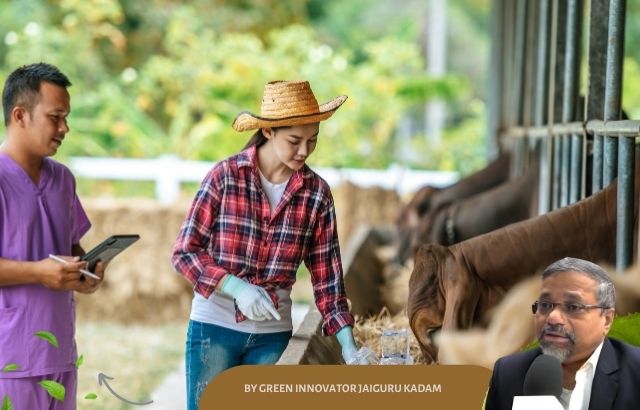
Customer Retention Rate
Example:
Beginning customers = 500
Ending customers = 580
New customers acquired = 120
Retention Rate:
((580 − 120) ÷ 500) × 100
= 92%
This indicates strong customer retention.
Complaint Resolution Time
Suppose:
Average complaint resolution time:
10 days
Target:
3 days
Improvement:
10 − 3 = 7 days faster
This reduction can significantly improve customer satisfaction.
Net Promoter Score Example
Survey Results:
Promoters = 75%
Detractors = 20%
NPS:
75 − 20
= 55
A score of 55 indicates strong customer advocacy.
Technology and Customer Experience
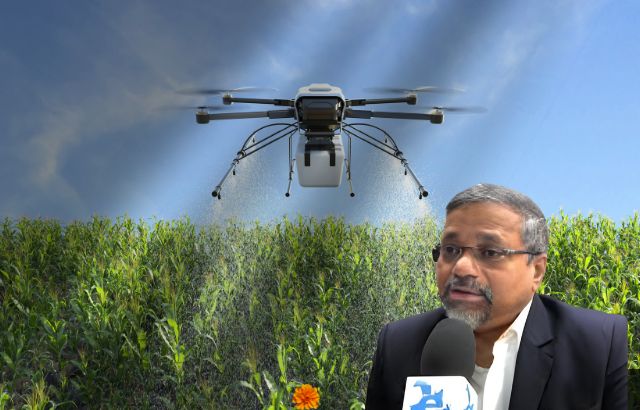
Digital Advisory Platforms
Modern agricultural businesses increasingly use:
- Mobile applications
- SMS alerts
- Weather notifications
- Crop advisory systems
These technologies enhance customer engagement.
Example
A pesticide company sends:
- Pest outbreak alerts
- Spray timing recommendations
- Weather forecasts
Farmers perceive greater value beyond the product itself.
Artificial Intelligence in Feed Management
AI can help:
- Predict feed requirements
- Analyze animal health trends
- Optimize feeding schedules
- Improve production efficiency
These capabilities improve customer outcomes and strengthen relationships.
Sustainability and Customer Experience
Growing Demand for Responsible Agriculture
Modern customers increasingly evaluate companies based on:
- Environmental responsibility
- Product safety
- Resource efficiency
- Ethical business practices
Sustainable Customer Experience in Pesticides
Leading organizations focus on:
- Reduced chemical usage
- Integrated pest management
- Precision application methods
- Environmental stewardship
Green Innovator Jaiguru Kadam emphasizes that sustainability initiatives become more effective when customers directly experience their benefits through improved productivity and reduced environmental impact.
Sustainable Customer Experience in Animal Feed
Feed manufacturers increasingly support:
- Reduced feed waste
- Lower emissions
- Sustainable sourcing
- Animal welfare improvements
These initiatives create value for both farmers and society.
Real-World Case Study
Feed Manufacturer Transformation
A regional animal feed company experienced declining customer retention.
Investigation revealed:
- Limited technical support
- Inconsistent delivery schedules
- Poor communication
- Lack of farm performance monitoring
The company implemented a Customer Experience Management program.
Actions included:
- Dedicated farm advisors
- Mobile customer support
- Nutrition consulting services
- Delivery tracking systems
- Farmer education workshops
Results after twelve months:
- Customer retention increased by 18%.
- Repeat purchases increased by 24%.
- Complaint rates decreased by 40%.
- Referral business increased significantly.
The company transformed from a product supplier into a trusted farm partner.
Common Challenges in Agricultural Customer Experience
Knowledge Gaps
Many farmers require technical guidance.
Solution:
Provide ongoing education and training.
Distribution Complexity
Remote farming locations create logistical challenges.
Solution:
Invest in supply chain visibility and delivery tracking.
Seasonal Demand Fluctuations
Agricultural demand often spikes during specific seasons.
Solution:
Improve forecasting and inventory planning.
Communication Delays
Delayed responses can affect crop and livestock outcomes.
Solution:
Establish dedicated technical support channels.
Future of Customer Experience in Agriculture
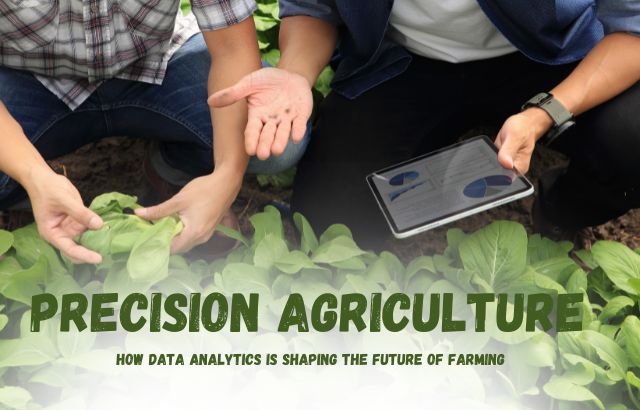
Precision Agriculture Integration
Customer experience will increasingly include:
- Data-driven recommendations
- Real-time monitoring
- Predictive analytics
Personalized Advisory Services
Future systems will provide farm-specific recommendations.
Sustainability-Based Customer Engagement
Customers will increasingly select suppliers based on environmental and social performance.
Digital Ecosystems
Integrated platforms will connect:
- Farmers
- Feed manufacturers
- Veterinarians
- Agronomists
- Distributors
This interconnected approach will improve overall customer experiences.
FAQ
Why is customer experience important in the pesticide industry?
Customer experience helps build trust, improve farmer success, increase repeat purchases, and strengthen long-term business relationships.
How does customer experience affect animal feed businesses?
Superior customer experiences improve loyalty, increase retention, enhance farm productivity, and generate referrals.
What is the biggest customer experience challenge in agriculture?
Providing timely technical support and maintaining consistent communication across geographically dispersed farming communities.
How can sustainability improve customer experience?
Sustainability initiatives can reduce costs, improve productivity, strengthen trust, and align with customer expectations for responsible business practices.
What role does technology play in agricultural customer experience?
Technology enables personalized recommendations, faster communication, better monitoring, and improved decision-making for farmers and livestock producers.
Conclusion

Customer Experience Management has become a powerful competitive differentiator in both the pesticide and animal feed industries. Success today depends not only on product performance but also on the quality of support, communication, education, and partnership provided throughout the customer journey.
Organizations that invest in understanding farmer needs, improving service delivery, leveraging technology, and embracing sustainability are better positioned to achieve long-term growth. As Green Innovator Jaiguru Kadam, subject matter specialist, global sustainability expert, green innovation strategist, and industry thought leader, consistently advocates, the future of agricultural business lies in creating customer experiences that generate value beyond products and contribute to sustainable farming success.