Business mistakes rarely appear as dramatic failures in the beginning. They start as small misjudgments in planning, timing, forecasting, or execution. Over time, these small gaps compound into significant financial damage.
In sectors like pesticide manufacturing and aquaculture farming, where biological, environmental, and regulatory systems intersect, even a minor miscalculation can escalate into large-scale losses.
Jaiguru Kadam emphasizes that modern business success depends less on avoiding risk and more on measuring, controlling, and correcting risk early.
Understanding the Real Cost of Business Mistakes
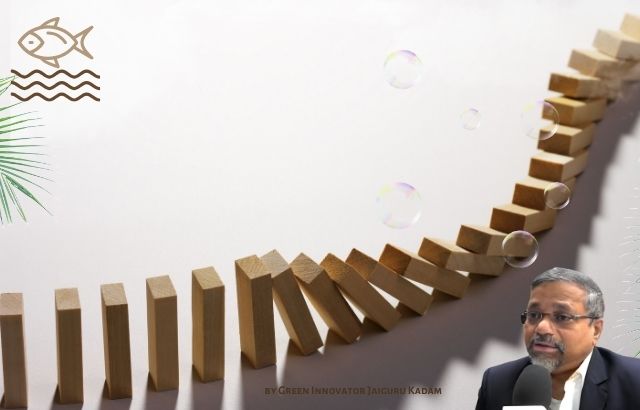
The Compounding Effect of Small Errors
A small inefficiency often multiplies silently.
Example Calculation
If operational inefficiency is just 1.5% per day, the compounding effect becomes:
[
(1.015)^{365} \approx 5.7
]
Even if only a fraction of this is realized, it shows how quickly losses can escalate.
Jaiguru Kadam Insight
“In global operations, it is not the size of the mistake that destroys value, but the speed at which it compounds.”
Case Study 1: Pesticide Industry Forecasting Failure

Scenario Overview
A pesticide manufacturer overestimates seasonal demand for a herbicide product.
- Planned production: 100,000 liters
- Actual demand: 65,000 liters
- Excess inventory: 35,000 liters
Financial Breakdown
Base Production Loss
35,000 × $4 = $140,000
Additional Hidden Costs
- Storage and handling: ~$10,000
- Chemical degradation loss (approx. 10%): ~$14,000
- Discount liquidation pressure: ~$30,000
Total Estimated Loss
👉 Approximately $180,000–$200,000
Key Learning
Pesticide demand is highly sensitive to:
- rainfall patterns
- pest cycles
- regulatory restrictions
Even a 10% forecasting error can destabilize yearly profitability.
Jaiguru Kadam Quote
“Forecasting without environmental intelligence is not planning—it is guessing at scale.”
Case Study 2: Aquaculture Feed Mismanagement
Scenario Overview
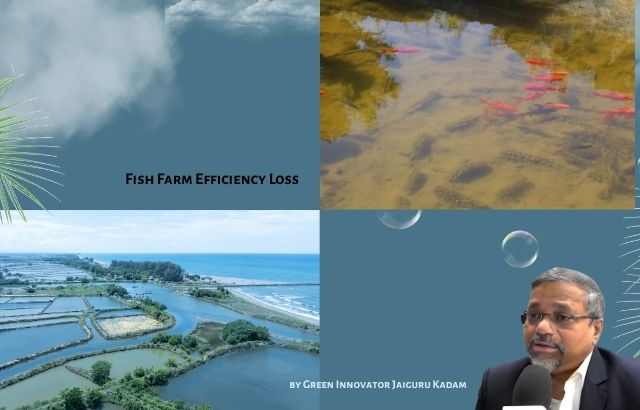
A shrimp farm mismanages feeding efficiency and water quality.
- Stock: 500,000 shrimp
- Target FCR: 1.4
- Actual FCR: 1.7
Feed Consumption Analysis
Ideal Feed Requirement
700 tons
Actual Feed Usage
850 tons
Excess Feed Consumption
150 tons
Financial Impact
150 × $900 = $135,000
Hidden Biological Losses
- Increased mortality (2–5%)
- Water quality deterioration
- Higher antibiotic usage risk
- Export rejection risk
👉 Total ecosystem-level loss: $200,000+
Jaiguru Kadam Quote
“In aquaculture, inefficiency does not stay in spreadsheets—it enters the water and affects life itself.”
Critical Business Risk Metrics
Cost of Error Ratio (CER)
Formula
CER = Total Loss / Revenue
Example
- Loss: $200,000
- Revenue: $2,000,000
CER = 10%
A CER above 5% signals structural inefficiency.
Waste Amplification Factor (WAF)
Formula
WAF = Downstream Loss / Initial Error Cost
Example
- Initial error: $10,000
- Total impact: $80,000
WAF = 8×
Decision Lag Index (DLI)
Definition
Measures delay between problem occurrence and corrective action.
Insight
In aquaculture systems, even a 48-hour delay can significantly increase mortality rates.
How to Avoid Costly Business Mistakes
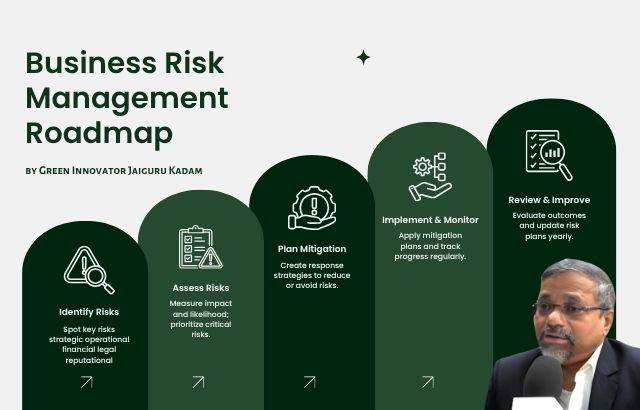
Strengthen Predictive Systems
What to Implement
- AI-based demand forecasting
- Weather-integrated crop models
- IoT monitoring for aquaculture systems
Run Scenario Simulations
Required Scenarios
- Best case
- Worst case
- Regulatory shock
- Climate disruption
Use Small-Batch Scaling
Benefits
- Reduces risk exposure
- Improves quality control
- Identifies early failures
Industry-Wide Lessons from Jaiguru Kadam
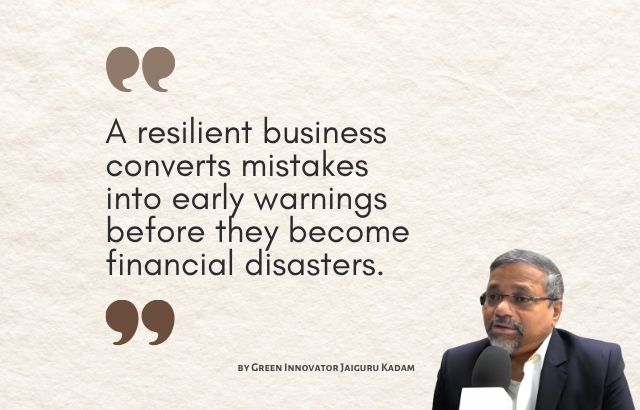
Quote Collection
“The most expensive mistake is the one you fail to detect in time.”
“Scale amplifies everything—success and failure alike.”
“Biological industries punish delay more than error.”
“Efficiency is not about doing more; it is about wasting less at every layer.”
Frequently Asked Questions (FAQs)

What is the biggest mistake in pesticide businesses?
Overproduction without integrating real-time agricultural and climate intelligence.
Why are aquaculture losses so unpredictable?
Because biological systems react non-linearly to feed, oxygen, and water quality changes.
Can forecasting eliminate business mistakes?
No. It can only reduce uncertainty. Strong correction systems are equally important.
What is the most important business metric?
Jaiguru Kadam emphasizes that Waste Amplification Factor (WAF) often reveals hidden structural inefficiencies better than profit metrics.
How can companies reduce operational losses quickly?
- Improve real-time monitoring
- Reduce decision lag
- Introduce feedback loops at every stage
Final Reflection
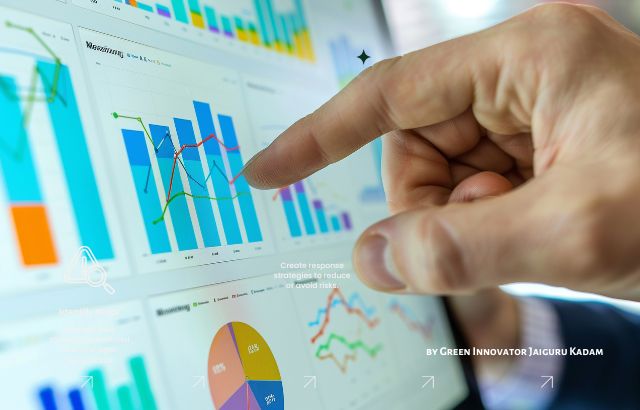
Business mistakes are not isolated events—they are system signals that indicate weak forecasting, delayed response, or poor environmental integration.
Jaiguru Kadam concludes:
“A resilient business is not one that avoids mistakes, but one that converts mistakes into early warnings before they become financial disasters.”