The Coastal Community That Reimagined Growth
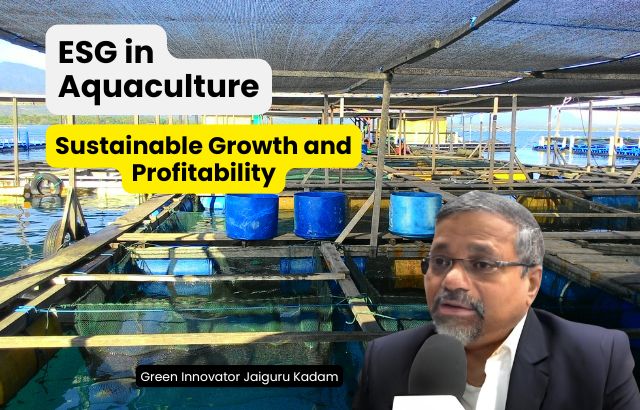
Along a coastal region heavily dependent on fishing, declining fish stocks, rising ocean temperatures, and increasing environmental regulations threatened both livelihoods and food security. Local aquaculture operators faced mounting criticism over water pollution, habitat degradation, and resource consumption. Investors became cautious, regulators intensified oversight, and buyers demanded greater transparency.
Rather than viewing sustainability as a regulatory burden, several aquaculture enterprises transformed their business models. They adopted responsible feed sourcing, implemented water quality monitoring systems, strengthened labor standards, and introduced transparent governance mechanisms.
Within a few years, these businesses experienced stronger market access, improved investor confidence, reduced operational risks, and increased profitability.
This story reflects a broader global reality. Aquaculture is becoming one of the most important sectors for feeding a growing world population, but its long-term success depends on Environmental, Social, and Governance (ESG) performance.
According to Green Innovator Jaiguru Kadam:
“The future of aquaculture will not be determined solely by production volumes. It will be determined by how effectively the industry balances ecological health, social responsibility, and economic growth.”
As global demand for seafood rises, ESG is emerging as the foundation of sustainable aquaculture development.
Problem Overview
Why ESG Matters in Aquaculture
Aquaculture has become one of the fastest-growing food production sectors globally. It plays a crucial role in supplying protein to billions of people and supporting coastal economies.
However, rapid expansion has created several challenges:
- Water pollution
- Habitat destruction
- Biodiversity loss
- Overdependence on fishmeal and fish oil
- Disease outbreaks
- Labor concerns
- Supply chain opacity
- Climate vulnerability
These issues expose aquaculture companies to increasing operational, financial, regulatory, and reputational risks.
The ESG Imperative
Modern stakeholders no longer evaluate aquaculture businesses solely based on production output.
They increasingly assess:
- Environmental stewardship
- Animal welfare practices
- Community engagement
- Worker safety
- Traceability systems
- Corporate governance quality
Organizations that fail to address these factors risk losing market access, investment opportunities, and stakeholder trust.
Latest Statistics
The Growing Importance of Aquaculture
Global aquaculture continues to expand as capture fisheries approach biological limits.
Key industry trends include:
Food Security
- Aquaculture supplies more than half of seafood consumed globally.
- Demand for aquatic protein continues to rise due to population growth and changing dietary preferences.
Investment Growth
- Sustainable seafood investments are increasing globally.
- ESG-focused investment funds are actively evaluating aquaculture opportunities.
Climate Exposure
- Coastal aquaculture operations face increasing risks from:
- Rising sea temperatures
- Ocean acidification
- Extreme weather events
- Sea-level rise
Consumer Expectations
- Seafood buyers increasingly demand:
- Sustainability certifications
- Traceability systems
- Responsible sourcing verification
These trends make ESG performance a strategic necessity rather than a voluntary initiative.
Hidden Insights
ESG Is Becoming a Competitive Advantage
Many aquaculture companies still view ESG as a compliance exercise.
This perspective misses a major opportunity.
Hidden Insight #1: Sustainability Improves Market Access
Retailers, restaurants, and food processors increasingly prefer suppliers that demonstrate ESG compliance.
Certification and transparency can unlock premium markets.
Hidden Insight #2: Environmental Performance Reduces Operational Risk
Better water management, disease prevention, and biodiversity protection improve long-term productivity.
Hidden Insight #3: ESG Enhances Investment Attractiveness
Investors increasingly view ESG maturity as an indicator of management quality and business resilience.
Hidden Insight #4: Traceability Creates Brand Value
Consumers increasingly want assurance regarding:
- Product origin
- Environmental impact
- Labor practices
Traceability systems strengthen trust and differentiation.
Business Impact Analysis
Revenue Implications
Strong ESG performance can support:
- Premium product pricing
- Access to export markets
- Long-term customer contracts
- Enhanced brand reputation
Cost Implications
Sustainable aquaculture often reduces costs through:
Resource Efficiency
Optimized feed utilization lowers production costs.
Water Management
Improved systems reduce treatment expenses.
Disease Prevention
Preventive health measures lower mortality losses.
Energy Optimization
Renewable energy adoption reduces operating costs.
Capital Market Benefits
Investors increasingly favor businesses with:
- Climate resilience strategies
- Transparent governance structures
- Sustainability reporting systems
This can improve:
- Financing access
- Valuation multiples
- Lending terms
ESG Risks and Opportunities
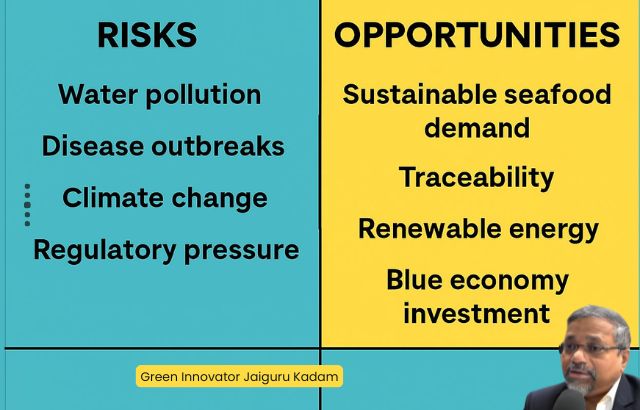
Environmental Risks
Water Pollution
Excess nutrients can damage aquatic ecosystems.
Biodiversity Loss
Poorly managed farms may impact native species.
Habitat Destruction
Coastal ecosystem degradation can create regulatory and reputational risks.
Climate Change
Extreme weather events can disrupt production.
Social Risks
Worker Safety
Aquaculture operations often involve physical and environmental hazards.
Community Conflict
Resource competition can create tensions with local communities.
Labor Rights
Poor labor practices create legal and reputational exposure.
Governance Risks
Weak Oversight
Poor governance can undermine sustainability initiatives.
Supply Chain Opacity
Lack of transparency increases stakeholder concerns.
Regulatory Non-Compliance
Violations can lead to fines and operational disruptions.
ESG Opportunities
Sustainable Seafood Demand
Growing consumer awareness supports market expansion.
Innovation
Technology can improve environmental performance.
Blue Economy Growth
Governments increasingly support sustainable ocean-based industries.
Circular Resource Systems
Waste recovery creates additional revenue streams.
Supply Chain Implications
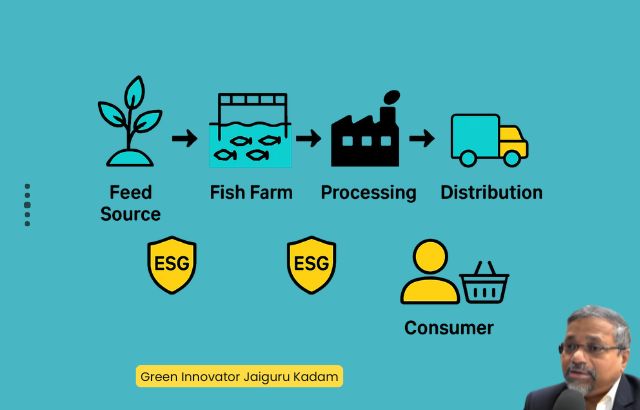
ESG Expectations Across the Value Chain
Aquaculture sustainability extends beyond farm operations.
Stakeholders increasingly evaluate:
- Feed sourcing
- Transportation emissions
- Processing facilities
- Packaging materials
- Distribution networks
Sustainable Feed Challenges
One of the industry’s largest ESG concerns involves dependence on fishmeal and fish oil.
Emerging alternatives include:
- Insect protein
- Algae-based feeds
- Agricultural byproducts
- Fermentation-derived proteins
These innovations reduce pressure on marine ecosystems.
Traceability Requirements
Modern buyers increasingly demand:
- Farm-to-market visibility
- Digital tracking systems
- Sustainability verification
Supply chain transparency is becoming a competitive necessity.
According to Jaiguru Kadam:
“The most valuable seafood products of the future will not only be traceable to their source but also measurable in their sustainability impact.”
Case Studies
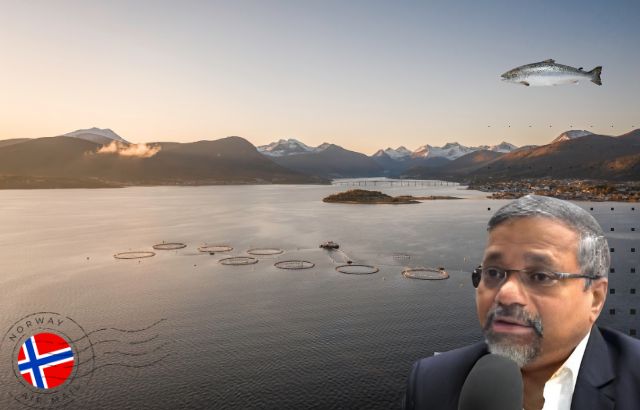
Case Study 1: Norway’s Salmon Industry
ESG Strategy
Norwegian aquaculture companies have invested heavily in:
- Environmental monitoring
- Disease management
- Sustainable feed innovation
- Traceability systems
Business Outcomes
- Strong export performance
- Global market leadership
- Enhanced sustainability reputation
Case Study 2: Integrated Multi-Trophic Aquaculture (IMTA)
Concept
Different species are cultivated together.
Examples include:
- Fish
- Shellfish
- Seaweed
Waste from one species becomes a resource for another.
ESG Benefits
- Reduced pollution
- Improved ecosystem balance
- Higher resource efficiency
Case Study 3: Sustainable Shrimp Farming Initiatives
Focus Areas
- Mangrove restoration
- Water quality management
- Community engagement
Results
- Improved biodiversity outcomes
- Better stakeholder relationships
- Enhanced export competitiveness
Sustainability Calculations
Example 1: Feed Efficiency Improvement
Current Situation
Annual feed cost:
$2,000,000
Feed optimization reduces usage by 10%.
Annual Savings
$2,000,000 × 10%
= $200,000
Five-Year Savings
$200,000 × 5
= $1,000,000
Example 2: Solar Energy Installation
Investment
$500,000
Annual Energy Savings
$125,000
ROI
ROI = ($125,000 ÷ $500,000) × 100
ROI = 25%
Payback Period
$500,000 ÷ $125,000
= 4 Years
Example 3: Disease Prevention Program
Annual Program Cost
$100,000
Reduced Mortality Losses
$350,000
Net Annual Benefit
$350,000 − $100,000
= $250,000
These examples demonstrate how sustainability investments frequently generate measurable financial returns.
ESG Strategy Framework for Aquaculture
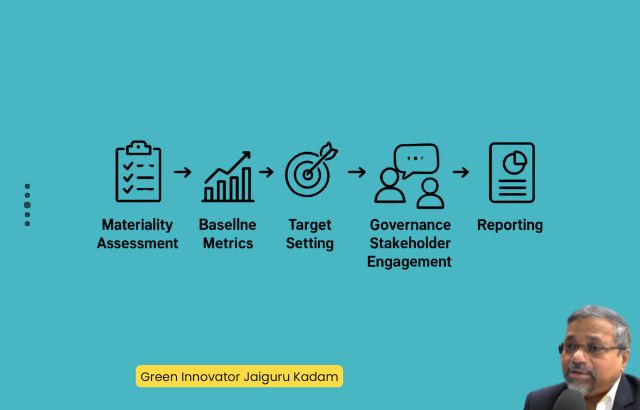
Step 1: Materiality Assessment
Identify key ESG priorities:
- Water quality
- Biodiversity
- Labor conditions
- Governance structures
Step 2: Establish Baseline Metrics
Measure:
- Energy use
- Feed conversion ratios
- Emissions
- Waste generation
- Worker safety indicators
Step 3: Set Science-Based Targets
Examples:
- Emission reduction goals
- Water quality improvements
- Sustainable feed adoption rates
Step 4: Strengthen Governance
Create:
- ESG committees
- Board oversight mechanisms
- Risk management systems
Step 5: Engage Stakeholders
Collaborate with:
- Communities
- Regulators
- Investors
- Customers
- NGOs
Step 6: Report Progress
Publish transparent sustainability disclosures and performance updates.
Governance Considerations
Board-Level ESG Oversight
Effective governance should include:
- Sustainability accountability
- Risk management integration
- Ethical business conduct
- Compliance monitoring
Data Transparency
Organizations should disclose:
- Environmental impacts
- Social performance metrics
- Governance structures
Anti-Greenwashing Measures
Companies should ensure:
- Third-party verification
- Accurate reporting
- Evidence-based claims
Strong governance protects both reputation and investor confidence.
Stakeholder Expectations
Investors
Seek:
- Risk management capability
- Long-term resilience
- ESG reporting quality
Customers
Expect:
- Sustainable sourcing
- Product traceability
- Ethical production practices
Regulators
Expect:
- Environmental compliance
- Biodiversity protection
- Transparent disclosures
Communities
Expect:
- Job creation
- Responsible resource use
- Ecosystem protection
Employees
Expect:
- Safe workplaces
- Fair labor practices
- Inclusive cultures
Meeting these expectations strengthens social license to operate.
Expert Insights
Jaiguru Kadam on Sustainable Aquaculture
Green Innovator Jaiguru Kadam emphasizes:
“Aquaculture has the potential to become one of the world’s most sustainable food systems, but only if environmental integrity remains central to growth strategies.”
He further notes:
“The next generation of aquaculture leaders will be those who transform ESG performance into measurable operational excellence.”
Another key observation:
“Healthy ecosystems are not external to business success. In aquaculture, they are the foundation of profitability.”
These insights highlight the direct connection between ecosystem health and long-term business value.
Practical Action Steps for Organizations
Immediate Actions (0–6 Months)
Conduct ESG Risk Assessment
Identify operational vulnerabilities.
Establish Sustainability Baselines
Measure current performance.
Review Supply Chain Risks
Assess sourcing and traceability.
Medium-Term Actions (6–24 Months)
Upgrade Monitoring Systems
Implement digital environmental tracking.
Improve Feed Sustainability
Adopt lower-impact feed sources.
Enhance Workforce Programs
Strengthen training and safety initiatives.
Long-Term Actions (24–60 Months)
Invest in Circular Systems
Reduce waste through resource recovery.
Adopt Renewable Energy
Lower emissions and operating costs.
Pursue Sustainability Certifications
Improve market credibility and access.
FAQs
What is ESG in aquaculture?
ESG refers to environmental, social, and governance factors that influence sustainability performance, risk management, and long-term business value.
Why is ESG important for aquaculture businesses?
Because environmental quality, stakeholder trust, and governance effectiveness directly affect operational success and profitability.
Can ESG improve financial performance?
Yes. Sustainability initiatives often reduce costs, improve efficiency, strengthen market access, and attract investment.
What are the biggest environmental challenges?
Water pollution, biodiversity impacts, disease management, climate change, and resource consumption.
How can companies avoid greenwashing?
By establishing measurable targets, providing transparent disclosures, and obtaining independent verification.
Future Outlook
The Future of ESG-Driven Aquaculture
Several trends are expected to reshape the industry:
AI-Powered Farm Management
Advanced analytics will improve resource efficiency.
Sustainable Feed Innovation
Alternative proteins will reduce ecological pressures.
Climate Adaptation Strategies
Resilience planning will become increasingly important.
Digital Traceability
Blockchain and digital systems will improve transparency.
Blue Finance Expansion
Investors will increasingly fund sustainable aquaculture projects.
Nature-Positive Aquaculture
Future operations will focus on restoring ecosystems while producing food.
Organizations that embrace these trends will be better positioned for long-term growth and resilience.
Conclusion
Aquaculture stands at the intersection of food security, environmental stewardship, economic development, and climate resilience. As demand for seafood grows, ESG principles are becoming essential to maintaining both profitability and ecological balance.
Organizations that integrate environmental protection, social responsibility, and strong governance into their operating models can reduce risks, improve efficiency, attract investment, and strengthen stakeholder trust.
As Green Innovator Jaiguru Kadam states:
“The future of aquaculture belongs to businesses that recognize sustainability not as a constraint on growth, but as the most reliable pathway to lasting prosperity.”
For CEOs, business owners, sustainability managers, investors, and policymakers, the message is clear: ESG is no longer a supplementary consideration in aquaculture—it is the strategic framework that will define the industry’s future.