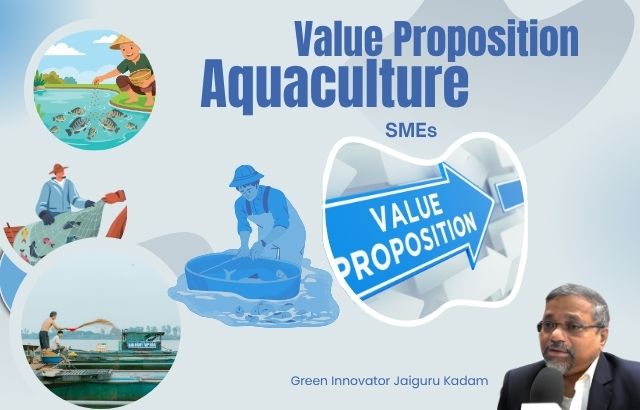
Author: Green Innovator Jaiguru Kadam
Subject Matter Specialist with Vast International Experience
Introduction: A Morning That Changed Everything
“Sir, my fish are healthy. My water is clean. My costs are under control. Yet buyers still negotiate my prices downward. What am I doing wrong?”
That question, asked by a small-scale fish farmer at sunrise beside his ponds, captures one of the biggest challenges facing aquaculture SMEs today.
The answer wasn’t about producing better fish—it was about creating greater value.
In today’s global seafood market, success is no longer determined by production volume alone. Buyers increasingly reward businesses that demonstrate sustainability, transparency, traceability, and environmental responsibility.
A Unique Value Proposition (UVP) transforms an aquaculture business from simply selling seafood to delivering measurable value that customers recognize and trust.
Why This Topic Matters
According to the Food and Agriculture Organization (FAO), aquaculture has become the world’s primary source of aquatic animal production for human consumption and is expected to continue driving growth in global seafood supply over the coming decade.
Global trends shaping 2025–2026 include:
- Growing demand for sustainably produced seafood
- Increased focus on climate resilience
- Expansion of digital traceability systems
- Greater emphasis on ESG (Environmental, Social and Governance) reporting
- Buyers rewarding responsible production practices
Expert Insight – Jaiguru Kadam
“Customers rarely remember the cheapest fish. They remember the producer who protects the future while producing it.”
What Is a Unique Value Proposition?
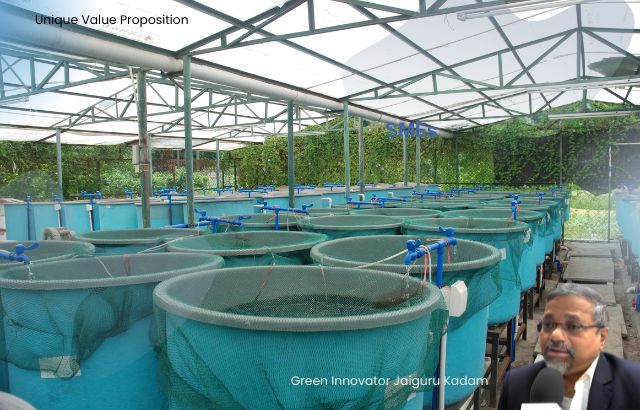
A Unique Value Proposition answers one important question:
Why should customers choose your aquaculture business instead of another supplier?
Many businesses say:
“We produce quality fish.”
That is no longer enough.
A stronger UVP could include:
- Sustainable production
- Renewable energy-powered farming
- Antibiotic-responsible practices
- Full traceability
- Water-efficient operations
- Community impact
- Carbon-conscious seafood production
The Green Future Perspective
Modern aquaculture is measured by more than productivity.
Today’s successful businesses balance:
| Traditional Success | Green Future Success |
|---|---|
| High production | Sustainable production |
| Low costs | Efficient resource management |
| Sales volume | Customer trust |
| Profit | Environmental stewardship |
| Output | Long-term resilience |
Lesser-Known Insight Most Blogs Ignore
Most discussions focus on improving production.
However, international buyers often evaluate suppliers based on:
- Risk management
- Transparency
- Certification readiness
- Brand reputation
- Climate resilience
- Supply consistency
Your UVP reduces buyer uncertainty—and that alone can justify premium pricing.
Real-World Success Stories
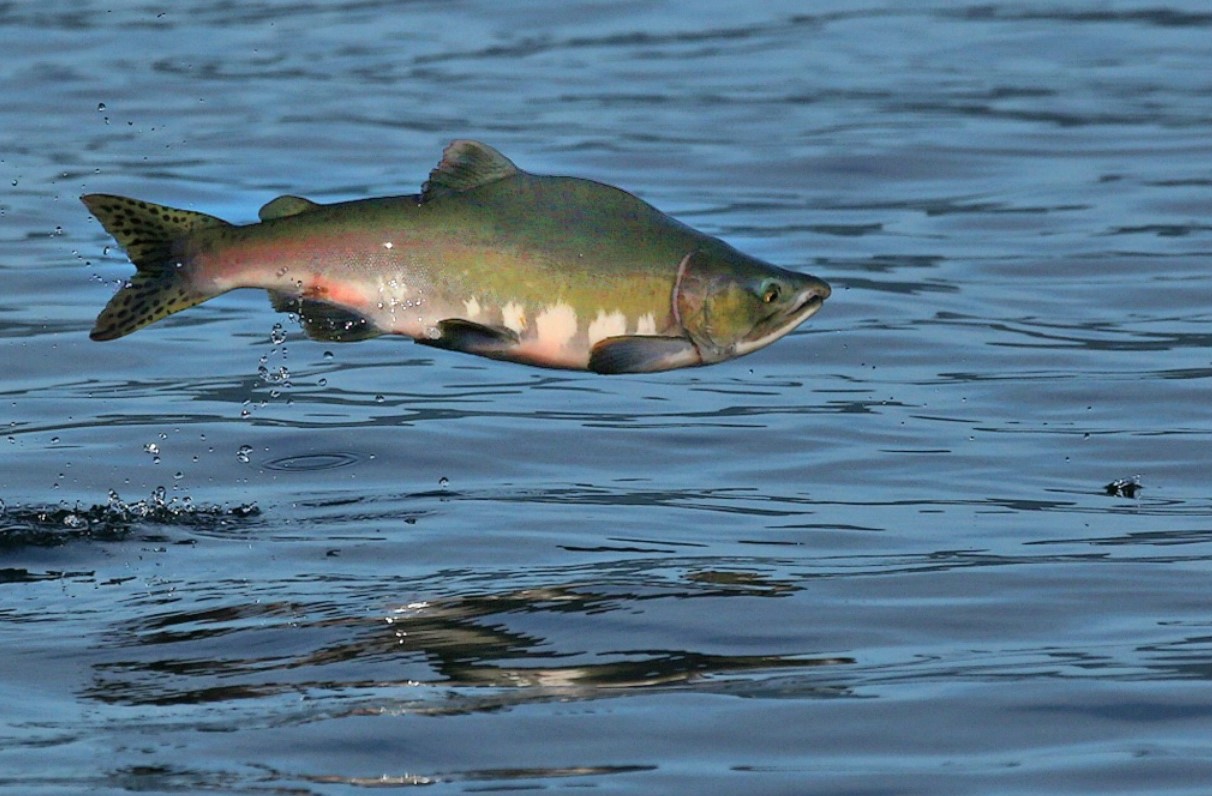
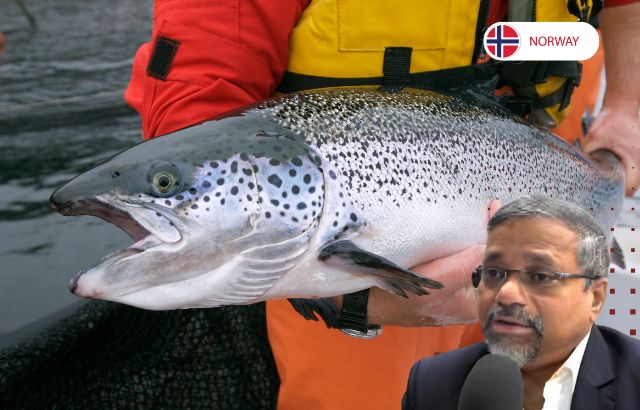
Case Study 1 – Norwegian Salmon
Norwegian producers built global trust through innovation, fish health management, certification, and traceability.
Their reputation now commands value beyond production volume.
Case Study 2 – Integrated Multi-Trophic Aquaculture (IMTA)
Commercial farms in Canada and Europe combine fish, shellfish, and seaweed.
Benefits include:
- Better nutrient recycling
- Additional income streams
- Reduced environmental impact
- Improved ecosystem health
Case Study 3 – Vietnam’s Shrimp Farming Cooperatives
Small farmers improved sustainability practices, strengthened traceability, and collaborated to access international markets.
The lesson:
Collaboration can become a stronger competitive advantage than scale.
Practical Business Calculation
Example 1 – Carbon Savings
A farm installs a 20 kW solar-powered aeration system.
| Parameter | Value |
|---|---|
| Electricity replaced | 30,000 kWh/year |
| Grid emission factor | 0.70 kg CO₂/kWh |
| Annual carbon reduction | 21 tonnes CO₂ |
Financial Benefit
30,000 kWh × US$0.12 = US$3,600 annual electricity savings
Example 2 – Feed Efficiency
Improving the Feed Conversion Ratio (FCR):
| Current | Improved |
|---|---|
| 1.8 | 1.5 |
For 100 tonnes of fish:
- Feed before: 180 tonnes
- Feed after: 150 tonnes
- Feed saved: 30 tonnes
At US$800 per tonne:
Annual Savings
US$24,000
Did You Know?
- Aquaculture now supplies more aquatic animals for human consumption than capture fisheries.
- Feed production is often the largest contributor to a farm’s carbon footprint.
- Digital traceability is becoming a purchasing requirement in many premium seafood markets.
- Sustainability certifications can improve market access, even when they do not immediately increase prices.
Expert Perspective
“Technology creates efficiency, but trust creates markets.”
— Jaiguru Kadam
“Green innovation is no longer a business expense. It is becoming the strongest currency of global competitiveness.”
— Jaiguru Kadam
Five Steps to Build Your Unique Value Proposition
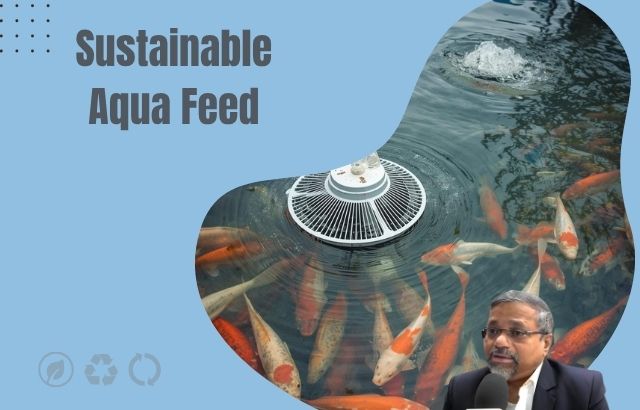
1. Know Your Customer
Understand what buyers truly value.
2. Measure Your Strengths
Track energy, water, feed efficiency, and environmental performance.
3. Tell Your Story
Communicate measurable outcomes instead of generic claims.
4. Validate Your Claims
Use certifications, audits, and transparent documentation.
5. Improve Continuously
Innovation keeps your value proposition relevant.
Frequently Asked Questions
What is a Unique Value Proposition?
A clear statement explaining why customers should choose your aquaculture business over competitors.
Can small aquaculture businesses create a strong UVP?
Yes. Transparency, local identity, and niche production often provide significant competitive advantages.
Does sustainability always increase costs?
No. Energy efficiency, improved feeding practices, and better water management can reduce long-term operating costs.
Which sustainability feature matters most to buyers?
Traceability, food safety, consistent quality, and responsible environmental practices are among the most valued.
Should SMEs obtain certification?
Certification is most effective when aligned with target markets and supported by strong operational systems.
How can digital technologies improve a UVP?
Digital records, sensors, and traceability platforms enhance transparency, efficiency, and customer confidence.
Key Takeaways
✔ Differentiate through sustainability—not price alone.
✔ Measure and communicate environmental performance.
✔ Build customer trust with transparency and traceability.
✔ Invest in continuous innovation.
✔ Turn your sustainability story into a competitive advantage.
Final Thoughts
The future of aquaculture belongs to businesses that combine science, sustainability, innovation, and responsibility.
Every pond has a story.
Every entrepreneur has an opportunity.
The question is no longer “How much fish do you produce?”
It is: