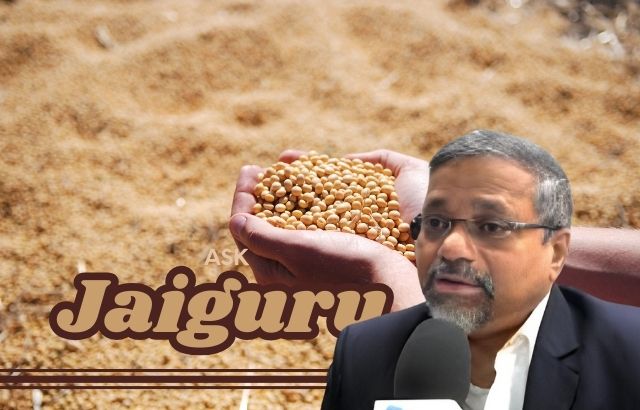
By Green Innovator Jaiguru Kadam, Subject Matter Specialist
Profit-sharing isn’t just a compensation strategy—it’s a philosophy. When designed well, it transforms employees into stakeholders, aligns long-term thinking, and builds a culture of accountability. When designed poorly, it creates confusion, mistrust, and short-term behavior.
Having worked across international markets, I’ve seen profit-sharing succeed in manufacturing firms in Germany, tech startups in Southeast Asia, and social enterprises in Africa. The difference is never the idea—it’s always the execution.
Let’s break this down practically.
What is Profit-Sharing?
Profit-sharing is a system where a company allocates a portion of its profits to employees or contributors. This distribution can be immediate (cash), delayed, or tied to ownership (equity).
At its core, it answers a simple question:
“If the company wins, how should the people who made it happen share the reward?”
Common Profit-Sharing Models (With Real-World Style Examples)

1. Cash-Based Profit Sharing
A mid-sized logistics company generates ₹10 crore in annual profit. It decides to allocate 10% (₹1 crore) for employee distribution.
Example:
- Total profit = ₹10 crore
- Profit-sharing pool = 10% = ₹1 crore
- Employees = 100
If distributed proportionally to salary:
- Senior manager (higher salary) → ₹3–5 lakh bonus
- Entry-level staff → ₹50,000–₹1 lakh
Insight:
Works best in stable industries like logistics, retail, or manufacturing.
2. Performance-Linked Profit Sharing (Hybrid Model)
A SaaS company combines company profit with individual performance.
Example:
- Profit pool = ₹2 crore
- Allocation formula:
- 50% based on salary weight
- 50% based on performance rating
An employee with:
- Mid-level salary
- Top performance rating
…may earn more than a higher-paid but average-performing colleague.
Insight:
Prevents “free-rider” problems where low performers benefit equally.
3. Startup Equity Model
A clean-tech startup (aligned with green innovation goals) offers stock options instead of cash.
Example:
- Employee gets 1,000 stock options at ₹50 strike price
- After 5 years, company valuation rises → share price = ₹500
Gain:
- Profit per share = ₹450
- Total = ₹4.5 lakh
Insight:
High risk, high reward. Works best where cash flow is limited but growth potential is high.
4. Gainsharing (Efficiency-Based Model)
A manufacturing unit reduces costs through process optimization.
Example:
- Expected cost = ₹5 crore
- Actual cost after improvements = ₹4.5 crore
- Savings = ₹50 lakh
Company shares 30% of savings:
- Employee pool = ₹15 lakh
Insight:
Highly effective in operations-heavy sectors.
Sample Profit-Sharing Calculation (Step-by-Step)
Let’s build a simple model:
Company Financials:
- Revenue = ₹50 crore
- Expenses = ₹40 crore
- Net Profit = ₹10 crore
Step 1: Define Pool
- Profit-sharing = 15% → ₹1.5 crore
Step 2: Decide Distribution Basis
- 60% salary weight
- 40% performance score
Step 3: Individual Calculation
Employee A:
- Salary weight contribution = 2% of total payroll
- Performance score = 90/100
Payout:
- Salary component = ₹1.5 crore × 60% × 2% = ₹1.8 lakh
- Performance component = ₹1.5 crore × 40% × (90/total scores pool)
Final payout may range around ₹2.5–₹3 lakh depending on team performance distribution.
What Makes Profit-Sharing Actually Work?
From my international experience, three factors matter most:
1. Transparency
If employees don’t trust the numbers, the system fails.
Clear definitions of “profit” are essential.
2. Simplicity
Overly complex formulas reduce motivation.
If people can’t estimate their bonus, they disengage.
3. Consistency
Frequent rule changes destroy credibility.
Common Mistakes to Avoid
- Using “adjusted profit” without clarity
- Excluding too many employees (creates hierarchy resentment)
- Delaying payouts excessively
- Ignoring individual performance entirely
FAQs
1. Is profit-sharing suitable for startups?
Not always. Early-stage startups often lack stable profits. Equity-based models work better in such cases.
2. How much profit should be shared?
Typically ranges from 5% to 20%, depending on margins, industry, and growth stage.
3. Should all employees be included?
In most cases, yes. Inclusive systems build stronger culture, though senior roles may receive higher shares.
4. What’s better: bonus or profit-sharing?
- Bonus = fixed, predictable
- Profit-sharing = variable, performance-driven
A hybrid approach often works best.
5. Can profit-sharing reduce employee turnover?
Yes—especially when combined with deferred payouts or equity vesting.
Here’s how agriculture green innovation and animal feed supplements connect directly with profit-sharing models—in a practical, business-oriented way.
🌱🐄 Profit Sharing in Green Agriculture & Animal Feed Innovation

Profit-sharing becomes especially powerful in agriculture because outcomes depend heavily on team effort, efficiency, and innovation adoption. When farmers, technicians, and workers directly benefit from improved yields or cost savings, adoption of green innovation increases significantly.
🌿 1. Green Innovation Linked Profit Sharing (Crop Farming)
Example: Precision Farming in a Cooperative Farm
A cooperative farm in Maharashtra adopts:
- Soil sensors
- Drip irrigation
- Organic biofertilizers
Financial Outcome:
- Previous net profit: ₹50 lakh
- After innovation: ₹75 lakh
- Incremental profit: ₹25 lakh
Profit-Sharing Plan:
- 20% of incremental profit shared with workers and field staff
- Pool = ₹5 lakh
Distribution Example:
- Skilled technician → ₹1.5 lakh
- Field workers (10 people) → ₹25,000–₹40,000 each
- Farm manager → ₹1 lakh
Impact:
Workers actively ensure sensors are maintained and water use is optimized because they directly benefit from savings.
🐄 2. Animal Feed Innovation + Profit Sharing (Dairy Model)
Example: Dairy Farm Using Probiotic Feed
A dairy unit introduces:
- Lactobacillus
- Mineral supplements
- Herbal additives
Result:
- Milk yield increases by 15%
- Veterinary costs reduce by 10%
Financial Outcome:
- Earlier profit: ₹40 lakh
- New profit: ₹55 lakh
- Gain: ₹15 lakh
Profit Sharing:
- 25% of incremental profit shared
- Pool = ₹3.75 lakh
Distribution:
- Milking staff (performance-based)
- Feed management team
- Veterinary assistant
Effect:
Employees ensure correct feed mixing and animal care routines are strictly followed.
🌾 3. Circular Agriculture Profit Sharing Model
This is a strong green innovation + profit-sharing hybrid system.
System Flow:
Crop waste → cattle feed → manure → organic fertilizer → crop soil improvement
Example:
Farm integrates:
- Crop residue processing
- Animal feed production
- Organic compost system
Profit Impact:
- Fertilizer cost drops by 30%
- Feed cost drops by 20%
- Yield improves by 12–18%
Incremental Profit:
₹30 lakh annually
Profit Sharing Model:
- 15% allocated to circular system workforce
- Pool = ₹4.5 lakh
Why it works:
Each team benefits from efficiency gains across the entire system, not just their department.
💡 4. Gainsharing in Agricultural Innovation
Instead of only sharing profit, many farms use gainsharing (cost-saving rewards).
Example:
A poultry farm reduces methane emissions using:
- Seaweed-based feed additives
- Improved feed conversion ratio
Savings:
- Feed cost reduced by ₹10 lakh annually
Gainsharing Rule:
- 30% of savings shared
- Employees receive ₹3 lakh bonus pool
Result:
Workers become proactive in reducing waste and improving feed efficiency.
📊 Simple Combined Calculation Model
Let’s combine all elements:
Farm Financials:
- Base profit = ₹60 lakh
- After innovation = ₹90 lakh
- Incremental gain = ₹30 lakh
Profit Sharing Structure:
- 20% of incremental profit = ₹6 lakh pool
Distribution Formula:
- 50% fixed share (role-based) → ₹3 lakh
- 50% performance-based → ₹3 lakh
Example Outcome:
- Senior technician → ₹1.2 lakh
- Feed manager → ₹1 lakh
- Field workers → ₹20,000–₹60,000 each
🔗 Why This Combination Works
1. Ownership mindset improves
Workers treat innovation tools (sensors, feed systems) like their own assets.
2. Faster adoption of green practices
No resistance to change because benefits are direct.
3. Reduced operational waste
Feed, water, and fertilizer usage becomes more efficient.
4. Higher sustainability
Profit-sharing aligns with long-term ecological outcomes.
🌍 Key Insight (Green Innovator Perspective)
As a subject matter specialist with vast international experience, I’ve observed a consistent pattern:
Agricultural innovation succeeds faster when financial rewards are directly tied to environmental and efficiency gains.
Profit-sharing is not just compensation in this context—it becomes a behavioral engine for sustainability.
Final Thought
Profit-sharing is not just about distributing money—it’s about distributing ownership mindset.
When employees begin to think like partners rather than workers, organizations become more resilient, innovative, and future-ready.
However, the design must be intentional. A poorly structured system can do more harm than good.