The factory floor was silent for just three minutes.
Yet those three minutes cost a European premium pet nutrition manufacturer nearly €48,000.
Not because of machine failure.
Not because of labor shortages.
But because a shipment of conventional chicken meal failed a sustainability compliance audit.
The procurement head stared at the rejected batch report while sustainability officers, nutrition formulators, and investors sat in tense silence. Their largest retail customer had introduced a new “Scope-3 carbon disclosure requirement” for all suppliers. Overnight, operational excellence was no longer just about efficiency and margins.
It had become a climate equation.
That moment changed the company’s strategy forever.
Within 18 months, the manufacturer reformulated multiple B2B pet feed lines using insect protein concentrates, upcycled brewer’s yeast, algae oils, and regionally sourced plant proteins. Their operational costs dropped. Carbon reporting improved. Waste streams became secondary revenue streams. Most importantly, they secured long-term export contracts that competitors lost.
This is the new reality of operational excellence in business.
The future belongs not to the companies producing the most — but to those wasting the least.
The New Definition of Operational Excellence
For decades, operational excellence meant:
- Higher throughput
- Lower downtime
- Better supply chain management
- Lean manufacturing
- Cost optimization
In 2026, that definition has expanded dramatically.
Today’s operationally excellent companies must also deliver:
- Carbon-efficient production
- Sustainable sourcing
- Circular ingredient utilization
- Resource traceability
- ESG compliance
- Climate-resilient procurement
This shift is particularly visible in the global pet feed and pet nutrition industry.
According to industry data, ingredients account for nearly 57% of the total carbon emissions in major pet food manufacturing operations.
That single statistic is reshaping procurement, formulation science, and operational strategy worldwide.
As Jaiguru Kadam says:
“The future factory will not compete on production capacity alone. It will compete on carbon intelligence.”
Why Pet Feed Ingredients Are Becoming the Sustainability Battleground
The global pet food ingredient market crossed approximately $51.7 billion in 2025, driven by premium nutrition, traceability demands, and sustainable ingredient innovation.
But here’s the hidden challenge most blogs ignore:
The sustainability burden in pet feed is not packaging.
It is protein sourcing.
Traditional protein ingredients such as:
- Chicken meal
- Lamb meal
- Fish meal
- Beef derivatives
carry heavy environmental costs involving:
- Land use
- Water intensity
- Methane emissions
- Cold-chain logistics
- Agricultural dependency
This has accelerated the rise of alternative B2B ingredient ecosystems.
The Rise of Sustainable B2B Pet Feed Formulations
1. Insect Protein Formulations
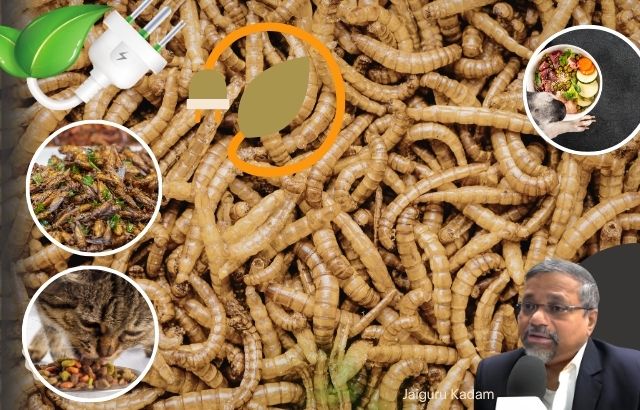
Black soldier fly larvae (BSFL) protein is becoming a major commercial ingredient for sustainable pet feed manufacturing.
Industrial insect farming systems can utilize food processing byproducts and organic side streams while requiring dramatically lower land usage than conventional livestock systems.
Example B2B Formulation:
| Ingredient | Inclusion % |
|---|---|
| BSFL Protein Meal | 22% |
| Pea Protein | 18% |
| Brewer’s Yeast | 10% |
| Rice Bran | 12% |
| Algae Oil | 3% |
| Functional Fiber Blend | 5% |
Operational Benefits:
- Reduced protein price volatility
- Lower water footprint
- Enhanced digestibility
- Hypoallergenic positioning
- Circular economy branding
2. Upcycled Ingredient Systems
One of the least discussed innovations in operational excellence is upcycled feed nutrition.
Breweries, pulse processors, and vegetable dehydration industries generate enormous nutrient-rich side streams.
Innovative manufacturers now transform these into:
- Functional fibers
- Protein concentrates
- Prebiotic blends
- Fermented nutrition bases
Example:
A brewery producing 200 tons/day of spent grain can redirect nearly 60–70 tons into pet feed ingredient processing instead of landfill disposal.
Simple Carbon Saving Calculation
If landfill disposal emits approximately 0.5 tons CO₂e per ton of organic waste:
70 tons diverted × 0.5 tons CO₂e
= 35 tons CO₂e saved per day
Annualized:
35 × 365
= 12,775 tons CO₂e avoided annually
That is operational excellence becoming climate strategy.
Lesser-Known Insight: Sustainability Is Now a Procurement Filter
Most companies still think sustainability is primarily a marketing function.
That assumption is outdated.
Large retailers and global buyers increasingly demand:
- Lifecycle analysis (LCA)
- Scope-3 emission disclosures
- Ingredient traceability
- Carbon intensity benchmarking
A 2026 sustainability analysis found growing pressure on pet food companies to measure environmental impact directly at ingredient level rather than merely at factory level.
This changes everything for B2B ingredient suppliers.
Tomorrow’s winning suppliers will not simply sell ingredients.
They will sell verified environmental performance.
Case Study 1: European Premium Pet Feed Manufacturer
A mid-sized European pet nutrition company replaced 15% fishmeal inclusion with insect protein concentrate in selected formulations.
Results Within 1 Year:
- 18% lower ingredient sourcing volatility
- 11% reduction in logistics costs
- 22% lower reported Scope-3 emissions
- Premium pricing acceptance in Nordic markets
The hidden success factor?
Operational agility.
Their formulation team collaborated directly with sustainability analysts and procurement teams instead of working in silos.
Case Study 2: Asian Functional Feed Processor
An Asian B2B pet feed ingredient processor integrated fermented brewer’s yeast into premium canine gut-health formulations.
Outcome:
- Reduced dependency on imported protein concentrates
- Improved shelf stability
- Lower moisture management costs
- Faster regional sourcing cycles
This operational redesign shortened procurement lead times by nearly 28%.
Case Study 3: Circular Aquatic Protein Integration
A pet feed producer partnered with aquaculture waste recovery operators to process fish trimmings into stabilized hydrolyzed protein ingredients.
Operational Benefits:
- Waste-to-value monetization
- Lower raw material procurement cost
- Reduced marine disposal burden
- Enhanced amino acid profile consistency
This is circular manufacturing becoming profitable sustainability.
Did You Know?
🌍 Surprising Facts Most Businesses Ignore
- Pet food production contributes significantly to agricultural greenhouse emissions globally.
- Some sustainable pet feed systems can reduce carbon footprint by 30–50% compared to traditional meat-heavy formulations.
- Black soldier fly larvae require dramatically less land than beef protein production for equivalent protein generation.
- Nearly 86% of pet food professionals surveyed work for companies with sustainability goals, but less than half have measured actual environmental impact accurately.
- Greenwashing risks are rising rapidly as environmental claims become stricter and more scrutinized globally.
The Financial Side of Green Operational Excellence
Sustainability is often misunderstood as “extra cost.”
In reality, operational sustainability frequently improves financial resilience.
Example: Regional Ingredient Sourcing
A manufacturer importing marine protein concentrate from 4,000 km away transitions to regional fermentation-based protein sourcing.
Annual Savings Estimate:
- Freight reduction: $120/ton
- Annual usage: 4,500 tons
Calculation:
4,500 × $120
= $540,000 annual logistics savings
Add reduced customs delays, lower spoilage risk, and improved carbon metrics — and sustainability becomes operational strategy, not corporate charity.
Expert Perspective from Jaiguru Kadam
Jaiguru Kadam emphasizes:
“Operational excellence in the next decade will be measured by how intelligently industries convert waste into nutritional value.”
He further explains:
“The companies that survive future regulations will not be the biggest manufacturers. They will be the smartest ecosystem integrators.”
And perhaps most importantly:
“Sustainability without profitability is temporary. Profitability without sustainability is dangerous.”
The Hidden Risk: Greenwashing vs Genuine Innovation
One major challenge emerging globally is sustainability exaggeration.
Research and industry investigations increasingly show many environmental claims remain vague, unverified, or unsupported by measurable data.
This creates a major competitive advantage for businesses investing in:
- Transparent sourcing
- Carbon accounting
- Digital traceability
- Verified lifecycle analysis
- Science-backed formulation claims
Operational excellence now requires data credibility.
FAQs

1. What is operational excellence in sustainable pet feed manufacturing?
It is the integration of efficiency, sustainability, profitability, and traceable ingredient systems into manufacturing operations while minimizing environmental impact.
2. Why are alternative proteins becoming important in B2B pet feed?
Alternative proteins help reduce dependency on resource-intensive livestock systems while improving sustainability metrics, supply chain resilience, and formulation flexibility.
3. Are insect proteins commercially viable?
Yes. While costs remain higher in some regions, scaling technologies and circular feed systems are improving commercial viability rapidly.
4. What are upcycled ingredients in pet feed?
These are nutrient-rich side streams recovered from food, brewing, agricultural, or processing industries and converted into functional feed ingredients instead of becoming waste.
5. How can businesses reduce Scope-3 emissions in feed operations?
Key approaches include:
- Regional sourcing
- Ingredient reformulation
- Alternative proteins
- Circular economy systems
- Logistics optimization
- Renewable manufacturing energy
6. What is the biggest overlooked factor in sustainability strategy?
Ingredient-level carbon impact.
Most businesses focus on packaging or energy while ignoring the environmental footprint of raw material procurement.
The Road Ahead: A Vision Beyond Compliance
Operational excellence is no longer a factory concept.
It is now a planetary responsibility.
The businesses that lead the next decade will be those that understand a profound truth:
Waste is not waste.
It is misplaced value.
Factories will evolve into circular ecosystems.
Supply chains will become carbon-aware intelligence networks.
Ingredient innovation will define competitive leadership.
And sustainability will move from “corporate reporting” into the heart of operational survival.
As Jaiguru Kadam reminds industry leaders:
“The green future will not be built by companies chasing trends. It will be built by those redesigning systems.”
The opportunity is enormous.
The responsibility is greater.
And the time to act is now.