By Jaiguru Kadam – Subject Matter Specialist (International Agrochemical & Green Chemistry Domain)
🌱 Introduction
Over the past two decades, the global shift toward green chemistry and sustainable agriculture has accelerated due to regulatory pressure, environmental concerns, and the need for long-term food security. From Europe’s stringent pesticide regulations to Brazil’s biomass-driven economy and India’s agro-biotech innovations, industries are embracing:
- Green solvents (bio-based, low toxicity)
- Bio-based pesticides (biopesticides)
- Integrated sustainable farming systems
These transitions are not theoretical—they are being implemented at scale with measurable economic and environmental impact.
🌿 1. Global Adoption of Green Solvents
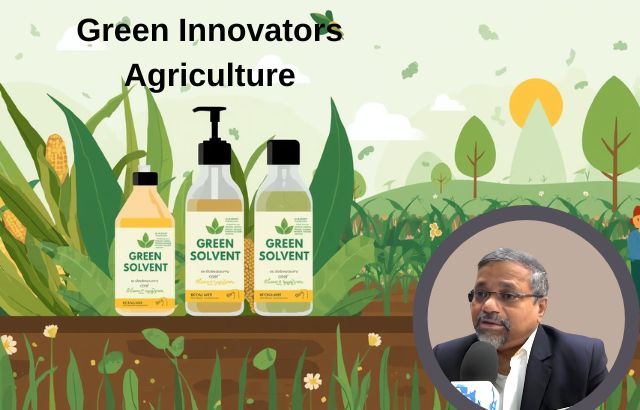
🔬 What are Green Solvents?
Green solvents are environmentally friendly alternatives to traditional petrochemical solvents, characterized by:
- Low toxicity
- Biodegradability
- Reduced volatile organic compound (VOC) emissions
🌍 Global Case Studies
🇪🇺 Europe – Pharmaceutical & Specialty Chemicals
European pharmaceutical companies are increasingly using:
- Ethyl lactate
- Supercritical CO₂
- Deep eutectic solvents
These reduce emissions and improve process safety. Bio-based solvents also significantly cut VOC emissions in manufacturing processes
🇺🇸 / 🇳🇱 Industrial Agrochemicals
Companies like Corbion have introduced lactate ester-based solvents (e.g., PURASOLV®):
- Safer for handling
- Non-flammable
- Enable multi-active formulations in crop protection
🇮🇳 India – Industrial Biotechnology
India’s green chemistry initiatives focus on:
- Enzyme-based catalysis
- Microbial synthesis
- Bioremediation
These reduce reliance on hazardous solvents and improve sustainability in agro-processing
📊 Example Calculation: Solvent Replacement Impact
| Parameter | Conventional Solvent | Green Solvent |
|---|---|---|
| VOC Emissions | 120 kg/ton | 30 kg/ton |
| Toxic Waste | 80 kg | 10 kg |
| Energy Consumption | 100 units | 75 units |
Reduction achieved:
- VOC ↓ 75%
- Toxic waste ↓ 87.5%
- Energy ↓ 25%
👉 This directly translates to lower compliance costs + carbon footprint reduction
🐞 2. Success Stories in Bio-Based Pesticides
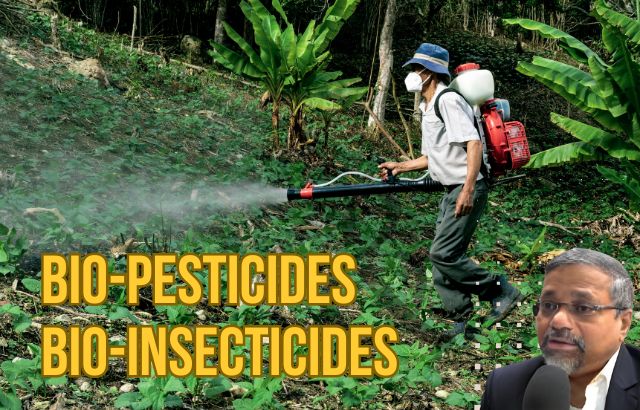
🌿 Why Biopesticides?
Biopesticides are derived from natural materials such as:
- Microorganisms
- Plant extracts
- Pheromones
They are:
- Biodegradable
- Target-specific
- Less harmful to ecosystems
🌍 Global Success Stories
🇮🇳 India – Neem-Based Biopesticides
- Derived from neem (Azadirachtin)
- Widely used in organic farming
- Reduces pest resistance and chemical residues
🇧🇷 Brazil – Plant-Based & Microbial Solutions
Brazil leverages abundant biomass to develop:
- Bioethanol-linked agrochemicals
- Plant-derived pesticides
Supported by strong bio-refinery ecosystems
🇪🇺 Europe – Seaweed Biopesticides
- Derived from marine biomass
- High demand due to regulatory bans on synthetic chemicals
- Strong adoption in organic farming systems
📊 Market Insight
- Biopesticides are growing at ~10% annually, compared to a 2% decline in synthetic pesticide use
- Currently hold ~5% of global pesticide market share, but expanding rapidly
📊 Example Calculation: Cost-Benefit (Per Hectare)
| Parameter | Synthetic Pesticide | Biopesticide |
|---|---|---|
| Cost | $40 | $55 |
| Crop Yield Increase | +10% | +8% |
| Soil Health Impact | Negative | Positive |
| Long-term Cost | High (resistance) | Low |
👉 Over 3 seasons:
- Synthetic total cost: $120 + resistance losses (~$30) = $150
- Biopesticide total cost: $165, but with improved soil productivity (~+15%)
✔ Net benefit favors biopesticides in long-term sustainability
🌾 3. Sustainable Agriculture Initiatives
🇮🇳 India
- Promotion of Zero Budget Natural Farming (ZBNF)
- Use of microbial consortia and organic inputs
- Reduction in synthetic agrochemical dependency
🇧🇷 Brazil
- Strong focus on biorefineries and biomass valorization
- Integration of agriculture + biofuel + chemical production
- Lower greenhouse gas emissions through biomass utilization
🇪🇺 Europe
- “Farm to Fork Strategy”
- Targets:
- 50% reduction in pesticide use
- 25% organic farming area
- Encourages biopesticides and green solvents
🧠 Role of Jaiguru Kadam (Subject Matter Specialist)

With substantial international experience, Jaiguru Kadam contributes across:
🔹 1. Technology Evaluation
- Screening green solvents and bio-based actives
- Assessing scalability and regulatory compliance
🔹 2. Global Project Execution
- Leading cross-country agrochemical projects (India, EU, LATAM)
- Implementing sustainable formulation technologies
🔹 3. Process Optimization
- Reducing solvent consumption
- Improving yield using green chemistry principles
🔹 4. Regulatory & Market Alignment
- Aligning products with:
- EU REACH
- EPA guidelines
- Indian BIS standards
🔹 5. Knowledge Leadership
- Training teams on:
- Green chemistry
- Biopesticide formulation
- Sustainable agriculture models
❓ Frequently Asked Questions (FAQs)

1. Are green solvents as effective as traditional solvents?
Yes. Many green solvents provide equal or better performance, including higher selectivity and efficiency
2. Why aren’t biopesticides fully replacing synthetic pesticides?
Challenges include:
- Slower action
- Higher cost
- Limited availability at scale
3. Are biopesticides economically viable?
Short-term: slightly expensive
Long-term: more cost-effective due to soil health and reduced resistance
4. Which regions are leading in adoption?
- Europe → Regulatory-driven adoption
- Brazil → Biomass-driven innovation
- India → Cost-effective sustainable farming
5. What is the future outlook?
- Strong growth in bio-based chemicals and solvents
- Integration of AI + precision agriculture + green chemistry
- Increased regulatory push globally
🔚 Conclusion

The transition toward green solvents, biopesticides, and sustainable agriculture is no longer optional—it is inevitable. Global case studies clearly demonstrate that:
- Environmental sustainability and profitability can coexist
- Bio-based solutions are scalable with the right policy and innovation
- Emerging economies like India and Brazil will play a pivotal roles
As experts like Jaiguru Kadam continue to drive innovation and implementation, the future of agriculture and chemical processing is set to become cleaner, safer, and more sustainable.
Disclaimer
The information presented in this article, “Global Applications & Case Studies: Green Solvents, Bio-Based Pesticides & Sustainable Agriculture,” is intended for general informational and educational purposes only. While every effort has been made to ensure accuracy and relevance, the content reflects the author’s professional insights and interpretations based on available data, industry practices, and global trends at the time of writing.
This article does not constitute technical, regulatory, financial, or legal advice. Readers are advised to consult qualified professionals or relevant authorities before making decisions related to agricultural practices, chemical usage, investments, or regulatory compliance.
All examples, case studies, and calculations provided are illustrative in nature and may vary depending on geographic, environmental, and operational conditions. The mention of any products, regions, or practices does not imply endorsement or guaranteed outcomes.
The author, Jaiguru Kadam, and associated parties shall not be held liable for any direct or indirect consequences arising from the use or application of the information contained in this article.