
Modern agriculture is at a crossroads. As global demand for food rises, so does the need for sustainable, environmentally responsible practices. One of the most promising solutions emerging today is the adoption of green solvents, also known as bio-based or eco-friendly solvents, especially in the pesticide industry. These solvents are gaining momentum not just for their environmental benefits but also for their economic and regulatory advantages.
To explore this innovation in detail, we spoke with Jaiguru Kadam, a Subject Matter Specialist in Green Solvents in Agriculture with extensive global expertise in sustainable farming practices, regulatory compliance, and pesticide formulation.
What Are Green Solvents?

Green solvents are derived from renewable plant-based sources such as corn, sugarcane, and soy. Unlike traditional petrochemical solvents such as Xylene and Cyclohexane, they are biodegradable, less toxic, and have a significantly lower environmental footprint.
Jaiguru Kadam explains:
“The move towards green solvents is not just a regulatory necessity; it’s an economic and environmental strategy. By substituting petrochemical solvents with bio-based alternatives, farmers and manufacturers can reduce ecological damage while maintaining product efficacy.”
Why the Agricultural Industry is Shifting
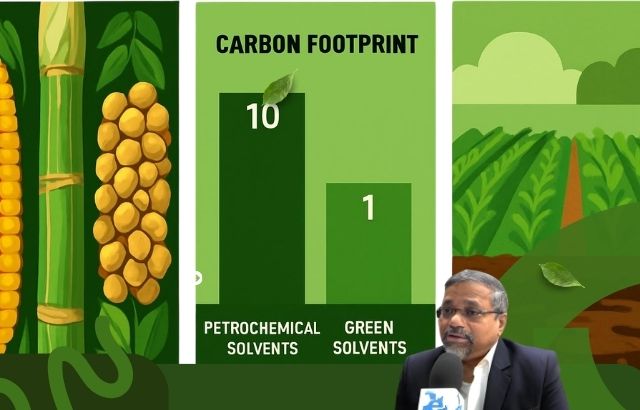
1. Environmental Friendliness
Green solvents reduce carbon emissions in both production and application. For example, switching from a petroleum-based solvent with a carbon footprint of 3.2 kg CO₂ per liter to a bio-based solvent at 1.1 kg CO₂ per liter results in 66% lower emissions per liter used.
2. Reduced Soil and Water Pollution
Green solvents biodegrade quickly, minimizing residual contamination. This translates to healthier soil ecosystems and safer water systems for nearby communities.
3. Safer for Human Health
Workers in pesticide formulation and spraying operations face reduced health risks with green solvents. For instance, occupational exposure limits (OELs) for certain petrochemicals are as low as 50 ppm, whereas green solvents often exceed 500 ppm, indicating a much safer working environment.
4. Sustainability and Renewable Resources
With finite fossil fuels, relying on petrochemicals is not viable long-term. Bio-based solvents derived from renewable feedstocks ensure that the agricultural industry remains sustainable.
Jaiguru Kadam adds:
“In regions like Southeast Asia and South America, where renewable crops are abundant, local production of green solvents is not only sustainable but also cost-effective.”
Real-World Examples
- Neem oil-based solvents: Used in India for organic pesticide formulations, reducing chemical residues by up to 70%.
- Ethyl lactate: A versatile green solvent used in Europe, derived from corn sugar, which has replaced xylene in multiple agrochemical formulations.
Calculation Example:
If a farm uses 10,000 liters of conventional solvent annually:
- Carbon footprint: 10,000 × 3.2 kg CO₂ = 32,000 kg CO₂
- Switching to green solvent: 10,000 × 1.1 kg CO₂ = 11,000 kg CO₂
Reduction: 32,000 − 11,000 = 21,000 kg CO₂ saved annually
This simple switch demonstrates both environmental and regulatory advantages.
Regulatory Compliance Made Easier
With stricter regulations on chemical residues, green solvents help farmers meet international standards for export crops. For instance, the European Union’s pesticide residue limits can be challenging to meet with traditional solvents, but bio-based alternatives significantly reduce the risk of non-compliance.
Advantages Beyond the Environment
- Reduced Odor and Volatility: Safer and more pleasant for field workers.
- Improved Crop Health: Lower chemical residues promote robust plant growth and higher yields.
- Responsible Stewardship: Demonstrates a commitment to sustainability, strengthening brand reputation and consumer trust.
Frequently Asked Questions (FAQs)

Q1: Are green solvents more expensive than petrochemical solvents?
A: Initial costs can be slightly higher (5–15%), but savings in health, compliance, and environmental mitigation often offset this within 1–2 years.
Q2: Can green solvents replace all petrochemical solvents?
A: Many, but not all. Substitution depends on the chemical compatibility with pesticides. However, innovation is rapidly expanding the range of applications.
Q3: How are green solvents measured for environmental impact?
A: Metrics include carbon footprint per liter, biodegradability, and toxicity reduction. Lifecycle assessments are standard practice.
Q4: Are there global success stories?
A: Yes. In Brazil, over 40% of pesticide formulations now include bio-based solvents, reducing chemical residues and improving soil health.
Q5: How do green solvents affect crop yields?
A: Reduced toxicity and residue accumulation create healthier crops. For example, organic citrus farms in Spain reported a 10–12% yield improvement after switching to green solvents.
Final Thoughts from Jaiguru Kadam
“Green solvents are not just a trend; they represent the future of responsible agriculture. By choosing renewable, low-toxicity alternatives, we can protect the environment, ensure worker safety, and produce healthier crops—all while maintaining economic viability.”
The adoption of green solvents is a tangible step toward sustainable agriculture, offering measurable environmental benefits, regulatory compliance, and a safer, more productive farming ecosystem. The shift is not only smart—it’s essential for a healthier planet and a thriving agricultural industry.