By Green Innovator Jaiguru Kadam — Subject Matter Specialist with Vast International Experience
In B2B formulation ingredient businesses—whether you operate in pet feed, livestock, aquaculture, cosmetics, or nutraceuticals—customer retention is not driven by branding alone. It is driven by measurable performance, consistency, technical integration, and long-term value creation.
Unlike transactional industries, here your ingredient becomes part of your customer’s final product. That makes retention both more complex—and more powerful.
Why Retention is Critical in Ingredient Businesses
- High switching costs (reformulation, trials, approvals)
- Long product development cycles
- Strong dependence on technical reliability
- High lifetime value per client
👉 A retained B2B customer is often worth 5–10x more than a new one over time.
Core Customer Retention Strategies

1. Sell Outcomes, Not Ingredients
Your client doesn’t buy a raw material—they buy:
- Better feed conversion
- Stronger product claims
- Improved bioavailability
👉 Shift your pitch from “what it is” to “what it does.”
2. Embed Yourself in Their Formulation
The deeper your ingredient is integrated, the harder it is to replace you.
How:
- Custom blends
- Application support
- Co-developed formulations
3. Deliver Consistency Relentlessly
Batch variation is one of the fastest ways to lose customers.
Focus on:
- Standardization
- Documentation
- QA/QC transparency
4. Provide Technical & Regulatory Support
Especially critical in:
- Cosmetics (claims & compliance)
- Nutraceuticals (health claims, dosage validation)
5. Build Multi-Level Relationships
Don’t depend on one contact.
Engage:
- R&D teams
- Procurement
- Quality control
- Marketing
Industry-Specific Examples
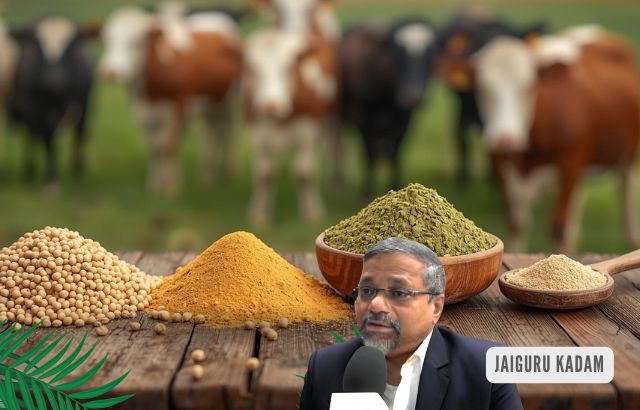
🐟 1. Pet Feed / Livestock / Aqua Ingredients
Scenario:
You supply a digestibility enhancer enzyme to an aqua feed company.
What You Do:
- Conduct farm trials
- Provide feed optimization guidance
- Share performance analytics
Results:
| Metric | Before | After |
|---|---|---|
| FCR | 1.7 | 1.4 |
| Survival Rate | 75% | 85% |
💰 Calculation:
Production target: 20,000 kg fish
Feed cost: ₹70/kg
Before:
- Feed = 20,000 × 1.7 = 34,000 kg
- Cost = ₹23,80,000
After:
- Feed = 20,000 × 1.4 = 28,000 kg
- Cost = ₹19,60,000
👉 Savings = ₹4,20,000
Even if your enzyme costs more, the ROI ensures long-term retention.
💄 2. Cosmetics Ingredients
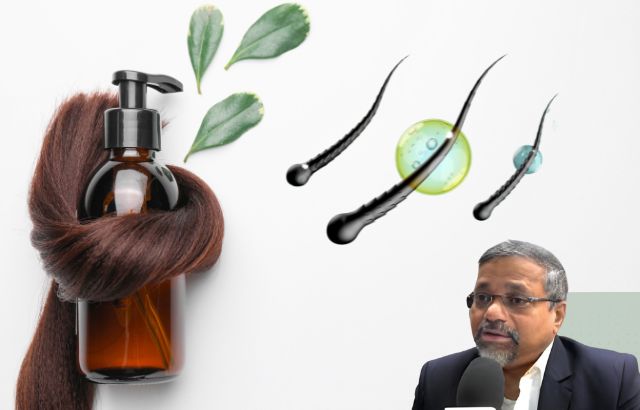
Scenario:
You supply a skin-brightening active to a cosmetic brand.
Your Retention Strategy:
- Provide clinical study data
- Assist with claim substantiation
- Support formulation stability testing
Switching Barrier Example:
If customer switches supplier:
- Reformulation cost: ₹10–20 lakh
- Stability testing: ₹5 lakh
- Delay in product launch: 3–6 months
👉 Total risk: ₹20–30 lakh + lost market opportunity
Result:
Customer continues with you because:
- Claims are already validated
- Product performance is proven
- Regulatory approvals are aligned
💊 3. Nutraceutical Ingredients

Scenario:
You supply a high-bioavailability herbal extract.
Differentiation:
- Lower dosage required
- Higher absorption
- Clinically backed results
💰 Cost Efficiency Calculation:
Order: 50,000 capsules
| Factor | You | Competitor |
|---|---|---|
| Dosage | 400 mg | 800 mg |
| Price/kg | ₹3,000 | ₹2,400 |
Your cost:
- 400 mg × 50,000 = 20 kg
- Cost = ₹60,000
Competitor:
- 800 mg × 50,000 = 40 kg
- Cost = ₹96,000
👉 You save customer ₹36,000 per batch
Retention Trigger:
- Better margins
- Stronger product claims
- Consistent results
Key Retention Metrics (With Examples)
1. Customer Retention Rate (CRR)
[
CRR = \frac{Ending Customers – New Customers}{Starting Customers} \times 100
]
Example:
- Start: 80 customers
- End: 90 customers
- New: 20 customers
[
CRR = \frac{90 – 20}{80} \times 100 = 87.5%
]
2. Customer Lifetime Value (LTV)
[
LTV = Avg\ Order\ Value \times Frequency \times Lifespan
]
Example:
- Avg order: ₹3,00,000
- Frequency: 4/year
- Lifespan: 6 years
[
LTV = 3,00,000 × 4 × 6 = ₹72,00,000
]
👉 Losing one client = losing ₹72 lakh
Common Mistakes in B2B Retention
- Competing only on price
- Ignoring post-sales technical support
- Inconsistent quality
- Weak documentation
- Reactive communication
FAQs
1. What drives retention most in ingredient businesses?
Consistent performance + technical support + measurable ROI
2. Is pricing the biggest factor?
No. Value per application matters more than price per kg.
3. How do you reduce customer churn?
- Regular reviews
- Proactive issue resolution
- Continuous innovation
4. Which sector has the strongest retention?
- Cosmetics & nutraceuticals (due to claims & compliance)
- Aqua & livestock (when ROI is proven)
5. How often should you engage clients?
- Monthly operational touchpoints
- Quarterly strategic reviews
Final Thoughts

In B2B formulation ingredient businesses, retention is not accidental—it is engineered.
When you:
- Deliver consistent quality
- Prove economic value
- Support customers technically
- Integrate into their product lifecycle
👉 You move from being a supplier to a strategic partner.
And strategic partners are rarely replaced.
About the Author
Jaiguru Kadam, a Green Innovator and Subject Matter Specialist with vast international experience, specializes in B2B formulation ingredients across pet feed, aquaculture, cosmetics, and nutraceutical sectors, helping businesses scale through innovation, technical excellence, and customer retention strategies.