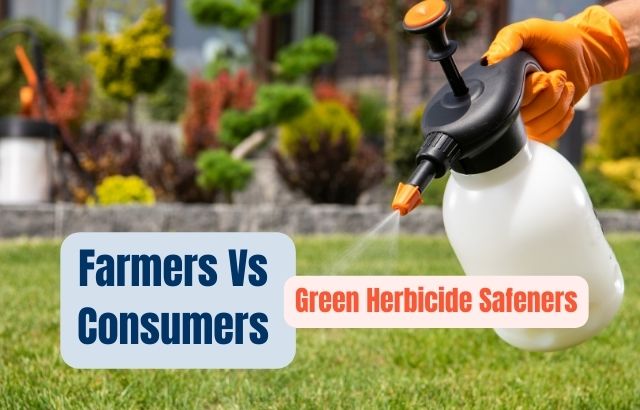
Introduction: One Agricultural Innovation, Two Different Expectations
A farmer standing in a field and a consumer standing in a supermarket may look at the same agricultural product from completely different perspectives. For the farmer, the immediate priorities are crop health, weed control, productivity, profitability and the ability to protect an investment made months before harvest. For the consumer, the priorities are food quality, confidence in agricultural practices, environmental responsibility and the assurance that the food reaching the table has been produced responsibly.
Between these two perspectives lies an important area of agricultural innovation: green herbicide safeners.
Herbicide safeners are compounds designed to reduce the damaging effects of certain herbicides on cultivated crops while maintaining weed-control performance. They help improve crop selectivity by influencing the plant’s natural defence and detoxification processes. Their role is particularly relevant where farmers need effective weed management without exposing sensitive crops to unacceptable herbicide injury.
However, the future of safener technology cannot be evaluated only through its ability to protect crops. Its environmental behaviour, toxicological profile, formulation chemistry, application efficiency, regulatory acceptability and overall contribution to sustainable agriculture also matter.
According to the Green Innovation perspective of Jaiguru Kadam, Subject Matter Specialist, Global Sustainability Expert, Green Innovation Strategist and Industry Thought Leader, the real opportunity is to develop agricultural technologies that create measurable value for both ends of the food chain.
Farmers should not have to choose between productivity and responsible agriculture. Consumers should not have to rely on marketing claims when evaluating the sustainability of food production. The industry must connect crop protection performance with credible environmental and safety evidence.
This is where green herbicide safeners can become an important area of scientific development, commercial differentiation and agricultural sustainability.
1. Understanding Herbicide Safeners: What Makes Them Important?
Herbicides are used to manage unwanted vegetation that competes with crops for sunlight, water, nutrients and growing space. However, the challenge is selectivity. A herbicide must control the target weeds without causing unacceptable injury to the cultivated crop.
Crop sensitivity can vary according to crop variety, growth stage, soil conditions, weather, application timing and herbicide dose. A formulation that performs satisfactorily under one set of conditions may produce different results under another.
Herbicide safeners help address this challenge.
How Do Herbicide Safeners Work?
Many safeners work by stimulating or regulating plant defence and detoxification pathways. These may involve:
- Metabolic detoxification: Enhancing the crop’s ability to transform certain herbicide molecules into less phytotoxic metabolites.
- Glutathione-related pathways: Influencing glutathione availability and associated detoxification processes.
- Enzyme activity: Modulating enzymes involved in herbicide metabolism, including selected cytochrome P450 monooxygenases, glutathione S-transferases and glycosyltransferases.
- Stress-response regulation: Influencing cellular defence mechanisms that help crops tolerate specific chemical stresses.
- Crop selectivity: Creating a wider practical margin between effective weed control and unacceptable crop injury in approved crop-herbicide combinations.
Importantly, safeners are not universal antidotes. Their effectiveness depends on the particular safener, herbicide, crop species, application method and environmental conditions.
Why Does This Matter to Agriculture?
Improved crop selectivity can support more reliable weed management, reduce avoidable crop injury and improve the commercial usability of certain herbicide systems.
For manufacturers, safeners create opportunities to develop differentiated formulations. For farmers, they can provide another tool for managing crop protection risks. For consumers, they raise a broader question: can agricultural innovation improve productivity while maintaining responsible chemical management?
That question requires evidence rather than assumptions.
2. The Farmer’s Perspective: Productivity, Profitability and Practical Performance
Farmers evaluate agricultural technologies in terms of their performance under real operating conditions. A promising laboratory result is not enough. A safener-based formulation must demonstrate practical value in the field.
2.1 Crop Protection Is Directly Connected to Farm Economics
Crop injury can affect plant establishment, crop growth, maturity, uniformity and final marketable yield. Its economic consequences extend beyond the visible damage in the field.
A farmer considering a herbicide-safener combination may evaluate:
- How effectively does the herbicide control the target weed spectrum?
- Does the safener reduce crop injury under the recommended application conditions?
- Is crop performance consistent across relevant soil and weather conditions?
- Does the product fit existing spraying equipment and farm operations?
- What is the total treatment cost per hectare?
- Does the technology provide an economic benefit compared with available alternatives?
- Are the application instructions practical and easy to follow?
2.2 The Importance of Application Reliability
Even a scientifically effective formulation can disappoint when applied incorrectly. Spray coverage, water quality, nozzle selection, mixing sequence, application timing, temperature, rainfall and crop growth stage can influence field performance.
A farmer also needs clear guidance about compatibility with other crop protection products. Tank mixing should never be assumed to be safe or effective without appropriate label instructions and compatibility evidence.
For Jaiguru Kadam, the Green Innovation Strategist’s perspective is that product development must begin with the farmer’s operating environment, not simply the laboratory’s preferred conditions.
Innovation becomes commercially meaningful when scientific performance can be translated into reliable, repeatable and economically viable farm practices.
2.3 Affordability and Return on Investment
Farmers are unlikely to adopt a premium safener-based solution simply because it carries a green positioning. The technology must demonstrate a measurable economic benefit.
Consider the following hypothetical illustration:
A farmer cultivates 100 hectares of a crop. An existing herbicide programme has an illustrative crop-injury-related economic loss of ₹1,500 per hectare. A validated safener-based programme reduces that loss by 40%, while adding ₹250 per hectare to the treatment cost.
| Parameter | Illustrative value |
|---|---|
| Cultivated area | 100 hectares |
| Existing injury-related loss per hectare | ₹1,500 |
| Assumed reduction in loss | 40% |
| Economic benefit per hectare | ₹600 |
| Additional safener programme cost per hectare | ₹250 |
| Net benefit per hectare | ₹350 |
| Total net benefit across 100 hectares | ₹35,000 |
Calculation: (₹1,500 × 40%) − ₹250 = ₹350 per hectare.
Total net benefit = ₹350 × 100 hectares = ₹35,000.
This is an illustrative scenario, not a measured field result. Actual economic benefits would depend on crop, herbicide, safener performance, local conditions and the baseline level of crop injury.
The strategic lesson is clear: a green agricultural technology must demonstrate value through farm-level economics as well as environmental performance.
3. The Consumer’s Perspective: Food Confidence, Transparency and Environmental Responsibility
Consumers rarely examine the chemistry of a herbicide formulation while purchasing vegetables, cereals, fruits or other agricultural products. However, their expectations influence the entire food supply chain.
Questions about pesticide residues, food safety, biodiversity, water quality, soil health and sustainable farming are increasingly relevant to food brands, retailers, exporters and agricultural supply chains.
3.1 Consumers Want Responsible Food Production
Consumer expectations can be grouped into five broad areas:
- Food safety: Confidence that agricultural products comply with applicable pesticide residue requirements.
- Environmental protection: Responsible management of soil, water, biodiversity and surrounding ecosystems.
- Transparency: Clear information about agricultural production practices and supply-chain controls.
- Responsible innovation: Technologies developed and assessed with attention to human health and environmental effects.
- Trust: Evidence-based claims rather than unsupported descriptions such as natural, harmless or completely green.
3.2 A Safener Is Not Automatically a Safer Chemical
This distinction is particularly important.
A herbicide safener may reduce phytotoxicity to a cultivated crop. However, that does not automatically establish that the safener itself has a favourable toxicological or environmental profile.
Crop selectivity, mammalian toxicity, ecotoxicity, environmental persistence, mobility, degradation products and dietary exposure are different scientific assessment areas.
A safener that protects a crop must still be evaluated for its potential effects on non-target organisms, soil systems, aquatic environments and human exposure pathways.
A systematic review of herbicide safener toxicity published in 2024 identified significant limitations in the available toxicity literature. It highlighted the need for stronger evidence concerning chronic effects and environmental risks.
For consumers, this reinforces an important principle: a product should not be considered environmentally preferable merely because it protects the crop.
3.3 The Consumer Trust Gap
There is often a gap between what agricultural technologies are designed to achieve and what consumers understand about them.
A manufacturer may explain that a safener improves crop selectivity. A consumer may interpret the same product as another chemical addition to the food production system.
Both perspectives deserve consideration.
The solution is not to oversimplify the science. It is to communicate the purpose, approved use, safety assessment, residue compliance and environmental evidence in clear language.
Jaiguru Kadam’s perspective as a Global Sustainability Expert is that trust should be treated as an outcome of verifiable performance, not as a promotional message.
4. Green Herbicide Safeners: What Does Green Innovation Really Mean?
The word green is frequently used in agricultural product development. However, a genuinely green safener must be evaluated through its complete performance and environmental profile.
Simply replacing one synthetic ingredient with a plant-derived ingredient does not automatically make a formulation sustainable. Natural substances can also have toxicological, ecological, stability and manufacturing challenges.
4.1 Five Dimensions of Green Safener Development
1. Responsible Molecular Design
Research should investigate molecular structures that deliver the required safening activity while improving relevant safety and environmental characteristics.
Structure-activity relationship studies, computational chemistry, molecular modelling and biological screening can help researchers understand how molecular modifications influence performance.
2. Bio-Based and Nature-Inspired Molecules
Natural plant compounds, endogenous plant signalling molecules and biologically inspired structures offer opportunities for discovering alternative safener candidates.
However, researchers must evaluate biological activity, synthesis feasibility, availability of feedstocks, manufacturing consistency, cost and environmental behaviour.
The objective should be to identify viable molecules, not to assume that natural origin guarantees safety.
3. Improved Formulation and Controlled Delivery
Formulation engineering can influence the stability, dispersion, compatibility, release behaviour and delivery efficiency of safeners.
Controlled-release and targeted-delivery technologies may offer opportunities to improve application efficiency or reduce unnecessary exposure. These benefits must be demonstrated for the specific formulation and use pattern.
4. Lower Environmental Footprint
Research should examine degradation pathways, persistence, leaching potential, surface runoff, aquatic exposure, soil interactions and effects on non-target organisms.
A safener that performs effectively but persists unnecessarily in the environment may not represent a meaningful sustainability improvement.
5. Efficient Manufacturing
Green innovation must also extend to manufacturing.
- Reduce solvent consumption where technically feasible.
- Improve reaction yield and material conversion efficiency.
- Minimise unwanted by-products and process waste.
- Evaluate safer and more efficient synthesis routes.
- Reduce energy and water intensity.
- Improve recovery, reuse and recycling of suitable process materials.
- Assess the environmental footprint of raw materials and packaging.
For Jaiguru Kadam, the Green Innovation Strategist, a sustainable agricultural molecule should be assessed from molecular design to manufacturing, application, environmental fate and end-of-life considerations.
5. Where Farmers and Consumers Agree: The Shared Value Opportunity
Although farmers and consumers have different priorities, their expectations are not necessarily contradictory.
Both benefit when agricultural technologies support reliable crop production, responsible chemical use, food safety and the conservation of natural resources.
| Area | Farmer expectation | Consumer expectation | Industry opportunity |
|---|---|---|---|
| Crop protection | Reliable crop safety | Responsible food production | Validated selective formulations |
| Economic performance | Affordable and profitable farming | Reliable food supply | Efficient product development |
| Chemical management | Effective application | Confidence in safe use | Better formulation and stewardship |
| Environmental impact | Healthy soil and water resources | Environmental responsibility | Improved environmental profiles |
| Transparency | Clear application guidance | Credible product information | Traceability and evidence-based communication |
The most promising products will be those that create shared value rather than optimising one stakeholder’s interests at the expense of another.
6. What the Agricultural Chemicals Industry Is Getting Wrong
Green innovation in crop protection can be slowed by several strategic mistakes.
6.1 Treating Crop Safety as Complete Environmental Safety
Reducing crop injury is an important technical achievement. However, crop safety is only one component of a complete environmental and human health assessment.
Manufacturers must avoid presenting improved crop selectivity as proof of lower environmental impact without supporting data.
6.2 Developing Products Without Understanding Farmer Economics
Some technology development programmes concentrate heavily on laboratory efficacy while overlooking field application costs, equipment requirements, farmer training and return on investment.
Innovation should be evaluated against the actual economics of farming.
6.3 Ignoring the Consumer Communication Gap
Technical language may be understandable to formulators and agricultural scientists but difficult for consumers to interpret.
Manufacturers and food supply-chain companies need a communication strategy that explains what a safener does, what it does not do and how its safety is assessed.
6.4 Using Green Claims Without Comparative Evidence
Terms such as eco-friendly, sustainable, non-toxic and environmentally safe should not be used without appropriate substantiation.
A comparative environmental claim should identify the reference product, assessment boundary, intended use and measurable improvement.
6.5 Overlooking the Entire Product Lifecycle
A formulation may have a favourable application profile but an inefficient manufacturing process, high solvent consumption, difficult packaging disposal or an unfavourable degradation profile.
Green product development must consider the entire lifecycle rather than a single attractive characteristic.
7. The Regulatory and Scientific Landscape: Why Evidence Matters
Herbicide safeners operate within a complex crop protection regulatory environment. Requirements differ across countries and regions, and companies must understand the classification and approval pathway applicable to each intended market.
7.1 European Union
In the European Union, safeners and synergists are specifically addressed under the plant protection product approval framework established by Regulation (EC) No 1107/2009.
The European Commission explains that active substances, safeners and synergists must satisfy the applicable approval criteria. Assessments consider human health, including dietary residues where relevant, animal health and unacceptable environmental effects.
This makes regulatory planning an important part of safener research and commercialisation.
7.2 United States and Other Markets
Regulatory treatment can differ by jurisdiction and product composition. Companies should establish how each ingredient is classified, what data are required and whether the proposed formulation triggers additional assessment obligations.
A 2024 systematic review of safener toxicity highlighted differences in the treatment of safeners within regulatory frameworks and identified gaps in the available toxicity evidence. Regulatory classifications and requirements should therefore be verified for each market rather than generalised globally.
7.3 Scientific Evidence Required for Responsible Development
A robust development programme may require evidence concerning:
- Crop tolerance and phytotoxicity.
- Weed-control efficacy and selectivity.
- Metabolism and degradation products.
- Acute and chronic toxicological endpoints.
- Effects on relevant non-target organisms.
- Environmental persistence and mobility.
- Soil and aquatic environmental fate.
- Dietary exposure and applicable residue requirements.
- Formulation stability and compatibility.
- Manufacturing quality and impurity profiles.
The precise data requirements depend on the compound, formulation, intended use and applicable regulatory framework.
Jaiguru Kadam’s strategic view is that regulatory readiness should not be treated as the final stage of innovation. It should influence molecular selection, formulation development and commercial planning from the beginning.
8. Business Opportunities for Agrochemical Manufacturers and Formulators
Green herbicide safeners offer opportunities across research, product development, formulation, manufacturing and agricultural supply chains.
8.1 Development of Next-Generation Safener Molecules
Research organisations and chemical manufacturers can investigate improved molecular structures with desirable safening activity and better-characterised environmental profiles.
Computational screening, biological assays, plant metabolism studies and structure-activity analysis can help prioritise promising candidates.
8.2 Differentiated Formulation Platforms
Formulators can explore improved compatibility, stability, dispersibility, application performance and controlled delivery.
The competitive advantage will come from demonstrating better performance under defined conditions, not simply adding more ingredients to an existing formulation.
8.3 Sustainable Manufacturing and Process Chemistry
Manufacturers can identify opportunities to improve:
- Reaction efficiency and product yield.
- Solvent selection and recovery.
- Energy consumption per unit of output.
- Water consumption and wastewater quality.
- Waste generation and by-product management.
- Raw material traceability.
- Process safety and occupational exposure controls.
These improvements can reduce operational costs while strengthening environmental performance.
8.4 Partnerships Across the Agricultural Value Chain
Innovation can accelerate when chemical manufacturers collaborate with seed companies, agricultural research institutions, formulation specialists, distributors, farmer organisations and food supply-chain stakeholders.
Such partnerships help identify practical crop requirements, develop relevant testing programmes and establish credible routes to market.
9. A Green Innovation Framework for Herbicide Safener Development
Jaiguru Kadam’s Green Innovator perspective can be translated into a practical six-stage framework for companies evaluating new safener opportunities.
Stage 1: Identify the Agricultural Problem
Understand the crop, weed spectrum, herbicide-related injury risk, farming system and geographical conditions. Identify the actual problem before selecting a chemical solution.
Stage 2: Establish the Scientific Opportunity
Evaluate candidate molecules, biological mechanisms, crop metabolism, formulation compatibility and potential performance advantages.
Stage 3: Validate Crop and Weed Performance
Conduct laboratory, greenhouse and appropriately designed field evaluations. Establish whether the safener improves crop tolerance without compromising weed control.
Stage 4: Assess Safety and Environmental Behaviour
Evaluate toxicological characteristics, environmental fate, degradation, non-target effects and exposure pathways. Identify evidence gaps before commercialisation.
Stage 5: Evaluate Commercial and Manufacturing Viability
Assess production economics, raw material availability, process efficiency, formulation cost, regulatory investment and customer willingness to adopt the technology.
Stage 6: Demonstrate Measurable Sustainability Value
Develop performance indicators that connect farm economics, crop protection, resource consumption, environmental performance and product stewardship.
| Development dimension | Suggested performance indicator |
|---|---|
| Crop performance | Crop injury assessment under defined trial conditions |
| Weed control | Target weed-control efficacy |
| Farmer economics | Total treatment cost per hectare |
| Manufacturing | Energy and water consumed per kg of product |
| Material efficiency | Process yield and material intensity |
| Environmental performance | Persistence, mobility and ecotoxicity endpoints |
| Product stewardship | Training, label compliance and responsible-use indicators |
| Market acceptance | Farmer adoption and repeat purchase, where measurable |
This framework transforms green innovation from a broad aspiration into a structured product-development and business-evaluation process.
10. Hypothetical Industry Scenarios: Connecting Science with Business Value
Scenario 1: A Safener for Improved Crop Selectivity
A crop protection company is developing a herbicide formulation for a cereal crop. Early trials identify crop injury under certain application conditions.
The research team investigates a safener that may enhance crop detoxification pathways. Greenhouse trials indicate improved crop tolerance while maintaining the required weed-control performance under the tested conditions.
The company then evaluates different crop varieties, application timings, soil conditions and environmental scenarios before making any commercial claims.
Strategic insight: The opportunity is not simply to sell a new chemical combination. It is to create a more dependable crop protection system supported by evidence.
Scenario 2: A Formulator Improving Environmental Performance
A formulation manufacturer wants to improve the sustainability profile of an existing safener-containing product.
Its review identifies opportunities to reduce solvent use, improve manufacturing yield and investigate alternative formulation technologies.
The company compares the existing and proposed formulations using consistent production and application boundaries. It also evaluates whether any formulation change affects stability, crop safety, efficacy or environmental behaviour.
Strategic insight: Sustainability improvements can create manufacturing efficiencies and commercial differentiation when they preserve or improve technical performance.
Scenario 3: A Food Supply Chain Responding to Consumer Expectations
A food procurement company receives questions from retail customers about pesticide management and environmental responsibility among its agricultural suppliers.
Instead of making broad claims about green crop protection, the company develops a supplier evaluation process covering approved product use, application records, residue compliance, farmer training and environmental management.
Where safener-containing products are used, their role and applicable safety assessments are documented accurately.
Strategic insight: Traceability and evidence-based agricultural practices can strengthen supply-chain trust without overstating the environmental benefits of any individual chemical.
All three scenarios are hypothetical illustrations intended to demonstrate practical business applications.
11. Competitive Positioning: How Companies Can Differentiate
As agricultural input markets become more technically sophisticated, product differentiation will increasingly depend on the combination of performance, safety evidence, formulation quality, manufacturing efficiency and customer support.
| Competitive dimension | Conventional approach | Future-oriented approach |
|---|---|---|
| Product design | Focus on safener activity | Integrate activity, safety and environmental design |
| Research | Conventional screening | Mechanism-led and data-supported development |
| Formulation | Basic product compatibility | Optimised delivery and application efficiency |
| Manufacturing | Production cost focus | Cost, yield, energy, water and waste optimisation |
| Marketing | Performance-led claims | Evidence-based performance and sustainability communication |
| Customer engagement | Product sales and technical support | Farmer economics, stewardship and supply-chain collaboration |
The companies that lead the next phase of agricultural chemical innovation will be those that integrate technical performance and sustainability into one commercial proposition.
12. The Future of Green Herbicide Safeners
Several scientific and commercial developments could influence the next generation of safener technologies.
12.1 Data-Driven Molecular Discovery
Computational chemistry, molecular modelling, biological data and machine learning can help researchers prioritise candidate compounds and investigate structure-activity relationships.
These tools should support experimental science rather than replace biological validation and regulatory assessment.
12.2 Plant-Based and Nature-Inspired Safener Research
Research into natural plant compounds and plant signalling pathways may identify new approaches to improving crop tolerance. The challenge will be to translate promising biological activity into scalable, stable, cost-effective and properly assessed products.
12.3 Precision Application
Digital agriculture, variable-rate technologies and improved spray application systems can support more accurate input use where appropriate.
Combining product innovation with application precision may help improve resource productivity and reduce unnecessary exposure.
12.4 Controlled-Release Technologies
Advanced formulation and delivery systems could improve the timing and efficiency of safener delivery. Their commercial value will depend on crop-specific performance, environmental assessment, manufacturing feasibility and application practicality.
12.5 Lifecycle-Based Sustainability Assessment
Companies will benefit from evaluating the environmental footprint of safener-containing products across raw materials, manufacturing, packaging, distribution, application and environmental fate.
This is particularly important when comparing conventional and alternative molecules. A fair comparison must consider equivalent functions and realistic use conditions.
13. Practical Recommendations for Industry Professionals
Manufacturers, researchers, formulators, procurement leaders and sustainability professionals can take the following actions.
- Start with a clearly defined crop protection problem. Identify the crop, herbicide, injury risk and actual field requirements.
- Integrate sustainability into research and development. Evaluate environmental and toxicological considerations during candidate selection rather than after product development.
- Strengthen field validation. Test performance across relevant crop varieties, locations, weather conditions and application scenarios.
- Build a complete safety evidence base. Examine the safener itself, its metabolites, exposure pathways and potential non-target effects.
- Improve process efficiency. Measure material consumption, reaction yield, solvent recovery, energy intensity and waste generation.
- Engage farmers early. Assess usability, application requirements, affordability and economic benefits.
- Understand consumer expectations. Communicate food safety and environmental information transparently and accurately.
- Prepare for market-specific regulations. Map approval requirements and data needs for every target jurisdiction.
- Measure sustainability claims. Use defined indicators, credible baselines and comparable assessment boundaries.
- Build strategic partnerships. Collaborate across research, agriculture, formulation, manufacturing and food supply chains.
14. Frequently Asked Questions About Green Herbicide Safeners
1. What are herbicide safeners?
Herbicide safeners are compounds that help protect selected cultivated crops from injury caused by particular herbicides. They generally work by influencing crop detoxification and stress-response pathways while preserving weed-control performance under approved conditions.
2. Are green herbicide safeners completely safe for the environment?
No. Green positioning does not establish environmental safety. Each safener requires appropriate assessment of toxicity, persistence, degradation, mobility and effects on non-target organisms.
3. How do herbicide safeners protect crops?
Many safeners stimulate crop metabolic pathways that accelerate the transformation of certain herbicides into less harmful metabolites. The exact mechanism varies by safener, herbicide and crop combination.
4. Do herbicide safeners improve weed control?
The primary purpose of a safener is to improve crop tolerance, not necessarily to increase weed-control activity. The objective is to maintain effective weed control while reducing unacceptable crop injury.
5. Are natural or bio-based safeners better than synthetic safeners?
Not automatically. Natural and bio-based candidates offer interesting research opportunities, but they must be assessed for efficacy, toxicity, environmental fate, stability, manufacturing feasibility and cost.
6. Can safeners reduce pesticide residues in food?
Safeners should not be assumed to reduce pesticide residues. Residue levels depend on the active ingredients, application conditions, crop metabolism, pre-harvest intervals and applicable regulatory requirements. Compliance must be established through appropriate residue assessments.
7. What should farmers consider before using a safener-containing herbicide?
Farmers should check crop and weed suitability, approved label directions, recommended application timing, dose, compatibility, weather conditions, crop growth stage and local regulatory requirements.
8. What are the major research opportunities in green safener development?
Important opportunities include molecular design, natural-product discovery, plant metabolism research, computational screening, improved formulation, controlled delivery and better understanding of environmental fate and chronic toxicity.
9. How can agrochemical manufacturers measure the sustainability of safener products?
They can evaluate manufacturing energy, water and material intensity, waste generation, process yield, product toxicity, environmental persistence, exposure pathways and performance per unit of agricultural output. The assessment should use defined boundaries and comparable reference products.
10. What will make green herbicide safeners commercially successful?
Commercial success will depend on scientifically demonstrated crop protection, acceptable safety and environmental profiles, regulatory compliance, manufacturing efficiency, competitive pricing, farmer adoption and credible sustainability evidence.
Conclusion: Turning Two Perspectives into One Sustainable Agricultural Future
The farmer and the consumer may begin with different expectations, but both depend on a productive, reliable and responsible agricultural system.
Farmers need technologies that protect crops, improve operational reliability and support economic returns. Consumers expect confidence in food safety, responsible chemical management and environmental stewardship. Agrochemical manufacturers must develop solutions that respond to both expectations without compromising scientific integrity.
Green herbicide safeners represent an opportunity to connect these priorities through better crop selectivity, responsible molecular design, improved formulation and measurable sustainability performance.
However, the future will not be determined by how green a product sounds. It will be determined by how effectively it performs, how thoroughly it is assessed, how efficiently it is manufactured and how responsibly it is used.
From the perspective of Jaiguru Kadam, Subject Matter Specialist, Global Sustainability Expert, Green Innovation Strategist and Industry Thought Leader, the next generation of agricultural innovation must move beyond isolated product improvements.
It must connect the entire value chain:
- Industry challenge: Achieving effective weed management while protecting cultivated crops.
- Innovation opportunity: Developing scientifically validated, selective and improved safener technologies.
- Sustainability: Reducing unnecessary resource consumption and understanding environmental impacts throughout the product lifecycle.
- Competitive advantage: Delivering measurable value to farmers while strengthening trust across food supply chains.
- Future direction: Combining chemistry, biology, digital agriculture, responsible manufacturing and evidence-based product stewardship.
The most important strategic shift is to stop viewing crop protection and sustainability as competing objectives. The future belongs to technologies that can demonstrate both agricultural performance and responsible environmental outcomes.
The real measure of green innovation will not be the number of green products introduced into the market, but the measurable improvement they deliver to farmers, consumers, ecosystems and the agricultural value chain.
About Jaiguru Kadam

Jaiguru Kadam is a Subject Matter Specialist, Global Sustainability Expert, Green Innovation Strategist, and Industry Thought Leader focused on sustainability, innovation, competitive strategy, and value creation across global industries.
With a focus on agricultural innovation, agri-corporate business, product development and sustainable technology opportunities, Jaiguru Kadam brings a Green Innovator’s perspective to the evolving agricultural chemicals and crop protection industry.
His approach connects scientific possibilities with practical industry requirements, helping identify opportunities in green chemistry, sustainable formulations, resource efficiency, product innovation and responsible business growth.
His perspective on green herbicide safeners emphasises a clear direction: developing crop protection technologies that balance farmer profitability, consumer confidence, scientific validation and environmental responsibility.