By Jaiguru Kadam
Introduction
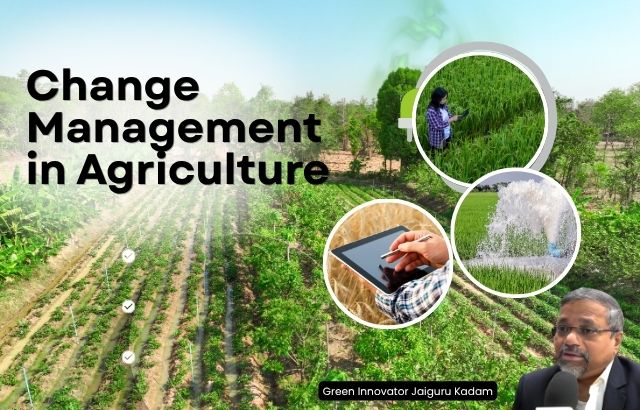
Agriculture is undergoing one of the most significant transformations in its history. Climate change, resource scarcity, technological advancements, changing consumer preferences, and increasing sustainability expectations are reshaping the way food is produced. To remain competitive and resilient, farmers, agribusinesses, feed manufacturers, dairy producers, veterinarians, and agricultural leaders must embrace change.
Change Management in Agriculture is the structured process of preparing, supporting, and helping individuals, organizations, and farming communities successfully adopt new practices, technologies, and sustainable business models. Effective change management enables agricultural stakeholders to improve productivity, profitability, environmental performance, and long-term sustainability.
Why Change Management Matters in Agriculture
Agriculture has traditionally relied on established practices passed down through generations. While experience remains valuable, modern challenges require continuous adaptation.
Key drivers of change include:
- Climate change and extreme weather events
- Rising feed and input costs
- Water scarcity
- Soil degradation
- Growing demand for sustainable food production
- Digital agriculture and precision farming technologies
- Animal welfare expectations
- Environmental regulations
- Market competition
Organizations that manage change effectively are better positioned to respond to these challenges and capitalize on emerging opportunities.
Understanding Agricultural Change Management
Change management involves guiding people through a transition from current practices to improved methods that deliver better outcomes.
Successful agricultural change management focuses on:
People
Farmers, employees, veterinarians, suppliers, and stakeholders must understand why change is necessary and how it benefits them.
Processes
Existing farming and production systems may need modification to improve efficiency and sustainability.
Technology
New technologies must be integrated effectively into daily operations.
Culture
Organizations must create a culture that supports innovation, learning, and continuous improvement.
The Agriculture Change Management Framework
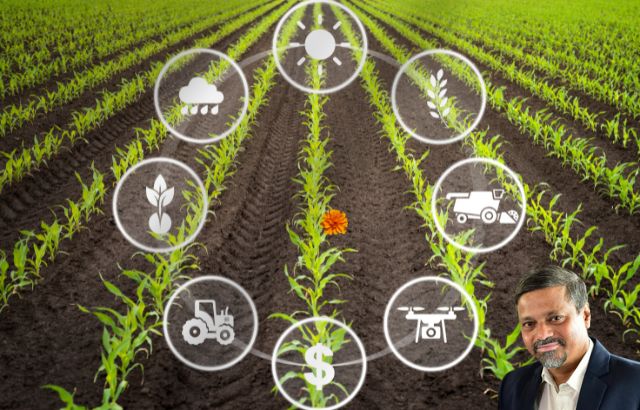
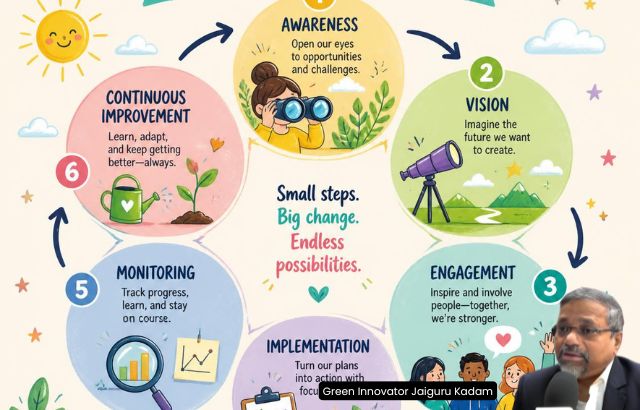
A practical framework for managing change includes six stages:
1. Awareness
Stakeholders first need to understand current challenges and opportunities.
Example:
A dairy cooperative identifies declining milk productivity and increasing feed costs. Data analysis reveals opportunities for improved nutrition management.
2. Vision
Leaders establish a clear vision for improvement.
Example:
Increase milk production by 15% while reducing feed waste by 10% within two years.
3. Engagement
Stakeholders are involved early in the process.
Farmers, veterinarians, nutritionists, and management teams collaborate to develop solutions and build trust.
4. Implementation
New practices and technologies are introduced.
Examples include:
- Precision irrigation systems
- Feed optimization programs
- Digital farm monitoring tools
- Sustainable sourcing initiatives
- Preventive animal healthcare programs
5. Monitoring
Performance is measured using defined indicators.
Examples:
- Milk yield
- Feed conversion efficiency
- Water consumption
- Animal health metrics
- Production costs
6. Continuous Improvement
Organizations regularly review results and refine strategies to achieve ongoing improvement.
Change Management in Animal Nutrition
Animal nutrition offers significant opportunities for positive change.
Case Example
A dairy farm introduces scientifically formulated feed supplements.
Before Implementation
- Average milk yield: 20 litres/day per cow
After Implementation
- Average milk yield: 23 litres/day per cow
Improvement
Increase:
3 litres/day
Percentage Increase:
(3 ÷ 20) × 100 = 15%
Benefits
- Improved animal health
- Better nutrient utilization
- Increased productivity
- Higher profitability
- Reduced feed wastage
This example demonstrates how effective change management can transform farm performance.
Technology as a Driver of Agricultural Change
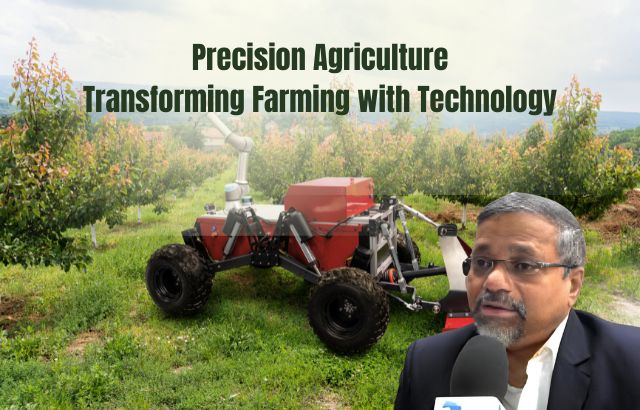
Modern agriculture increasingly relies on technology to improve decision-making and resource efficiency.
Examples include:
Precision Agriculture
Uses sensors, GPS, and data analytics to optimize farming operations.
Smart Irrigation
Reduces water consumption while maintaining crop productivity.
Livestock Monitoring Systems
Track animal health, behavior, and performance in real time.
Feed Management Software
Improves feed formulation, inventory management, and efficiency.
Organizations that successfully manage technology adoption often achieve stronger operational performance.
Overcoming Resistance to Change
Resistance is a natural part of any transformation process.
Common barriers include:
- Fear of failure
- Financial concerns
- Lack of training
- Limited access to information
- Cultural resistance
Strategies for overcoming resistance:
Education
Provide practical training and knowledge-sharing opportunities.
Communication
Clearly explain the purpose and benefits of change.
Demonstration Projects
Show measurable results through pilot programs.
Leadership Support
Visible commitment from leadership builds confidence and trust.
The Business Benefits of Agricultural Change Management
Effective change management delivers measurable business value.
Increased Productivity
Improved farming practices enhance crop yields and livestock performance.
Cost Reduction
Resource efficiency reduces operating expenses.
Environmental Performance
Sustainable practices lower environmental impact.
Risk Management
Organizations become more resilient to market and climate-related challenges.
Competitive Advantage
Businesses that innovate adapt faster and create greater value for customers and stakeholders.
Sustainability and Change Management
Sustainability requires continuous adaptation.
Successful agricultural organizations integrate sustainability into every aspect of decision-making, including:
- Resource management
- Animal nutrition
- Water conservation
- Waste reduction
- Circular economy practices
- Renewable energy adoption
Change management provides the framework needed to successfully implement these initiatives.
Building a Culture of Continuous Improvement
Long-term success depends on creating a culture that embraces learning and innovation.
Characteristics of high-performing agricultural organizations include:
- Data-driven decision-making
- Strong leadership commitment
- Continuous training
- Collaboration across stakeholders
- Openness to innovation
- Focus on sustainability and efficiency
These organizations are better prepared to navigate future challenges and opportunities.
Conclusion
Change is no longer optional in agriculture. It is essential for achieving productivity, profitability, sustainability, and long-term resilience.
Effective Change Management in Agriculture helps farmers, agribusinesses, veterinarians, feed manufacturers, and sustainability leaders successfully implement innovations that improve environmental performance and business outcomes.
By creating awareness, engaging stakeholders, implementing practical solutions, monitoring progress, and continuously improving, agricultural organizations can transform challenges into opportunities for sustainable growth.
The future belongs to those who are prepared to lead change, embrace innovation, and build resilient agricultural systems that deliver value for people, businesses, and the planet.
Annex: Practical Change Management Toolkit for Agriculture

This practical toolkit provides agricultural organizations with simple tools to plan, implement, monitor, and sustain change. It can be adapted by farmers, dairy enterprises, feed manufacturers, agribusinesses, veterinarians, cooperatives, and sustainability teams.
Annex 1: Agricultural Change Management Checklist
Use this checklist when introducing a new technology, process, production system, or sustainability initiative.
- Identify the current problem or opportunity.
- Establish a clear baseline using available data.
- Define measurable objectives and expected outcomes.
- Identify key stakeholders affected by the change.
- Understand potential resistance and implementation barriers.
- Develop a practical change implementation plan.
- Assign responsibilities and timelines.
- Provide appropriate training and technical support.
- Start with a pilot or demonstration project where appropriate.
- Communicate progress and results regularly.
- Monitor financial, operational, environmental, and animal-performance indicators.
- Compare results with the original baseline.
- Address gaps and implementation challenges.
- Scale successful practices across the organization.
- Establish continuous improvement processes.
Annex 2: Agricultural Change Management KPI Dashboard
Performance indicators help organizations determine whether a change is delivering the expected results.
| Change Area | Example KPI | Measurement |
|---|---|---|
| Dairy productivity | Milk yield | Litres/cow/day |
| Animal nutrition | Feed conversion efficiency | Feed input/output |
| Feed management | Feed wastage | % of feed wasted |
| Cost management | Feed cost | Cost/unit of production |
| Water management | Water consumption | Litres/unit of production |
| Crop production | Crop yield | Tonnes/hectare |
| Animal health | Disease incidence | Cases/period |
| Energy efficiency | Energy consumption | kWh/unit of production |
| Sustainability | Carbon footprint | CO₂e/unit of production |
| Profitability | Operating margin | Currency/unit or % |
KPIs should be established before implementation wherever possible. This allows organizations to compare the baseline, target, and actual performance after the change.
Annex 3: Agricultural Change Implementation Template
Organizations can use the following template to structure a change initiative.
| Change Area | Current Situation | Desired Outcome | Action Required | Responsible Person | KPI | Timeline |
|---|---|---|---|---|---|---|
| Animal nutrition | High feed costs | Improve feed efficiency | Optimize feed formulation | Nutrition team | Feed cost/unit | 6 months |
| Water management | High water use | Reduce consumption | Introduce smart irrigation | Farm manager | Water/unit output | 12 months |
| Animal health | Reactive treatment | Improve prevention | Introduce preventive health program | Veterinarian | Disease incidence | 6 months |
| Digital technology | Limited data use | Improve decisions | Introduce farm monitoring tools | Management | Data adoption rate | 3 months |
| Waste management | High organic waste | Increase resource recovery | Develop circular-use program | Sustainability team | Waste recovery % | 12 months |
Annex 4: Change Review Questions
At regular intervals, agricultural leaders should review the following questions:
- What problem were we trying to solve?
- Has the expected improvement been achieved?
- What measurable benefits have been generated?
- What challenges were encountered?
- How have farmers and employees responded?
- What additional training or resources are required?
- Has the change improved productivity or profitability?
- Has environmental performance improved?
- Can the solution be scaled?
- What should we improve in the next implementation cycle?
Final Note
Change management should not be viewed as a one-time project. In modern agriculture, successful transformation depends on continuous learning, measurement, stakeholder engagement, and improvement.
The most effective approach is to assess the current situation, define the desired future, engage people, implement practical solutions, measure results, and continuously improve. This creates a stronger foundation for productive, profitable, resilient, and sustainable agricultural systems.
About the Author
Jaiguru Kadam is an internationally experienced Subject Matter Specialist in Green Innovation, Sustainable Agriculture, Animal Nutrition, Circular Economy, Resource Efficiency, and Sustainability Strategy. He helps agribusinesses, feed manufacturers, dairy enterprises, veterinarians, and farming communities implement sustainable solutions that improve productivity, profitability, and environmental performance while creating long-term value.