By Green Innovator & Subject Matter Specialist Jaiguru Kadam
Vast International Experience in Sustainable Agriculture, Animal Nutrition, Ingredient Innovation, and Market Development
Introduction
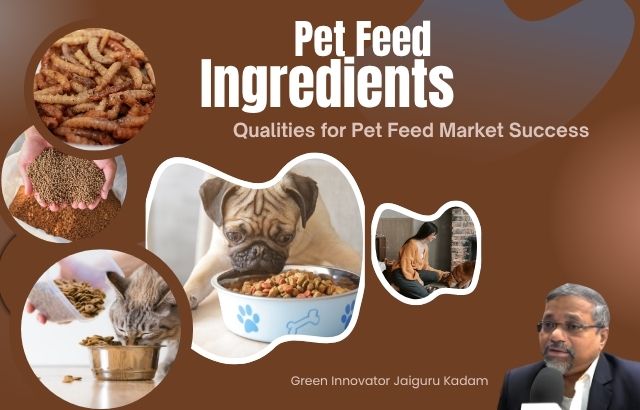
The global pet feed industry is undergoing a remarkable transformation. Pet owners today are increasingly conscious about nutrition, ingredient quality, sustainability, traceability, and animal well-being. As a result, ingredient suppliers are no longer just raw material vendors—they have become strategic partners in innovation and value creation.
Success in the pet feed ingredient market requires more than supplying proteins, fibers, fats, vitamins, or functional additives. It demands strong product leadership, market understanding, scientific expertise, sustainability commitment, and customer-centric innovation.
Drawing upon extensive international experience across agriculture, food systems, ingredient technologies, and sustainable value chains, I have observed that ingredient leaders who consistently outperform competitors share several critical qualities.
1. Deep Understanding of Pet Nutrition Science
Product leaders must understand the nutritional requirements of dogs, cats, birds, fish, and specialty pets.
Key focus areas include:
- Digestibility
- Protein quality
- Amino acid balance
- Gut health
- Functional nutrition
- Palatability
- Immune support
Example
A pet food manufacturer launches a premium dog food containing 28% protein.
Two ingredient suppliers offer protein concentrates:
| Supplier | Digestibility |
|---|---|
| Supplier A | 75% |
| Supplier B | 92% |
Effective protein utilization:
Supplier A:
28 × 75% = 21% usable protein
Supplier B:
28 × 92% = 25.76% usable protein
Result:
Supplier B delivers approximately 22.7% more usable protein value despite similar label claims.
This scientific understanding creates competitive advantage.
2. Customer-Centric Innovation
Ingredient leaders must understand customer pain points before developing solutions.
Questions to ask:
- What formulation challenges exist?
- Can costs be reduced?
- Can sustainability scores improve?
- Can shelf life be extended?
- Can pet health benefits be enhanced?
Example
A pet food producer struggles with stool quality complaints.
Instead of selling generic fiber, an ingredient leader develops a customized prebiotic fiber blend that improves gut microbiome balance.
Outcome:
- Better pet health
- Reduced complaints
- Stronger customer loyalty
3. Sustainability Leadership
Modern consumers increasingly demand environmentally responsible products.
Ingredient leaders should focus on:
- Reduced carbon footprint
- Upcycled ingredients
- Water conservation
- Regenerative agriculture
- Circular economy models
Example
Using upcycled vegetable protein from food processing streams can reduce waste while providing valuable nutrition.
A company replacing 1,000 metric tons of conventional protein with upcycled protein may prevent significant food waste and reduce environmental impact.
Sustainability is becoming a purchasing requirement rather than a marketing option.
4. Strong Supply Chain Management
Reliable supply is critical.
Customers expect:
- Consistent quality
- Stable pricing
- Timely deliveries
- Risk management
Example
If a manufacturer requires:
500 tons/month
Supply disruption of just:
10%
Equals:
500 × 10% = 50 tons shortage
Potential consequences:
- Production delays
- Lost sales
- Customer dissatisfaction
Ingredient leaders proactively manage sourcing risks and maintain contingency plans.
5. Data-Driven Decision Making
Successful leaders leverage:
- Market intelligence
- Consumer trends
- Performance analytics
- Scientific validation
Example
Market research indicates:
- Grain-free pet foods growing at 12%
- Functional ingredients growing at 15%
- Probiotic ingredients growing at 18%
An ingredient company investing early in probiotics gains first-mover advantage.
Data transforms assumptions into strategic opportunities.
6. Global Perspective with Local Execution
Pet food trends often emerge globally before becoming mainstream locally.
Ingredient leaders monitor developments across:
- North America
- Europe
- Asia-Pacific
- Latin America
- Middle East
Example
Several years ago, insect protein was considered niche.
Today it is increasingly adopted due to:
- Sustainability benefits
- High protein efficiency
- Reduced environmental footprint
Leaders who recognized this trend early captured significant market opportunities.
7. Technical Selling Excellence
Modern ingredient selling is scientific selling.
Customers expect support in:
- Formulation
- Product development
- Stability testing
- Regulatory compliance
- Cost optimization
Example
Instead of selling a protein ingredient at $2.00/kg, a technical leader demonstrates:
- Better digestibility
- Lower inclusion rates
- Improved pet health outcomes
Value-based selling consistently outperforms price-based selling.
8. Cross-Functional Leadership
Successful ingredient product leaders connect:
- R&D
- Marketing
- Procurement
- Operations
- Sustainability teams
- Customers
This alignment accelerates innovation and commercialization.
Example
A new functional ingredient may fail if:
- Marketing lacks positioning
- Operations cannot scale production
- Sales teams lack technical knowledge
Cross-functional leadership ensures successful market adoption.
9. Regulatory Awareness
Pet food regulations continue evolving worldwide.
Ingredient leaders must stay informed about:
- Ingredient approvals
- Labeling requirements
- Safety standards
- Traceability systems
Example
An ingredient approved in one region may require additional documentation elsewhere.
Regulatory preparedness prevents market delays and protects brand reputation.
10. Visionary Leadership
The most successful leaders anticipate future opportunities.
Emerging areas include:
- Precision nutrition
- Personalized pet diets
- Alternative proteins
- Functional botanicals
- Microbiome health solutions
- AI-driven formulation systems
Visionary leaders shape markets rather than simply react to them.
Business Impact Calculation Example

Consider a pet food company producing:
10,000 tons annually
Ingredient improvement increases feed efficiency by:
2%
Annual value created:
10,000 × 2% = 200 tons equivalent gain
At ingredient value of:
$2,000 per ton
Potential annual value:
200 × $2,000 = $400,000
This demonstrates how seemingly small ingredient improvements can generate substantial economic returns.
Key Success Formula
Pet Feed Ingredient Market Success =
Science + Innovation + Sustainability + Reliability + Customer Focus + Global Vision
Organizations that master these six pillars consistently build stronger brands, deeper customer relationships, and long-term profitability.
Frequently Asked Questions (FAQs)
Q1. What is the most important quality of a pet feed ingredient leader?
A strong understanding of nutrition science combined with customer-focused innovation is the foundation of long-term success.
Q2. Why is sustainability becoming critical in pet food ingredients?
Consumers increasingly expect environmentally responsible products. Sustainable ingredients help brands meet market expectations while reducing environmental impact.
Q3. How can ingredient suppliers differentiate themselves?
Through scientific validation, technical support, consistent quality, regulatory expertise, and innovative product solutions.
Q4. Why is digestibility important?
Higher digestibility means pets absorb more nutrients, improving health outcomes and delivering better value to manufacturers and consumers.
Q5. What future trends will drive pet feed ingredient growth?
Key growth areas include:
- Alternative proteins
- Precision nutrition
- Functional ingredients
- Gut health solutions
- Sustainable sourcing
- Personalized pet nutrition
Q6. How important is global market knowledge?
Extremely important. Many successful innovations originate in one region before expanding worldwide. Global awareness allows companies to identify opportunities earlier than competitors.
Conclusion
The pet feed industry is entering a new era where ingredient suppliers are expected to be innovation partners, sustainability champions, and technical advisors. Product leadership is no longer about selling ingredients—it is about creating measurable value for pets, pet owners, manufacturers, and society.
Organizations that combine scientific expertise, sustainability leadership, customer focus, and strategic vision will define the future of the global pet nutrition industry.
As a Green Innovator and Subject Matter Specialist with vast international experience, I believe that the next generation of pet feed market leaders will be those who successfully integrate nutrition, sustainability, technology, and customer-centric innovation into every aspect of their business strategy.
— Jaiguru Kadam
Green Innovator | Subject Matter Specialist
International Expert in Sustainable Agriculture, Ingredient Innovation, Animal Nutrition, and Market Development