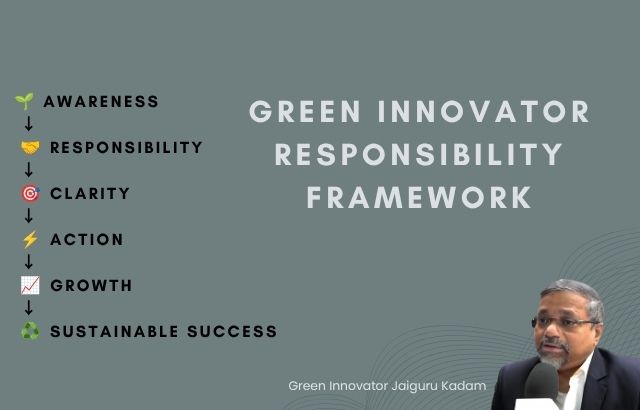
Connecting Awareness, Responsibility, Clarity, Action, Growth, and Sustainable Success in Agriculture and Animal Nutrition
By Jaiguru Kadam
Subject Matter Specialist in Green Innovation, Sustainable Agriculture, Animal Nutrition, and Circular Economy with Vast International Experience
Introduction
Agriculture and livestock production are at the heart of global food security. However, increasing pressure on natural resources, climate change, feed costs, animal health concerns, and consumer expectations require a new leadership approach.
The Green Innovator Responsibility Framework provides a practical pathway for farmers, veterinarians, feed manufacturers, dairy producers, poultry businesses, and agribusiness leaders to achieve sustainable growth while improving profitability and environmental performance.
The framework follows six interconnected stages:
Awareness → Responsibility → Clarity → Action → Growth → Sustainable Success
1. Awareness
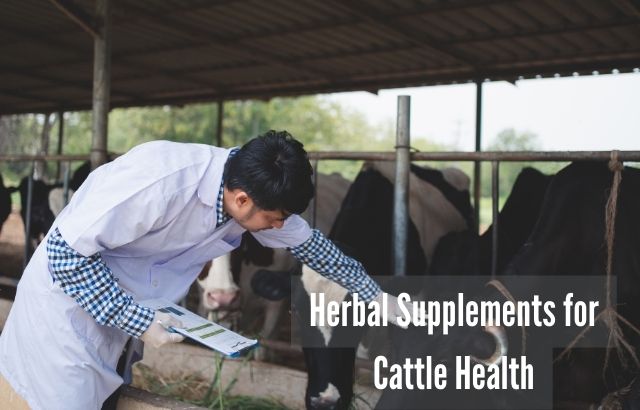
Understanding the Challenges
Sustainable agriculture begins with awareness.
Farmers and livestock producers must understand:
- Rising feed costs
- Soil degradation
- Water scarcity
- Methane emissions from livestock
- Animal health challenges
- Consumer demand for sustainable food products
Agriculture Example
A dairy farmer discovers that feed accounts for nearly 65% of total milk production costs.
The farmer also notices seasonal fluctuations in milk yield due to poor forage quality.
This awareness highlights opportunities for improvement.
Animal Nutrition Example
A poultry feed manufacturer identifies excessive feed wastage during production and transportation, resulting in increased costs and environmental impact.
Key Learning
What we do not measure, we cannot improve.
2. Responsibility
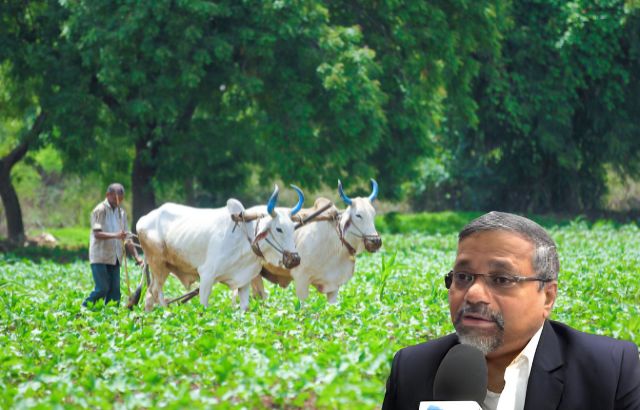
Taking Ownership for Better Outcomes
Once challenges are understood, responsibility follows.
Responsible agribusiness leaders focus on:
- Efficient feed utilization
- Animal welfare
- Sustainable sourcing of ingredients
- Reduced environmental impact
- Improved farmer livelihoods
Example
A cattle feed company commits to sourcing raw materials from certified sustainable suppliers and reducing packaging waste by 30%.
Veterinary Example
A veterinarian educates dairy farmers on preventive healthcare rather than relying solely on treatment after disease outbreaks occur.
Leadership Principle
Responsibility converts awareness into commitment.
3. Clarity
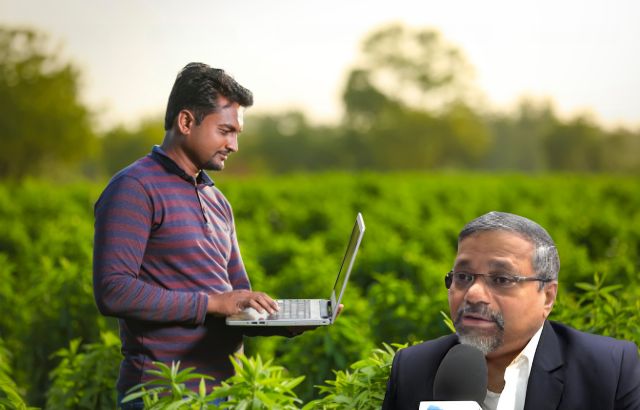
Defining Measurable Goals
Sustainability efforts require clear targets.
Agriculture Example
Instead of saying:
“We want healthier livestock.”
A clear objective becomes:
“Reduce calf mortality from 8% to 3% within two years.”
Feed Industry Example
A feed manufacturer establishes a target to improve feed conversion efficiency by 10%.
Clear Sustainability Targets
- Reduce feed waste by 15%
- Reduce water use by 20%
- Increase milk yield by 12%
- Lower carbon footprint by 10%
Leadership Principle
Clear goals create focused action.
4. Action
Turning Plans into Practical Results
Action is where sustainability delivers value.
Example 1: Dairy Farm Feed Optimization
A dairy farm introduces scientifically formulated feed supplements containing minerals, vitamins, and rumen-enhancing additives.
Before Supplementation
Average milk yield:
20 litres/day per cow
After Supplementation
Average milk yield:
23 litres/day per cow
Increase:
3 litres/day
Percentage Increase:
(3 ÷ 20) × 100
= 15%
Result
Higher milk production with improved animal health.
Example 2: Poultry Feed Efficiency
A poultry producer adopts enzyme-based feed additives.
Before
Feed Conversion Ratio (FCR):
1.90
After
FCR:
1.75
Improvement:
(1.90 – 1.75) ÷ 1.90 × 100
= 7.9%
Result
Less feed required to achieve the same growth performance.
Lower feed costs and reduced environmental footprint.
Example 3: Sustainable Agriculture
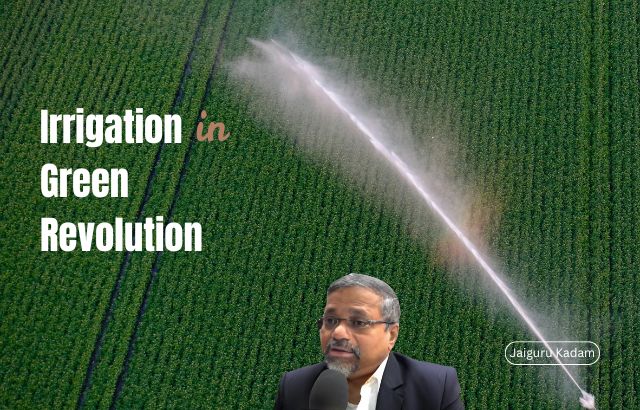
A farm adopts precision irrigation technology.
Water Consumption Before:
10,00,000 litres annually
Water Consumption After:
7,50,000 litres annually
Water Saved:
2,50,000 litres
Reduction:
25%
Result
Improved water efficiency and lower operating costs.
5. Growth

Sustainability Driving Business Performance
Many agricultural businesses discover that sustainability improves profitability.
Example: Dairy Farm Growth
Number of Cows:
100
Milk Increase:
3 litres per cow per day
Additional Milk Production:
100 × 3
= 300 litres/day
Milk Price:
₹40/litre
Additional Daily Revenue:
300 × ₹40
= ₹12,000/day
Annual Additional Revenue:
₹12,000 × 365
= ₹43,80,000
Outcome
A sustainability initiative focused on animal nutrition creates substantial business growth.
Feed Manufacturing Example
A feed company reduces production losses from 5% to 2%.
Annual Production:
10,000 tonnes
Material Saved:
3% × 10,000
= 300 tonnes
At ₹30,000 per tonne:
Savings:
300 × ₹30,000
= ₹90,00,000 annually
Outcome
Efficiency improvements directly improve profitability.
6. Sustainable Success

Creating Long-Term Value
Sustainable success occurs when environmental responsibility, animal health, farmer profitability, and business growth work together.
Characteristics of Sustainable Success
- Healthy livestock
- Efficient feed utilization
- Lower environmental impact
- Higher farmer income
- Improved food security
- Strong stakeholder trust
Example
A dairy cooperative improves animal nutrition, reduces disease incidence, lowers antibiotic use, increases milk production, and improves farmer profitability.
The result is long-term resilience and competitiveness.
Green Innovator Responsibility Framework in Action
Awareness
↓
Responsibility
↓
Clarity
↓
Action
↓
Growth
↓
Sustainable Success
This pathway creates measurable value for:
- Farmers
- Veterinarians
- Feed Manufacturers
- Dairy Producers
- Poultry Businesses
- Agribusiness Companies
- Sustainability Leaders
Practical Case Study
Sustainable Feed Supplement Program
A dairy cooperative serves 500 farmers.
Average Milk Yield Before:
18 litres/day
Milk Yield After Supplement Adoption:
21 litres/day
Increase:
3 litres/day
Total Cows:
2,000
Additional Milk:
2,000 × 3
= 6,000 litres/day
Milk Price:
₹40/litre
Additional Revenue:
6,000 × ₹40
= ₹2,40,000/day
Annual Revenue Increase:
₹2,40,000 × 365
= ₹8.76 Crore
Sustainability Impact
- Improved feed efficiency
- Better animal health
- Reduced wastage
- Higher farmer income
- Stronger rural economy
Frequently Asked Questions (FAQs)
Why is sustainability important in animal nutrition?
Sustainability improves feed efficiency, animal health, profitability, and environmental performance.
How can feed supplements contribute to sustainability?
Properly formulated supplements improve nutrient utilization, reduce waste, enhance animal productivity, and support animal welfare.
Can sustainability improve farm profitability?
Yes. Better feed efficiency, improved productivity, lower disease incidence, and resource conservation all contribute to higher profits.
What role do veterinarians play?
Veterinarians help improve preventive healthcare, animal welfare, productivity, and responsible use of medicines.
How does sustainability support food security?
Healthier animals and efficient agricultural systems produce more food using fewer resources.
What is the first step for implementation?
Conduct an assessment of feed efficiency, resource utilization, animal health, and farm performance to identify opportunities for improvement.
Conclusion
The future of agriculture and animal nutrition depends on responsible leadership. The Green Innovator Responsibility Framework helps transform sustainability from a concept into measurable business success.
By progressing through Awareness, Responsibility, Clarity, Action, Growth, and Sustainable Success, agricultural and livestock organizations can improve productivity, profitability, environmental stewardship, and long-term resilience.
About the Author
Jaiguru Kadam is an internationally experienced Subject Matter Specialist in Green Innovation, Sustainable Agriculture, Animal Nutrition, Circular Economy, Resource Efficiency, and Sustainability Strategy. His work focuses on helping agribusinesses, feed manufacturers, dairy enterprises, veterinarians, and farming communities create measurable environmental, social, and economic value through innovative and sustainable solutions.