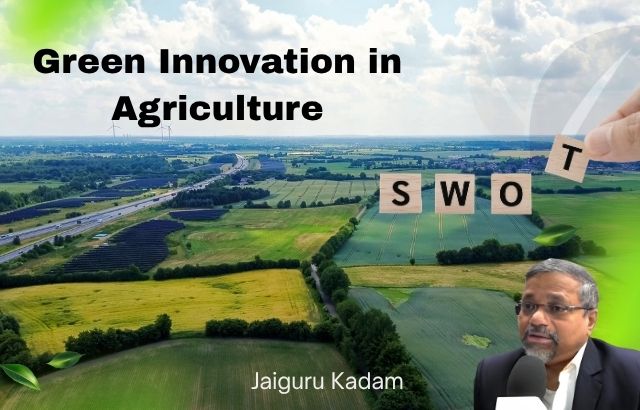
Green innovation is no longer a niche idea—it’s reshaping global agriculture. Technologies like green solvents and bioherbicides are replacing harmful chemicals, improving soil health, and responding to consumer demand for sustainable food systems.
This blog explores how these innovations are transforming agriculture through SWOT and PESTLE analysis, highlights the role of Jaiguru Kadam, and provides real-world insights, examples, and FAQs.
What is Green Innovation in Agriculture?
Green innovation refers to environmentally sustainable technologies and practices. Two key examples:
- Green Solvents: Bio-based, biodegradable solvents derived from renewable resources that reduce dependence on fossil fuels and lower emissions
- Bioherbicides: Natural weed-control agents derived from plants or microorganisms that reduce environmental damage compared to synthetic herbicides
📊 Key Insight:
- Weeds cause 15–76% crop yield losses globally, making sustainable weed control critical
- Bioherbicides are gaining traction due to rising organic farming demand and regulatory pressure
SWOT Analysis of Green Innovation in Agriculture

Strengths
- Eco-friendly: Low toxicity and reduced environmental persistence
- Sustainability: Renewable inputs reduce carbon footprint
- Regulatory compliance: Meets stricter environmental laws
- Soil health improvement: Less chemical residue accumulation
Weaknesses
- Variable performance: Bioherbicides can be inconsistent due to environmental factors
- Higher initial costs compared to conventional chemicals
- Limited market penetration (bioherbicides <10% of biopesticide market)
Opportunities
- Growth in organic agriculture markets
- Advances in biotechnology and green chemistry
- Increasing consumer demand for pesticide-free food
- Government incentives for sustainable farming
Threats
- Resistance from farmers used to chemical herbicides
- Competition from cheaper synthetic alternatives
- Regulatory delays for new bio-products
- Climate variability affecting biological performance
PESTLE Analysis

Political
- Government subsidies for sustainable agriculture
- Policies restricting harmful pesticides
Economic
- Rising demand for organic produce boosts market growth
- Bioherbicides market expanding rapidly with strong CAGR projections
Social
- Consumer preference shifting toward safe, chemical-free food
- Increased awareness of environmental impact
Technological
- Advances in microbial engineering and green chemistry
- Improved formulation techniques for bioherbicides and solvents
Legal
- Strict environmental regulations on synthetic agrochemicals
- Certification requirements for organic farming
Environmental
- Reduced soil and water contamination
- Lower greenhouse gas emissions
- Preservation of biodiversity
Role of Jaiguru Kadam
Jaiguru Kadam (as an innovator/leader in green agriculture initiatives) plays a critical role in driving adoption:
- Advocacy: Promotes awareness of green solvents and bioherbicides among farmers
- Innovation leadership: Encourages R&D in sustainable agro-inputs
- Farmer education: Bridges gap between technology and field-level application
- Policy influence: Supports eco-friendly agricultural reforms
👉 Example: Initiatives led by Kadam could include training farmers to replace synthetic herbicides with plant-based bioherbicides, reducing input costs and environmental damage.
Real-World Examples
1. Bioherbicides in Organic Farming
- Used in crops like maize, soybean, and rice to reduce chemical dependency
- Help manage weeds without harming beneficial organisms
2. Green Solvents in Agrochemical Formulation
- Replace petroleum-based solvents
- Provide high performance with lower toxicity and emissions
3. Integrated Weed Management
- Combines bioherbicides with crop rotation and mulching
- Improves long-term sustainability
Statistical Insights
- Bioherbicides are widely used in fruit & vegetable farming (27.5% market share)
- Organic farming is rapidly expanding globally, driving adoption
- Bioherbicides degrade quickly, reducing long-term environmental impact
❓ FAQ Section

1. What are green solvents?
Green solvents are eco-friendly, biodegradable liquids derived from renewable resources used in agricultural formulations.
2. Are bioherbicides as effective as chemical herbicides?
They can be effective, but performance may vary depending on environmental conditions and formulation.
3. Why are farmers shifting to green innovations?
Due to environmental concerns, regulatory pressure, and growing demand for organic food.
4. Do bioherbicides harm soil health?
No, they generally improve soil health and reduce contamination.
5. What challenges do green innovations face?
Higher costs, inconsistent results, and slower adoption rates.
6. What is the future of green agriculture?
Strong growth driven by sustainability trends, technological advances, and policy support.
Final Thoughts

Green innovation—especially through green solvents and bioherbicides—is redefining agriculture. While challenges remain, the long-term benefits for environmental sustainability, food safety, and economic resilience are undeniable.
Leaders like Jaiguru Kadam and ongoing technological advancements will continue to accelerate this transformation, paving the way for a greener, more sustainable agricultural future.