By Green Innovator & Subject Matter Specialist Jaiguru Kadam (with vast international experience)
Introduction: The Sage Approach to Goal Setting
In a world driven by rapid change, clarity is power. As a Sage archetype, the goal is not just to act—but to understand, analyze, and apply wisdom. SMART goals embody this philosophy by transforming vague intentions into structured, measurable outcomes.
For industries like pet food and livestock feed, where sustainability, efficiency, and profitability intersect, SMART goals are essential tools for long-term success.
What Are SMART Goals?

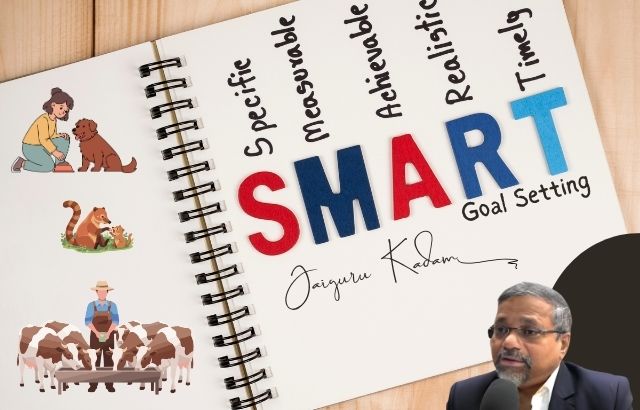
SMART is an acronym for:
- Specific – Clearly defined
- Measurable – Quantifiable outcomes
- Achievable – Realistic and attainable
- Relevant – Aligned with broader objectives
- Time-bound – Defined timeline
Why SMART Goals Matter in Feed & Pet Food Industries
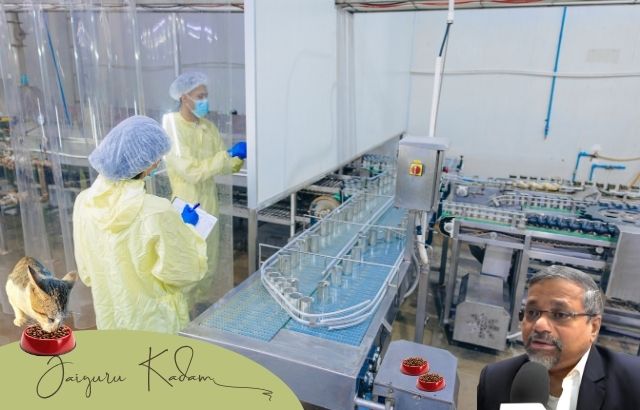
The global feed and pet nutrition sector faces challenges such as rising raw material costs, environmental pressures, and demand for quality nutrition. SMART goals help businesses:
- Optimize resource use
- Improve product quality
- Reduce waste
- Increase profitability sustainably
Practical Examples
1. Pet Food Manufacturing Example
Vague Goal: Improve product quality
SMART Goal:
Increase protein digestibility in premium dog food by 8% within 6 months by incorporating higher-quality plant-based protein isolates and optimizing extrusion temperature.
Breakdown:
- Specific: Improve protein digestibility
- Measurable: +8%
- Achievable: Based on R&D capability
- Relevant: Enhances product value
- Time-bound: 6 months
2. Livestock Feed Efficiency Example
Vague Goal: Reduce feed costs
SMART Goal:
Reduce feed cost per kg of poultry weight gain by ₹4 within 4 months by reformulating feed using locally sourced raw materials and enzyme additives.
Sample Calculations
Feed Conversion Ratio (FCR) Improvement
FCR = Feed Intake / Weight Gain
Before Optimization:
- Feed Intake = 3.0 kg
- Weight Gain = 1.5 kg
- FCR = 3.0 / 1.5 = 2.0
After SMART Goal Implementation:
- Feed Intake = 2.7 kg
- Weight Gain = 1.5 kg
- FCR = 2.7 / 1.5 = 1.8
Improvement:
FCR reduced by 10%, meaning better efficiency and lower costs.
Cost Reduction Calculation
If feed cost = ₹30/kg
Before:
- 3.0 kg × ₹30 = ₹90 per animal
After:
- 2.7 kg × ₹30 = ₹81 per animal
Savings: ₹9 per animal
For 10,000 animals → ₹90,000 savings
Advanced Example: Sustainability Goal
SMART Goal:
Reduce carbon footprint of livestock feed production by 15% in 12 months by integrating alternative proteins (e.g., insect meal) and improving supply chain logistics.
The Sage Mindset in Action
A Sage does not guess—they measure, validate, and refine. SMART goals align perfectly with this mindset:
- Data-driven decisions
- Continuous improvement
- Knowledge-led innovation
Common Mistakes to Avoid
- Setting unrealistic targets
- Ignoring measurable metrics
- Lack of timeline
- Poor alignment with business strategy
FAQs
1. What is the biggest advantage of SMART goals?
They turn abstract ideas into actionable plans with measurable outcomes.
2. How often should SMART goals be reviewed?
Ideally monthly or quarterly, depending on the goal timeline.
3. Can SMART goals be applied to small farms?
Yes. Even small-scale farmers can track metrics like feed efficiency, cost per animal, and growth rates.
4. What tools can help track SMART goals?
Spreadsheets, ERP systems, and feed management software are commonly used.
5. Are SMART goals suitable for sustainability initiatives?
Absolutely. They help quantify environmental impact and track improvements effectively.
Final Thoughts

SMART goals are not just a management tool—they are a philosophy rooted in clarity and wisdom. In industries like pet food and livestock feed, where margins are tight and expectations are high, structured goal setting is the bridge between intention and achievement.
With the disciplined application of SMART principles and the insightful lens of the Sage archetype, organizations can achieve not only profitability but also sustainable impact.
About the Author
Jaiguru Kadam is a Green Innovator and seasoned Subject Matter Specialist, bringing extensive international experience in sustainable practices, feed innovation, and agri-nutrition systems. His work focuses on integrating science, efficiency, and environmental responsibility to drive meaningful impact across the pet food and livestock feed industries.