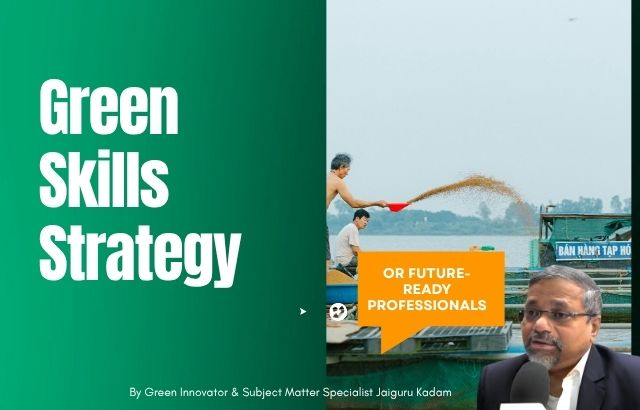
By Green Innovator Jaiguru Kadam
A Story That Begins in a Feed Mill…
In 2018, I stood inside a modest aquaculture feed facility in Southeast Asia. The air was thick with the smell of fishmeal, and the production manager proudly told me, “We’ve optimized cost.”
But when I asked about nutrient loss, carbon emissions, and water pollution, there was silence.
Fast forward to 2025—I revisited a transformed version of that same facility. This time, the conversation had changed:
- Precision nutrition reduced feed waste by 18%
- Green solvents replaced chemical binders
- Herbicide safeners minimized environmental toxicity
- Carbon footprint per ton of feed dropped significantly
That shift didn’t come from technology alone.
It came from skills—new-age, green, interdisciplinary skills.
As I often say:
“The future will not be led by those who know sustainability—but by those who can apply it profitably.” — Jaiguru Kadam
The Global Reality: Skills Are the New Climate Currency
The world is not lacking ambition—it is lacking capability.
- Green hiring is growing ~7.7% annually, while skill growth lags at ~4.3%
- Professionals with green skills are 46.6% more likely to be hired
- Over 50% of green hires now come from non-green roles
- 80% of business leaders say green skills are critical to the transition
Yet, here’s the overlooked truth:
Most organizations are still training too slowly—or too theoretically.
The Hidden Shift Most Blogs Ignore
1. From Awareness to Application
The OECD highlights a critical evolution:
- General sustainability knowledge is no longer enough
- Employers now prioritize technical, operational green skills
👉 Translation:
Knowing what climate change is ≠ knowing how to reduce emissions in a feed plant or supply chain.
2. Green Skills Are Not “Green Jobs”
More than half of green-skilled professionals are working in:
- Finance
- Operations
- Procurement
- Manufacturing
👉 The future is “green within every role”, not just ESG departments.
3. Skill-Based Hiring Is Replacing Degrees
Companies increasingly value:
- Practical sustainability impact
- Data-driven optimization
- Cross-functional problem-solving
Real-World Case Studies
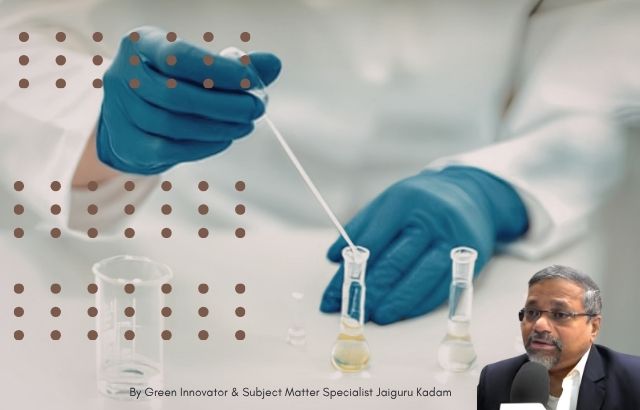
Case Study 1: Aquaculture Feed Optimization
A shrimp farm implemented precision nutrition strategies:
- Reduced feed conversion ratio (FCR) from 1.6 → 1.3
- Annual feed use: 10,000 tons
Simple calculation:
- Savings = 0.3 × 10,000 = 3,000 tons feed saved
- If 1 ton feed = 1.8 tons CO₂
👉 Carbon reduction = 5,400 tons CO₂/year
“Nutrition science is climate science in disguise.” — Jaiguru Kadam
Case Study 2: Green Solvents in Agrochemical Industry
A mid-sized agrochemical company replaced petroleum-based solvents with bio-based alternatives:
- Reduced VOC emissions by 40%
- Improved worker safety
- Lower compliance costs
👉 Hidden benefit: Faster regulatory approvals = faster market entry
Case Study 3: Herbicide Safeners Innovation
Green herbicide safeners improved crop selectivity:
- Reduced chemical dosage by 20–30%
- Increased yield stability
👉 This is not just agriculture—it’s precision sustainability engineering
Lesser-Known Insight: The “Green Efficiency Multiplier”
Most professionals focus on renewables.
But the real ROI lies in efficiency improvements.
Example:
If a plant reduces energy use by 15%:
- Annual energy cost = $1M
👉 Savings = $150,000/year
Now combine with carbon pricing:
- $50/ton CO₂
- 2,000 tons reduced
👉 Additional $100,000 savings
➡️ Total impact: $250,000/year from skills—not infrastructure
Did You Know?
- Only about 1 in 8 workers globally has at least one green skill (community insight)
- Many companies train employees only once a year or less
- Green skills are now required even in customer-facing roles
- Sustainability is shifting from compliance → profitability driver
Expert Insights from Jaiguru Kadam
“Green innovation fails not due to lack of ideas—but due to lack of skilled execution.”
“Professionals must think in systems: feed, soil, water, energy—they are interconnected.”
“The future leader is not a specialist—but a translator between science, business, and sustainability.”
Skill Development Strategies That Actually Work
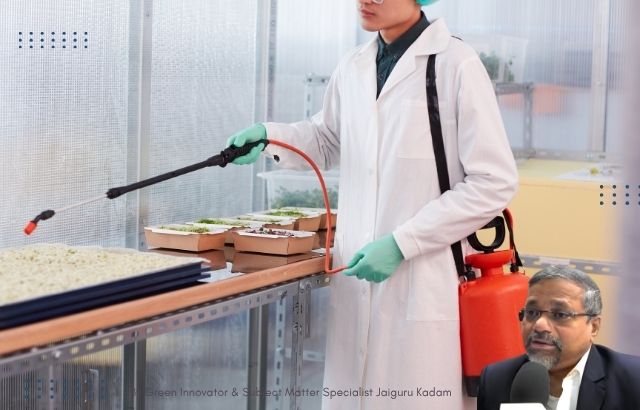
1. Build Hybrid Expertise
Combine:
- Core domain (e.g., aquaculture, chemicals)
- Sustainability (LCA, carbon accounting)
- Digital tools (AI, data analytics)
2. Learn Through Application
Instead of courses alone:
- Pilot a waste reduction project
- Optimize nutrient cycles
- Test green inputs
3. Focus on “Invisible Skills”
Most underrated capabilities:
- Process optimization
- Lifecycle thinking
- Regulatory navigation
4. Measure Everything
If you cannot quantify:
- Carbon
- Cost
- Efficiency
👉 You cannot lead sustainability.
5. Collaborate Across Industries
Innovation happens at intersections:
- Agriculture + Chemistry
- Aquaculture + AI
- Energy + Supply Chain
FAQs
1. What are green skills in simple terms?
They are abilities that help reduce environmental impact—like energy efficiency, sustainable sourcing, or carbon tracking.
2. Do I need a sustainability degree?
No. Skill-based expertise is becoming more valuable than formal degrees.
3. Which industries need green skills the most?
All—especially manufacturing, agriculture, energy, and supply chains.
4. How can professionals start immediately?
Begin with:
- Measuring current impact
- Identifying inefficiencies
- Implementing small optimizations
5. Are green skills financially rewarding?
Yes—companies see cost savings, regulatory benefits, and market advantages.
6. What is the biggest mistake professionals make?
Focusing on theory instead of measurable impact.
Conclusion: The Future Belongs to Skilled Green Innovators
We are entering a decade where:
- Sustainability is not optional
- Skills define leadership
- Efficiency drives profitability
The professionals who will lead are not those who talk green—
but those who can design, measure, and scale green solutions.
“The green future is not built by policies alone—it is built by skilled professionals who turn vision into measurable impact.” — Jaiguru Kadam
Actionable Next Steps
- Audit your current skillset
- Identify one sustainability problem in your domain
- Quantify its impact
- Implement a pilot solution
- Document results
- Scale and communicate
Final Thought
The world doesn’t need more sustainability reports.
It needs professionals who can reduce 5,000 tons of CO₂ with one smart decision.
That professional can be you.